



When people think about dangerous mold in their homes, they usually think about black mold. But red colored mold is real, it grows in many of the same places, and it carries its own set of health concerns and practical challenges. If you have spotted something pinkish-red, brick-red, or rust-colored growing in your bathroom, on your walls, on food, or in other damp spots around your home, this article will walk you through exactly what you are dealing with, why it matters, and how to get rid of it properly.
Red mold is not a single species. The term covers several different types of fungi and bacteria that produce red or pinkish pigments as part of their biology. Some of these are relatively harmless in small quantities. Others produce mycotoxins or cause infections in vulnerable people. And even the less dangerous types can trigger allergic reactions, worsen respiratory conditions, and cause structural damage to the surfaces they colonize. Understanding which type you are dealing with, how to assess the risk level, and how to remove it safely is what this article is about.
Throughout this guide, you will find practical information about identifying red mold types, understanding the specific health risks each carries, protective measures to take before and during removal, step-by-step cleaning approaches for different surfaces and situations, and long-term prevention strategies that actually work. Whether the growth is small enough to handle yourself or large enough to warrant professional help, you will finish this article knowing exactly what your next steps should be.
The Health Risks — What Exposure to Red Mold Can Do
Health effects from red mold exposure range from minor irritation to serious illness, depending on the organism involved, the level and duration of exposure, and the health status of the person exposed. The risks are real and should not be dismissed — but they also should not be exaggerated. A thin film of pink Rhodotorula on a shower grout line poses a very different risk than a large Fusarium colony on water-damaged drywall throughout a basement.
Allergic reactions
Allergic reactions are the most common health effect from mold exposure of any type, including red varieties. Mold spores trigger allergic immune responses in sensitized individuals. Symptoms include sneezing, runny nose, nasal congestion, itchy or watery eyes, skin rashes, and worsening of asthma symptoms. These reactions occur whether or not the mold is technically “toxic” — they are immune system responses to the proteins in mold spores and hyphal fragments rather than responses to mycotoxins specifically.
People who are already allergic to mold can have significant reactions to relatively small exposures. According to the American Academy of Allergy, Asthma and Immunology, mold allergy is a recognized trigger for asthma attacks and allergic rhinitis, and reducing indoor mold exposure is an important part of asthma management for affected individuals.
Respiratory effects
Respiratory effects include irritation of the airways, coughing, wheezing, shortness of breath, and exacerbation of chronic respiratory conditions including asthma and COPD (chronic obstructive pulmonary disease). These effects can occur both from allergic mechanisms and from direct irritant effects of mold volatile organic compounds (MVOCs) — gases released by mold as part of their metabolism that cause the musty smell associated with mold growth.
Mycotoxin effects
Mycotoxin effects are the most serious category. Certain molds — including some Fusarium species — produce mycotoxins: secondary metabolites that are toxic to humans and animals. Trichothecene mycotoxins produced by some Fusarium species have been associated with immune suppression, gastrointestinal effects, neurological effects, and in high exposure situations, hematological problems. Fumonisin mycotoxins have been linked to esophageal cancer and neural tube defects in areas of the world with high dietary exposure through contaminated corn.
It is important to note that mycotoxin exposure from household mold is generally at much lower levels than the occupational or dietary exposures studied in research. However, for people with persistent exposure in a significantly contaminated indoor environment, the risk is not negligible.
Opportunistic infections
Opportunistic infections are the most serious risk for immunocompromised individuals. Fusarium species are recognized causes of fusariosis — infections that can involve the skin, eyes, lungs, and in severely immunocompromised patients (such as those undergoing chemotherapy or organ transplants) can become life-threatening disseminated infections. Rhodotorula can cause fungemia (yeast in the bloodstream) in immunocompromised patients. Serratia marcescens can cause urinary tract infections, pneumonia, and blood infections in vulnerable individuals.
For healthy adults, these infection risks are generally low. But for anyone with a compromised immune system — from HIV/AIDS, cancer treatment, organ transplantation, immunosuppressive medications, or severe diabetes — even relatively “low-risk” molds like Rhodotorula become genuinely serious concerns that require prompt remediation.
Special populations at higher risk:
- Infants and young children (developing immune systems and respiratory tracts)
- Elderly adults (reduced immune function)
- People with asthma or chronic respiratory conditions
- People with mold allergies
- Immunocompromised individuals (cancer treatment, HIV, transplant recipients)
- Pregnant women
- People with chronic sinus conditions
Health effects by exposure level:
| Exposure Level | Who Is at Risk | Typical Effects |
|---|---|---|
| Brief, occasional contact | Generally anyone | Minimal to no effects in healthy individuals |
| Regular exposure in home | Allergic individuals, asthmatics | Allergic symptoms, asthma flares |
| Persistent heavy exposure | Healthy adults | Respiratory symptoms, irritation |
| Any significant exposure | Immunocompromised individuals | Potential serious infection risk |
| Very heavy exposure (large contamination) | Anyone | Respiratory effects, potential mycotoxin effects |
Where Red Mold Grows — The Most Common Locations in Your Home
Red and pink-colored mold and mold-like growth has specific preferred environments, and knowing where to look helps you find and address it before it becomes a larger problem. The common thread across all these locations is moisture — without adequate and persistent moisture, these organisms cannot survive.
Bathrooms
Bathrooms are the number one location for red and pink growth in homes. Rhodotorula (yeast) and Serratia marcescens (bacterium) are both extremely common in bathrooms and are responsible for the vast majority of pink or pink-red staining seen in shower grout, around faucets, on shower curtains, in toilet bowls (particularly under the rim), and on bathroom walls. Both organisms thrive in the warm, humid, nutrient-rich (from soap residue, skin cells, and shampoo) environment of a typical bathroom. Many homeowners clean this growth, see it return within days or weeks, and assume the cleaning did not work — but in reality the growth returned because the underlying conditions (persistent moisture, warmth, nutrients) were never addressed.
Kitchens
Kitchens — particularly areas around the sink, under the sink (where pipe leaks can go unnoticed for extended periods), around the dishwasher, and in refrigerator drip trays or condensation pans — are common locations for red mold growth. Food storage areas, particularly where organic residue accumulates, can support Fusarium and other food-associated molds.
Food itself
Food itself is an important location to be aware of. Certain foods are particularly susceptible to red and orange mold growth, including bread (Neurospora), corn and grain products (Fusarium), and aged or imported cheese (various pink-red molds). Food with visible mold should generally be discarded — the visible growth represents only a fraction of the mycelium that has penetrated the food’s structure.
Basements and crawl spaces
Basements and crawl spaces especially in homes with water infiltration, high humidity, or condensation issues can support large colonies of Fusarium and other molds on organic building materials including wood framing, insulation facing, and cardboard storage boxes. Basement mold of any color is a more serious concern than bathroom surface growth because it often indicates a structural moisture problem and because the volume of growth can be much larger.
Window sills and frames
Window sills and frames are frequently affected, particularly in homes with single-pane windows or condensation issues. The moisture that condenses on cold window glass runs down to the sill, creating chronically damp conditions ideal for mold.
Washing machines and drains
Washing machines and drains — particularly front-loading washing machines, which are notorious for mold and bacterial growth in the rubber door gasket — are often sources of pink or red-tinged growth.
HVAC systems and ductwork
HVAC systems and ductwork can harbor mold that is then distributed throughout the home via the air. If red or pink mold is found in or near air vents, this is a more serious concern because the HVAC system may be spreading spores throughout the entire house.
Common locations for red mold growth:
| Location | Most Likely Organism | Moisture Source | Risk Level |
|---|---|---|---|
| Shower grout and tiles | Rhodotorula, Serratia | High bathroom humidity | Low to moderate |
| Toilet bowl and rim | Serratia marcescens | Standing water | Low to moderate |
| Under sink / cabinet | Fusarium, various molds | Pipe leaks | Moderate |
| Basement walls/wood | Fusarium, Acremonium | Water infiltration | Moderate to high |
| Window sills | Various molds | Condensation | Moderate |
| Food (bread, grains) | Fusarium, Neurospora | Food moisture | Low to moderate |
| Washing machine gasket | Rhodotorula, various | Trapped water | Low to moderate |
| HVAC vents | Various molds | System condensation | Moderate to high |
Assessing the Situation — Is This a DIY Job or a Professional Job
Before you start any removal process, the first and most important step is honestly assessing the size and nature of the mold problem. This assessment determines whether you can safely handle the remediation yourself or whether you need professional help.
The Environmental Protection Agency (EPA) provides guidance on this question that remains a sensible reference point. According to EPA guidelines, mold growth covering an area smaller than about 10 square feet (roughly 3 feet by 3 feet) can generally be handled by a homeowner. Larger areas of growth — and growth in HVAC systems, on structural materials, or covering large areas of walls — typically warrant professional assessment and remediation.
For red mold specifically, additional considerations apply:
Location of the growth
matters significantly. Pink Rhodotorula on bathroom tiles is a surface-level issue. Red Fusarium growing on basement wall framing after a flood is a structural issue with potentially major health implications. These require very different responses.
The extent of the moisture problem
driving the growth matters. If you can clearly see and fix the moisture source — a dripping faucet, inadequate ventilation in the bathroom — then remediation is straightforward. If the moisture source is unclear, coming from inside walls, or related to structural issues like foundation water infiltration, professional assessment is needed. Cleaning mold without fixing the moisture source is a losing battle.
Your own health status
is a factor. If you or anyone regularly in the space is immunocompromised, has significant respiratory conditions, or is very young or elderly, professional remediation is the safer choice regardless of the mold’s size.
Whether the mold has penetrated porous materials
changes the difficulty significantly. Mold on non-porous surfaces like glazed tiles can be cleaned off. Mold that has grown into porous materials like drywall, insulation, wood framing, or ceiling tiles cannot be cleaned — these materials must be cut out and replaced.
Signs that you need professional help:
- Growth area larger than 10 square feet
- Growth in HVAC systems or ductwork
- Growth on structural materials (wood framing, concrete block walls)
- Mold inside walls (visible when walls are opened or detected by musty smell without visible surface growth)
- Recurring growth after repeated cleaning in the same area (suggests a hidden moisture source)
- Any occupant is immunocompromised, severely asthmatic, or has had mold-related health symptoms
- You cannot identify or fix the moisture source driving the growth
Signs that DIY remediation is appropriate:
- Growth is limited to a small area on hard, non-porous surfaces (tiles, glass, metal)
- The moisture source is clear and fixable (bathroom humidity, occasional splash zone)
- Occupants are healthy with no relevant immune or respiratory vulnerabilities
- Growth is on the surface (not appearing to penetrate the material beneath)
- You can complete the work with proper protective equipment and cleaning agents
What Red Mold Actually Is — The Different Organisms Behind the Color
Red and pink-colored mold growth in homes and on food comes from several different organisms, and they behave differently, grow in different conditions, and carry different levels of health risk. Knowing which type you are dealing with shapes everything from how you approach removal to how urgently you need to act.
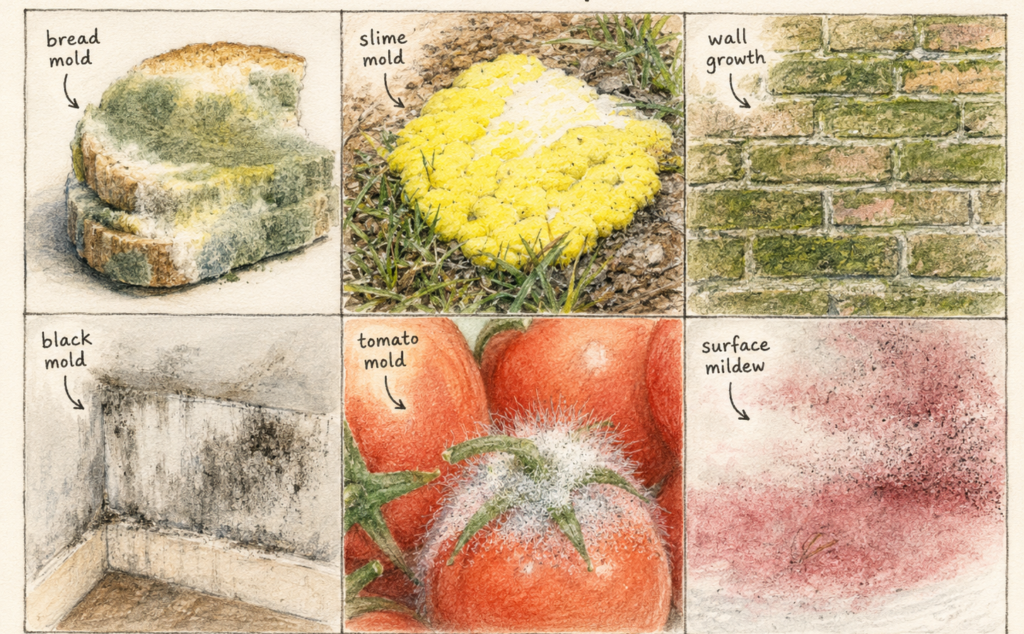
Fusarium is one of the most commonly encountered mold genera that produces pink to red to purple growth. Fusarium species grow on a wide range of materials — plant matter, soil, food, and building materials. Certain Fusarium species are opportunistic pathogens, meaning they can cause infections in people with weakened immune systems. They also produce mycotoxins, including trichothecenes and fumonisins, which have been associated with serious health effects in high exposure situations. Fusarium tends to appear as a fluffy, cottony growth that ranges from pink to red to purplish.
Rhodotorula
Rhodotorula is not a mold but a yeast — a single-celled fungus — that produces a characteristic pink to red to orange pigment called carotenoids. Rhodotorula thrives in moist environments and is extremely commonly found in bathroom grout, shower curtains, around faucets, and anywhere that has persistent moisture. It often appears as a pink or salmon-colored slime or film rather than the fuzzy texture of true molds. While generally considered a low-risk organism for healthy people, Rhodotorula can cause serious infections (fungemia, meningitis, endocarditis) in immunocompromised individuals. It is also very persistent and returns quickly if the underlying moisture problem is not addressed.
Neurospora
Neurospora is a reddish-orange mold often found on baked goods and starchy foods. It produces distinctive reddish-orange spores. While not typically a major health threat, its presence on food indicates contamination and the food should be discarded.
Acremonium
Acremonium is a mold genus that can appear pinkish or reddish, among other colors. Some Acremonium species are associated with health effects and can produce mycotoxins. They are often found on water-damaged building materials.
Serratia marcescens
Serratia marcescens is worth including in this discussion, even though it is technically a bacterium rather than a mold. It produces a red pigment called prodigiosin and is extremely commonly mistaken for red or pink mold in bathrooms. Serratia grows in standing water, on shower walls, in toilet bowls, and anywhere with moisture and organic material. It is a known opportunistic pathogen that can cause urinary tract infections, respiratory infections, and wound infections, particularly in hospital settings or in people with weakened immune systems. It spreads through water droplets and contaminated surfaces.
Trichoderma
Trichoderma occasionally appears with a reddish tint, though it is more commonly green. It can be found on water-damaged wood and other cellulosic materials.
Summary of red/pink mold-like organisms commonly found in homes:
| Organism | Type | Typical Color | Common Location | Health Risk Level |
|---|---|---|---|---|
| Fusarium | Mold (fungus) | Pink, red, purple | Food, soil, building materials | Moderate to high |
| Rhodotorula | Yeast (fungus) | Pink, salmon, orange-red | Bathrooms, wet surfaces | Low for healthy; high for immunocompromised |
| Neurospora | Mold (fungus) | Orange-red | Baked goods, starchy foods | Low |
| Acremonium | Mold (fungus) | Pink, red, cream | Water-damaged materials | Moderate |
| Serratia marcescens | Bacterium | Pink-red, orange | Bathrooms, water surfaces | Moderate to high |
| Trichoderma | Mold (fungus) | Occasionally reddish | Water-damaged wood | Moderate |
Protective Equipment — What You Must Wear Before Starting
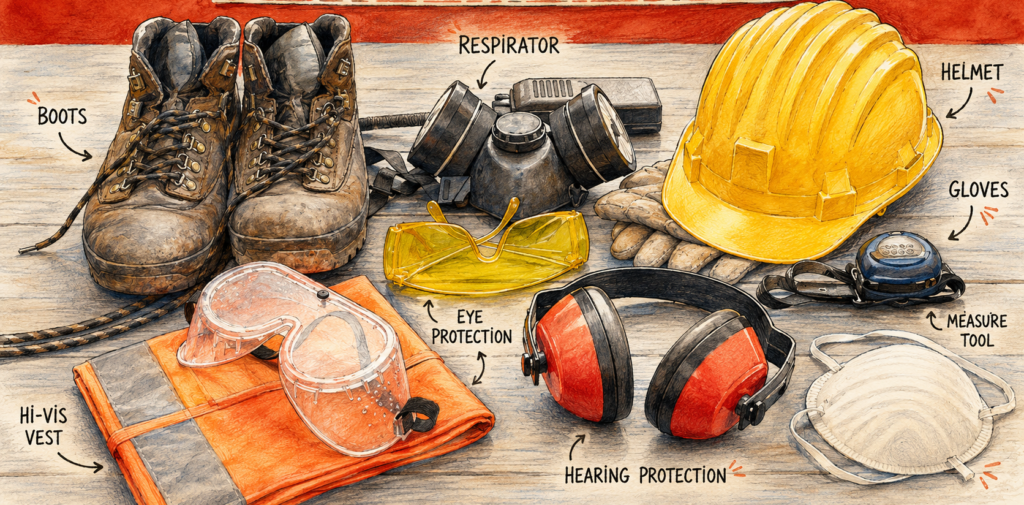
Before you clean or remove any mold, regardless of how small the area or how “harmless” the specific organism may be, personal protective equipment is non-negotiable. The process of disturbing and cleaning mold releases spores and other particles into the air, and exposure without protection during removal can actually be worse than the background exposure from the growth itself.
Respiratory protection
Respiratory protection is the highest priority. A basic paper dust mask (N95 rating or better) is the minimum acceptable protection. An N95 respirator filters at least 95% of airborne particles including mold spores. For larger clean-up jobs, a half-face or full-face respirator with P100 filters provides better protection. Surgical masks and cloth masks do not provide adequate filtration for mold spore protection and should not be used.
Gloves
Gloves protect your hands from mold contact and from the cleaning agents used. Non-porous gloves — nitrile, latex, or rubber — are appropriate. The gloves should be long enough to protect the wrists and forearms if you are reaching into confined spaces.
Eye protection
Eye protection is important, particularly for overhead or spray work where particles and cleaning solution droplets can reach the eyes. Safety goggles that seal against the face are preferable to regular safety glasses, which do not prevent particles from entering from the sides.
Protective clothing
Protective clothing should cover the arms and legs. Old clothing that can be washed immediately after (or disposable Tyvek coveralls for larger jobs) prevents mold spores from contaminating your regular clothing and being transferred around the home. After completing the work, bag the clothing immediately and wash it on a hot cycle.
Ventilation setup
Ventilation setup before starting work is also a protective measure. Opening windows and using a fan directed outward (to exhaust air rather than circulate it) helps remove airborne spores during the cleaning process. However, be thoughtful about this — for bathroom cleaning, a window fan exhausting to outside is ideal. For basement work, consider whether air movement is helping or spreading spores to other areas of the home.
Protective equipment checklist:
| Item | Minimum Standard | Better Option |
|---|---|---|
| Respiratory protection | N95 respirator | Half-face respirator with P100 filters |
| Gloves | Nitrile or latex gloves | Longer-cuffed rubber gloves |
| Eye protection | Safety glasses | Sealed safety goggles |
| Clothing | Old clothes, long sleeves | Disposable Tyvek coveralls |
| Footwear | Closed shoes | Covers or old shoes that can be cleaned |
Cleaning Red Mold From Bathroom Surfaces — The Right Way
Bathroom-based pink and red growth (Rhodotorula and Serratia marcescens) is the most common type of red mold situation homeowners deal with, and it is also one of the most manageable when approached correctly. The frustrating reality for many people is that they clean it repeatedly and it keeps coming back — and the reason is almost always that the cleaning approach is not addressing the organism and its growth conditions adequately.
Here is a proper approach to bathroom red mold removal:
Step one — prepare the space
Step one — prepare the space Put on your protective equipment. Open a window or turn on the exhaust fan. Remove any bath mats, towels, toiletries, or other items from the immediate area so they do not get contaminated during cleaning.
Step two — choose the right cleaning agent
Step two — choose the right cleaning agent For Rhodotorula and Serratia marcescens on non-porous bathroom surfaces, bleach solution is effective. A dilution of one cup of household chlorine bleach (5–6% sodium hypochlorite) to one gallon of water is a standard approach that kills these organisms on contact. Alternatively, commercial bathroom mold and mildew cleaners that contain bleach or hydrogen peroxide work well. Hydrogen peroxide-based cleaners (3%) are a good alternative for those who prefer not to use bleach.
Do not use vinegar for Serratia marcescens specifically — while vinegar works well against many molds, it is not reliably effective against this particular bacterium.
Step three
Step three — apply the cleaner and allow contact time Spray or apply the bleach solution liberally to the affected surfaces. Do not wipe immediately. Allow the solution to sit on the surface for at least 10–15 minutes. This contact time is critical — many people spray and immediately wipe, which physically removes some of the growth but does not kill it adequately. The contact time allows the bleach to penetrate and kill the organisms.
Step four — scrub effectively
Step four — scrub effectively. Use a stiff-bristled brush for grout lines, which have textured surfaces that trap organisms. An old toothbrush works well for grout. Use a sponge or cloth for flat surfaces like tiles, tubs, and sinks. Scrub with the cleaning solution, applying some physical pressure to dislodge the growth.
Step five — rinse thoroughly
Step five — rinse thoroughly Rinse the cleaned surfaces with clean water. Residual bleach on bathroom surfaces can cause eye and respiratory irritation.
Step six — dry the surface
Step six — dry the surface This is the step most people skip, but it is arguably the most important for preventing rapid return. After cleaning, dry the surface as thoroughly as possible — with a clean dry towel and if possible by leaving the area ventilated. Rhodotorula and Serratia return within days when surfaces remain wet.
Addressing grout specifically:
Grout is porous and textured, which makes it a persistent location for these organisms. After cleaning, applying a grout sealer (available at hardware stores) to clean, dry grout creates a less porous surface that is harder for organisms to colonize. This does not eliminate the need to clean, but it significantly slows regrowth.
For toilet bowl pink staining:
Pour bleach solution or a bleach-based toilet bowl cleaner under the rim and allow it to sit for at least 15–30 minutes before scrubbing with a toilet brush. The under-rim areas are particularly important because they retain moisture and organic material continuously.
Bathroom cleaning approach summary:
| Surface | Cleaner | Contact Time | Tool | Additional Step |
|---|---|---|---|---|
| Tile surfaces | Bleach solution (1:16) | 10–15 minutes | Sponge or cloth | Dry thoroughly after |
| Grout lines | Bleach solution (1:16) | 15 minutes | Stiff grout brush / toothbrush | Apply grout sealer when dry |
| Shower curtain | Bleach solution or washing machine hot cycle | 15 minutes | Sponge | Dry completely or replace |
| Toilet bowl/rim | Bleach-based bowl cleaner | 15–30 minutes | Toilet brush | Clean rim thoroughly |
| Faucet areas | Bleach solution | 10 minutes | Small brush | Dry area completely |
Removing Red Mold From Non-Porous Hard Surfaces Outside the Bathroom
Red mold on non-porous hard surfaces outside the bathroom — kitchen counters near the sink, appliance surfaces, window glass, metal fixtures — follows similar principles to bathroom cleaning, with some material-specific considerations.
For kitchen surfaces
near the sink or dishwasher, the approach is similar to bathroom tile cleaning. Bleach solution is effective, but be mindful of surfaces that may be damaged by bleach — some stone countertops (granite, marble) should not be exposed to bleach. For stone surfaces, hydrogen peroxide (3%) or a commercial stone-safe disinfectant is a better choice.
For window glass and frames
bleach solution applied with a cloth, allowed to sit for 10 minutes, then wiped off and rinsed works well on the glass itself. For wooden window frames, the situation is more complex — wood is porous, and if mold has penetrated the wood surface, surface cleaning will not fully remove it (see the section on porous materials below). For painted wood window sills with surface-level growth, cleaning with bleach solution and then repainting with a mold-resistant primer and paint can address the problem.
For appliance surfaces
like washing machine gaskets, the rubber material requires careful attention. Bleach solution applied with a cloth or old toothbrush, with adequate contact time, is effective. After cleaning, leaving the washing machine door open between uses is essential to prevent moisture accumulation in the gasket.
One important caution
about mixing cleaning products: never mix bleach with ammonia or with vinegar. Bleach and ammonia produce chloramine gases, and bleach and vinegar together at high concentrations can produce chlorine gas. Both combinations are dangerous. Use bleach solutions alone, and rinse surfaces thoroughly before using a different type of cleaner.
Dealing With Red Mold on Porous Materials — A Different Problem
Red mold on porous materials is a fundamentally different situation from surface-level growth on tiles or metal. When mold grows into porous materials — wood, drywall, insulation, ceiling tiles, fabric — the mycelium (root-like structures) penetrate the material’s interior, and surface cleaning removes only the visible portion while leaving the embedded growth intact to regrow.
Drywall
that has been colonized by red mold must be cut out and replaced, not cleaned. This is a firm principle in mold remediation. The standard practice is to cut out the affected drywall plus an additional margin of apparently clean material (typically 12 inches in each direction beyond the visibly affected area) to ensure all affected material is removed. Before patching, the underlying structure should be cleaned and dried, and the moisture source that caused the problem must be fixed.
Wood framing and structural wood
requires case-by-case assessment. Surface-level growth on wood can sometimes be successfully treated with antimicrobial solutions, followed by thorough drying and application of encapsulant products that seal the wood surface. However, deeply penetrated wood — particularly wood that has been wet for extended periods — may need to be replaced. A professional mold inspector or remediator can assess the extent of penetration and recommend the appropriate approach.
Insulation
that has been contaminated with mold cannot be effectively cleaned and must be removed and replaced. Insulation provides an ideal growth medium (trapped moisture and organic material) and cannot be cleaned without destroying its insulating properties.
Ceiling tiles
(the suspended grid type common in basements and offices) must be replaced when moldy — they are porous and relatively inexpensive, and cleaning them is not effective.
Cardboard, paper, and books
colonized by mold are essentially unrestorable and should be discarded. For irreplaceable documents or books, professional document recovery services exist, but the cost is significant.
Fabrics and upholstery
with mold growth can sometimes be cleaned if the growth is surface-level and the material is washable. Machine washing on the hottest safe temperature with a laundry detergent and addition of a cup of white vinegar can be effective for surface contamination of washable fabrics. Upholstered furniture with significant mold penetration is very difficult to successfully remediate and often needs to be discarded.
Porous material response guide:
| Material | Surface Growth Only | Deep Penetration |
|---|---|---|
| Drywall | Remove and replace | Remove and replace |
| Wood framing | Clean + antimicrobial treatment possible | May need replacement |
| Insulation | Remove and replace | Remove and replace |
| Ceiling tiles | Remove and replace | Remove and replace |
| Washable fabric | Hot wash with detergent | Discard if heavily contaminated |
| Books/paper | Specialized recovery services | Generally discard |
The Correct Order of Operations — Why Sequence Matters
When dealing with red mold, the order in which you do things matters significantly. Many people start cleaning and then try to figure out the moisture problem afterward — and they end up in a cycle of recurring growth because the sequence is wrong.
Fix the moisture source first
always. If you clean mold without addressing why the moisture is there, you are guaranteed a return of the problem within days to weeks. Identify and fix the moisture source before any cleaning work begins. This might mean repairing a leaking pipe, improving bathroom ventilation, sealing basement walls against water infiltration, fixing roof drainage, or simply establishing the habit of drying bathroom surfaces after use.
This principle is so fundamental that mold remediation professionals consider moisture assessment the first and most important step of any remediation project. According to EPA guidance, “the key to mold control is moisture control.”
Improve ventilation next
Adequate air exchange that removes humid air from moisture-generating areas (bathrooms, kitchens, basements, laundry areas) is a critical component of mold prevention. Bathroom exhaust fans should be rated for the size of the space and should exhaust to outside the building (not into the attic). Running the exhaust fan for at least 20–30 minutes after showering or bathing significantly reduces bathroom humidity.
Remove affected porous materials
before cleaning hard surfaces in the same area. Cutting out moldy drywall after you have already cleaned the tiles creates new contamination on the surfaces you have just treated.
Clean from top to bottom
within an affected area. Cleaning high surfaces after lower ones means falling debris re-contaminates what you have already cleaned.
Dry everything thoroughly
before closing up walls, putting items back in place, or reassembling areas that were disturbed.
Verify dryness before any new materials are installed. Using a moisture meter (an inexpensive tool available at hardware stores) to verify that wall framing and subfloor materials are at appropriate moisture content before closing up walls prevents trapping moisture that will feed new growth.
The correct sequence:
| Step | Action | Why It Matters |
|---|---|---|
| First | Identify and fix moisture source | Without this, all cleaning is temporary |
| Second | Improve ventilation if needed | Prevents future accumulation of humidity |
| Third | Remove porous affected materials | Prevents cross-contamination during surface cleaning |
| Fourth | Clean surfaces from top to bottom | Prevents re-contamination of cleaned areas |
| Fifth | Apply appropriate disinfectants | Kills remaining organisms |
| Sixth | Dry thoroughly | Prevents immediate regrowth |
| Seventh | Verify moisture levels before closing up | Prevents trapping moisture |
| Eighth | Restore and prevent | Replace materials, implement prevention measures |
Preventing Red Mold From Coming Back
The most frustrating aspect of dealing with red mold for many homeowners is the rapid return after cleaning. Rhodotorula and Serratia in bathrooms in particular are notorious for returning within days of cleaning, because the environmental conditions remain ideal for their growth. Long-term prevention requires changing those conditions, not just repeatedly cleaning the growth.
Reduce bathroom humidity consistently
The most impactful change you can make is to reliably reduce the humidity in your bathroom after showers and baths. Run the exhaust fan during and for 20–30 minutes after every shower. If your bathroom exhaust fan is weak, noisy, or absent, upgrading it is one of the most cost-effective home improvements you can make for mold prevention. Good exhaust fans are available for well under $100, and installation is relatively straightforward for a comfortable DIYer.
Dry surfaces after use
Wiping down shower walls, the tub surround, and the sink area with a squeegee or towel after each use removes the standing water film that provides moisture for Rhodotorula and Serratia. This sounds labor-intensive but takes less than a minute and is the single most effective habit change for preventing bathroom pink mold.
Fix dripping faucets and running toilets
Constant moisture from a dripping faucet or a toilet that runs persistently creates exactly the wet conditions these organisms need.
Wash shower curtains and bath mats regularly
These items trap moisture and organic material and are common reservoirs for re-inoculation of the bathroom. Washing them monthly in hot water with a cup of white vinegar added to the wash is effective.
Replace old grout and caulk
Cracked, stained, or deteriorating grout and caulk harbors organisms in its texture and is very difficult to fully clean. Removing and replacing old grout and caulk with fresh material — and then sealing the new grout — gives you a clean starting point that is easier to maintain.
Use an antimicrobial daily shower spray
Products designed to be sprayed on wet shower surfaces daily and not rinsed off provide ongoing antimicrobial protection between deep cleanings. These are particularly useful for people who struggle to keep ahead of the rapid regrowth.
Ensure adequate dehumidification in basement
For basement mold, a properly sized dehumidifier that maintains basement relative humidity below 60% (ideally below 50%) is essential. Without consistent humidity control, mold will return to basement materials regardless of how thoroughly they are cleaned.
Improve outdoor drainage away from the home
Water pooling against the foundation is a common cause of basement moisture that eventually supports mold growth. Grading the ground away from the foundation and ensuring gutters and downspouts direct water away from the building addresses this source.
Seal concrete and masonry surfaces
Basement concrete walls and floors that allow moisture migration can be treated with masonry waterproofing products that reduce moisture infiltration.
Prevention strategies ranked by impact:
| Strategy | Impact Level | Cost | Effort |
|---|---|---|---|
| Exhaust fan use consistently | Very high | Low | Low (habit change) |
| Wiping down shower surfaces after use | Very high | None | Low (habit change) |
| Fixing leaks promptly | High | Variable | Low to moderate |
| Regular washing of curtains and mats | High | Low | Low |
| Re-grouting and caulking old joints | High | Moderate | Moderate |
| Grout sealing | Moderate | Low | Low |
| Dehumidifier in basement | High for basements | Moderate | Low |
| Daily antimicrobial shower spray | Moderate | Low | Low |
| Foundation drainage improvement | High for basements | Moderate to high | Moderate to high |
When to Test — Should You Get a Mold Inspection Done
Mold testing and inspection is a service offered by various professionals, and many homeowners wonder whether they need to test before or after remediation. The answer depends on the situation.
When testing is valuable:
If you have recurring health symptoms — respiratory problems, allergic symptoms, or other symptoms — that improve when you are away from home but return when you come back, mold may be a factor. Professional air quality testing can confirm whether elevated mold spore counts are present.
If you suspect mold inside walls or in hidden areas (based on musty smell, water damage history, or unexplained moisture), professional inspection using moisture meters, thermal imaging cameras, and potentially limited wall opening can locate hidden growth.
After a significant flood, major plumbing leak, or other large water intrusion event, professional assessment of the full scope of potential mold growth throughout the affected area is prudent before beginning remediation.
If you are buying or selling a home and there is any history of water damage, a professional mold inspection provides objective documentation of the property’s condition.
When testing is generally not necessary:
If you can see the mold, you generally do not need to test it to know there is a problem — visible mold is visible mold, and the response (fix the moisture, clean or remove the growth) is the same regardless of the species. Consumer-grade mold test kits sold at hardware stores are of limited value because they nearly always come back positive (mold spores are present in essentially every indoor environment) without providing meaningful information about whether the levels are problematic.
Professional mold inspectors versus air quality testers:
A certified mold inspector (look for certifications from organizations like the American Council for Accredited Certification) can provide a thorough physical inspection with specialized tools. Air quality testers take samples of indoor air and compare spore counts and species to outdoor baselines. Both services have their place, but neither is necessary for a small, clearly visible, surficial mold problem.
Disposing of Mold-Contaminated Materials Safely
When you remove mold-contaminated porous materials — drywall, insulation, ceiling tiles, contaminated items — proper disposal prevents spreading spores to other areas of the home and to the environment.
Bag everything immediately
Before removing contaminated materials from the work area, have heavy-duty plastic bags (contractor bags, 6-mil thickness) ready. Place the material directly into the bag as it is removed rather than carrying open contaminated material through other parts of the home.
Seal bags tightly
before removing them from the work area. Double-bagging is appropriate for heavily contaminated materials.
Do not clean tools used for mold removal in household sinks
Clean brushes, sponges, and other tools used for mold remediation in a utility sink or outside, and dispose of heavily contaminated tools rather than trying to clean and reuse them.
Standard household trash
is generally appropriate for bagged mold-contaminated building materials in small quantities. For large remediation projects, check with your local waste management authority about whether special disposal is required.
Mold-contaminated food
should be sealed in bags before disposal to prevent spreading spores in the kitchen or to garbage areas.
Living With the Aftermath — What to Do After Major Remediation
After any significant mold remediation — removing affected materials, cleaning, drying — there are steps that help confirm the problem is fully addressed and that prevent recurrence.
Air out the space
thoroughly for at least 24–48 hours after remediation. Open windows, run fans, and allow complete air exchange to dilute any residual spores stirred up during work.
Clean all surfaces in adjacent areas
if significant mold was present — spores can settle on surfaces throughout a room during remediation. A thorough wipe-down of all horizontal surfaces in the affected room and adjacent areas with a damp cloth followed by a disinfecting wipe helps remove settled spores.
Monitor moisture levels
in the repaired area for at least several weeks after remediation. A moisture meter or humidity gauge helps confirm that the moisture source has been truly fixed.
Watch for recurrence
at the same location. A small amount of new growth appearing quickly after thorough remediation indicates the moisture source has not been fully addressed.
Document the work
photographs before, during, and after remediation are useful if the problem recurs or if insurance or real estate questions arise in the future.
Health monitoring
after significant mold exposure: if anyone in the home experienced health symptoms that may be related to the mold (respiratory symptoms, allergic reactions), consulting a healthcare provider after remediation to confirm symptoms have resolved is appropriate. Symptoms that do not resolve after the mold problem is fixed may have a different cause and warrant further evaluation.
Red mold in any of its forms is a manageable problem when approached with accurate information, appropriate protective measures, the right cleaning techniques, and — most importantly — a genuine commitment to fixing the moisture conditions that allowed it to grow in the first place. The biology of these organisms is relentless: they will return to any surface that offers them the moisture and nutrients they need. But a home where moisture is controlled, ventilation is adequate, and surfaces are maintained is a home where red mold cannot get a foothold.