


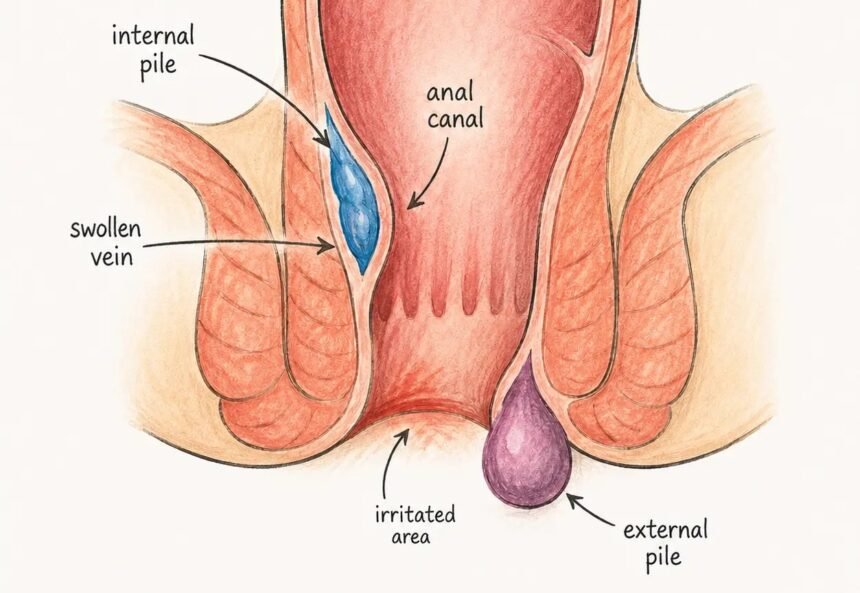
Piles, also called hemorrhoids, are swollen veins in or around the anus. They can cause itching, pain, swelling, bleeding, mucus, and discomfort when sitting or passing stool. Many people also worry about smell. This can feel embarrassing, but it is a common concern and there are practical ways to manage it.
Piles themselves do not always smell. The smell usually comes from things linked with piles, such as mucus leakage, small stool leakage, sweating, poor cleaning because of pain, skin irritation, infection, or trapped moisture around the area. Some people also notice a smell when internal piles come out during bowel movements and cause mucus to leak onto underwear or toilet paper.
A mild smell after using the toilet can happen to anyone. But a strong, lasting, foul, or unusual smell should not be ignored, especially if it comes with bleeding, swelling, fever, pus, severe pain, or a lump that is getting worse. These signs may mean there is something more than simple piles.
This article explains why piles may smell, what you can do at home, when to see a doctor, and how to prevent the problem from returning. The goal is to keep the advice simple, practical, and easy to follow.
| Main question | Simple answer |
|---|---|
| Do piles smell by themselves? | Not usually |
| What causes the smell? | Mucus, leakage, sweat, poor cleaning, irritation, or infection |
| Can internal piles cause mucus? | Yes, mucus can happen with piles |
| Can poor hygiene make it worse? | Yes, especially if wiping is painful |
| Can smell mean infection? | Sometimes, especially with pus, fever, swelling, or strong pain |
| What helps most? | Gentle cleaning, dry skin, fiber, water, soft stools, and medical care when needed |
What Are Piles?
Piles are swollen veins around the anus or inside the lower rectum. They are similar to varicose veins, but they happen in the anal area. Some piles are inside the rectum and are called internal piles. Some are under the skin around the anus and are called external piles.
Piles can be small and mild, or they can become swollen, painful, and irritating. Some people only notice bleeding after passing stool. Others feel itching, mucus, swelling, or a lump. When piles cause moisture or make cleaning hard, smell can become a concern.
Health note: Piles are common and often improve with home care, but bleeding or symptoms that do not improve should be checked.
| Type of piles | Where they are | Common symptoms |
|---|---|---|
| Internal piles | Inside the rectum | Bleeding, mucus, feeling of fullness |
| External piles | Around the anus | Pain, swelling, itching, lump |
| Prolapsed piles | Internal piles that come out | Mucus, irritation, discomfort |
| Thrombosed piles | External pile with a clot | Severe pain, hard lump, swelling |
Why Piles Can Feel Embarrassing
Many people delay getting help because piles affect a private area. They may feel shy about smell, bleeding, itching, or leakage. But doctors and nurses see these problems often. It is better to ask for help early than wait until symptoms get worse.
Piles can affect daily life in simple ways. Sitting can feel uncomfortable. Walking may irritate the area. Wiping may hurt. A person may worry about underwear stains or smell. These problems are common and can often be improved.
Common concerns include:
- Smell after bowel movements
- Mucus on toilet paper
- Moisture in underwear
- Itching around the anus
- Pain when wiping
- Bright red blood after stool
- Swelling or lump
- Fear of sitting in public
- Worry about hygiene
| Concern | Why it can happen |
|---|---|
| Smell | Moisture, mucus, leakage, sweat |
| Itching | Skin irritation or mucus |
| Pain | Swollen external piles |
| Bleeding | Irritated internal piles |
| Damp feeling | Mucus or sweating |
| Staining | Mucus or small leakage |
Do Piles Smell
Piles do not normally have a smell on their own. The swollen vein itself is not usually the source of odor. The smell usually comes from what happens around the pile. For example, mucus may leak from the rectum, stool may not clean away fully, sweat may collect, or the skin may become irritated and moist.
If the area is painful, a person may wipe less thoroughly because wiping hurts. This can leave tiny stool particles behind and cause odor. If the skin stays damp, bacteria on the skin can grow more easily and make smell stronger.
Doctor-style note: “When someone says their piles smell, the first thing to check is usually moisture, mucus, leakage, cleaning difficulty, or infection signs, not the pile alone.”
| Cause of smell | How it happens |
|---|---|
| Mucus leakage | Internal piles can cause mucus on underwear or toilet paper |
| Stool leakage | Small amounts may stay after bowel movements |
| Sweating | Warm skin folds can trap moisture |
| Painful wiping | Cleaning may be incomplete |
| Skin irritation | Moist skin can smell stronger |
| Infection | May cause strong smell, pus, fever, or worsening pain |
When Smell Is Mild Versus Concerning
A mild smell after using the toilet or after sweating is not always a sign of a serious problem. It may improve with gentle cleaning, dry underwear, soft stools, and better bowel habits.
A strong or unusual smell needs more attention. If smell comes with pus, fever, severe pain, swelling, heavy bleeding, or a painful lump, it may not be just piles.
| Smell pattern | What it may suggest |
|---|---|
| Mild smell after stool | Hygiene or small residue |
| Damp smell in underwear | Mucus, sweat, or leakage |
| Strong foul smell | Infection or other issue possible |
| Smell with pus | Needs medical check |
| Smell with fever | Needs urgent advice |
| Smell with severe pain | Needs medical care |
Mucus Leakage and Piles
Mucus is a slippery fluid made by the bowel lining. It helps stool pass more easily. With internal piles, especially piles that prolapse, mucus can leak out and appear on toilet paper or underwear. This mucus may feel wet, sticky, or slimy. It can irritate the skin and may cause itching or odor if it stays on the skin.
Mucus leakage is one of the main reasons piles may seem to smell. The smell may become worse if mucus mixes with sweat, stool residue, or skin bacteria.
| Mucus sign | What you may notice |
|---|---|
| Wet feeling | Dampness around the anus |
| Sticky underwear | Mucus leakage |
| Itching | Skin irritation |
| Smell | Moisture and bacteria |
| Feeling not fully clean | Mucus after wiping |
| Staining | Marks on underwear |
What You Can Do About Mucus
The goal is to keep the area clean and dry without scrubbing the skin. Harsh wiping can make piles and skin irritation worse.
Helpful steps include:
- Clean gently after bowel movements
- Use plain water if toilet paper irritates
- Pat dry instead of rubbing hard
- Wear breathable cotton underwear
- Change underwear if damp
- Avoid scented wipes that sting
- Use barrier cream if advised by a clinician
- Treat constipation to reduce piles pressure
- See a doctor if mucus is heavy or ongoing
| Helpful action | Why it helps |
|---|---|
| Gentle washing | Removes mucus without injury |
| Patting dry | Reduces moisture |
| Cotton underwear | Allows better airflow |
| Soft stools | Reduces straining |
| Medical review | Finds the cause if mucus continues |
Stool Leakage and Incomplete Cleaning
Sometimes the smell linked with piles comes from small stool leakage or incomplete cleaning. Piles can make the anal area swollen and uneven, so stool may be harder to clean away fully. If piles are painful, wiping may also be difficult.
Some people feel like they still need to pass stool even after using the toilet. This can lead to repeated wiping, straining, and irritation. The more irritated the area becomes, the more moisture and odor may happen.
| Reason cleaning becomes hard | How it affects smell |
|---|---|
| Swollen piles | Stool may get trapped in folds |
| Pain | Person avoids wiping fully |
| Mucus | Makes area feel sticky |
| Loose stool | Harder to clean |
| Constipation | Straining worsens piles |
| Skin irritation | More moisture and odor |
Better Cleaning After Bowel Movements
Cleaning should be gentle. Rough wiping may make piles bleed or swell more. If dry toilet paper hurts, water-based cleaning may be more comfortable.
Helpful cleaning tips include:
- Wipe gently from front to back
- Use soft unscented toilet paper
- Rinse with water if possible
- Pat dry with clean tissue or towel
- Avoid rubbing hard
- Avoid strong scented products
- Do not use harsh soaps inside the anus
- Wash hands well after cleaning
- Change underwear if stained or damp
| Cleaning mistake | Better choice |
|---|---|
| Scrubbing hard | Gentle wiping |
| Using scented wipes often | Use plain water or unscented options |
| Leaving area damp | Pat dry |
| Ignoring loose stool | Manage diet and hydration |
| Holding stool too long | Go when the urge is natural |
Sweat and Moisture Around the Anal Area
The anal area can sweat like other skin folds. Sweat can mix with mucus or stool residue and create a smell. Tight clothing, hot weather, long sitting, exercise, and synthetic underwear can make moisture worse.
Moisture can also irritate the skin. Irritated skin may itch, burn, or feel sore. Scratching can make the skin break and raise the risk of infection.
| Moisture trigger | Why smell may increase |
|---|---|
| Tight underwear | Traps sweat |
| Long sitting | Less airflow |
| Hot weather | More sweating |
| Exercise | Sweat and friction |
| Mucus leakage | Adds dampness |
| Loose stool | Harder to clean |
| Synthetic fabric | May hold moisture |
How to Keep the Area Dry
Keeping the area dry can reduce odor and itching. The aim is comfort, not over-cleaning.
Helpful tips include:
- Wear loose cotton underwear
- Change underwear after sweating
- Pat the area dry after washing
- Avoid tight jeans for long periods
- Use breathable clothing
- Take breaks from sitting
- Avoid heavy scented powders unless advised
- Use a barrier cream if skin is irritated and a clinician says it is safe
- Treat mucus or leakage rather than only covering smell
| Dryness tip | Why it helps |
|---|---|
| Cotton underwear | Better airflow |
| Changing damp clothes | Reduces odor |
| Patting dry | Prevents trapped moisture |
| Loose clothing | Less friction |
| Sitting breaks | Less heat and pressure |
Infection and Strong Smell
A strong bad smell can sometimes mean infection or another problem. Piles can become very irritated, but a foul smell with pus, fever, worsening pain, spreading swelling, or feeling unwell needs medical attention.
An abscess near the anus can also cause pain, swelling, fever, and discharge. This is different from simple piles and needs urgent care. Do not assume every painful lump is piles.
Health note: Strong smell with pus, fever, or severe pain should be checked quickly.
| Infection warning sign | Why it matters |
|---|---|
| Pus or thick discharge | Possible infection |
| Fever | Body may be fighting infection |
| Severe pain | Could be abscess or clot |
| Swelling getting worse | Needs care |
| Red hot skin | Infection possible |
| Feeling very unwell | Medical review needed |
| Foul smell | Can happen with infection |
When to Seek Help Quickly
Do not wait if the symptoms suggest infection or a more serious condition. Early care can prevent the problem from worsening.
Seek medical care if you notice:
- Strong foul smell
- Pus or unusual discharge
- Fever
- Severe pain around the anus
- Painful swelling
- A lump that grows quickly
- Bleeding that is heavy or keeps returning
- Black or tar-like stool
- Dizziness with bleeding
- Trouble controlling stool
- Symptoms that do not improve after a week of home care
| Symptom | Best action |
|---|---|
| Mild smell only | Improve hygiene and watch |
| Smell with mucus | Manage moisture and see doctor if ongoing |
| Smell with pus | Medical care soon |
| Smell with fever | Urgent medical care |
| Heavy bleeding | Urgent medical advice |
| Severe pain | Medical check |
Bleeding and Smell
Piles can cause bright red blood after passing stool. Blood may appear on toilet paper, in the toilet bowl, or on the outside of stool. Bleeding from piles is often bright red, but any rectal bleeding should be taken seriously, especially if it is new, heavy, or keeps happening.
Bleeding itself may not be the main cause of smell. Smell is more often linked with mucus, stool residue, leakage, sweat, or infection. But bleeding can make the area harder to clean and may increase worry.
| Bleeding pattern | What to do |
|---|---|
| Small bright red blood once | Book a check if unsure |
| Repeated bleeding | See a healthcare professional |
| Heavy bleeding | Get urgent help |
| Black stool | Medical advice needed |
| Bleeding with pain and swelling | Medical check |
| Bleeding with dizziness | Urgent care |
Why Bleeding Should Not Be Assumed to Be Only Piles
Piles are a common cause of bright red bleeding, but they are not the only cause. Anal fissures, infections, bowel inflammation, polyps, and other bowel conditions can also cause bleeding. This is why persistent bleeding should be checked.
Important points:
- Bright red blood can happen with piles
- Painful bleeding may also happen with a small tear
- Dark or black stool needs medical advice
- Bleeding that keeps returning should be checked
- Bleeding with weight loss or bowel habit changes needs medical review
- Do not self-diagnose long-term bleeding
| Extra symptom with bleeding | Why it matters |
|---|---|
| Change in bowel habits | Needs medical review |
| Weight loss | Needs check |
| Severe pain | May not be simple piles |
| Fever | Infection or inflammation possible |
| Dizziness | Blood loss concern |
| Black stool | Needs medical advice |
Constipation and Straining
Constipation is one of the biggest reasons piles become worse. When stool is hard, a person may strain. Straining puts pressure on veins around the anus and can make piles swell, bleed, or come out. It can also make cleaning harder and increase irritation.
Hard stool can also cause small tears, pain, and fear of using the toilet. This can start a cycle. A person avoids the toilet because it hurts, stool becomes harder, and piles become worse.
| Constipation problem | How it affects piles |
|---|---|
| Hard stool | More pressure and pain |
| Straining | Swells piles |
| Long toilet time | Raises pressure |
| Incomplete emptying | More wiping and irritation |
| Less water | Stool becomes harder |
| Low fiber | Less stool softness |
How to Make Stool Easier to Pass
Soft, regular stool is one of the best ways to reduce piles symptoms and related smell. Changes should be gentle and steady.
Helpful steps include:
- Eat more fiber from food
- Drink enough water
- Do not ignore the urge to pass stool
- Avoid sitting on the toilet too long
- Avoid straining
- Walk daily if safe
- Ask a clinician about fiber supplements if needed
- Ask about stool softeners if constipation continues
- Keep a regular toilet routine
- Do not force bowel movements
| Helpful habit | Why it helps |
|---|---|
| Fiber | Adds bulk and softness |
| Water | Helps stool move |
| Walking | Supports bowel movement |
| Less toilet sitting | Reduces pressure |
| No straining | Protects piles |
| Regular routine | Helps bowel rhythm |
Diarrhea and Loose Stool
Loose stool can also make piles smell worse. Diarrhea can irritate the anal skin, increase wiping, and make it harder to stay clean. Acidic or frequent stool can burn the skin and cause itching or soreness. When skin is irritated, smell and dampness may become more noticeable.
People often think only constipation worsens piles, but diarrhea can be a problem too. Both hard stool and frequent loose stool can irritate the area.
| Loose stool issue | How it affects piles |
|---|---|
| Frequent wiping | Skin becomes sore |
| More moisture | Odor risk increases |
| Skin burning | Irritation and itching |
| Harder cleaning | Residue may remain |
| Urgency | Leakage may happen |
| Less control | Underwear stains possible |
What to Do If Loose Stool Is Making Smell Worse
If diarrhea lasts more than a short time, has blood, causes dehydration, or comes with fever, seek medical advice. For mild loose stool, gentle cleaning and hydration are important.
Helpful steps include:
- Drink water or oral fluids as advised
- Avoid harsh wiping
- Pat dry after cleaning
- Avoid foods that trigger diarrhea
- Eat gentle foods if your stomach is upset
- Use barrier cream if advised
- See a doctor if diarrhea lasts or has blood
- Do not overuse anti-diarrhea medicine without advice
- Wash underwear and towels well
- Keep the skin dry
| Symptom | Best step |
|---|---|
| Mild loose stool | Hydrate and clean gently |
| Diarrhea with blood | Medical advice |
| Diarrhea with fever | Medical advice |
| Severe dehydration signs | Urgent care |
| Ongoing loose stool | Doctor review |
Diet Tips to Reduce Piles Symptoms and Smell
Diet can help piles by making stool softer and easier to pass. Fiber is very important. It helps prevent constipation and reduces straining. Water is also important because fiber works better when the body has enough fluid.
A diet that supports bowel health can reduce mucus, irritation, and cleaning problems over time. It may not fix smell instantly, but it can reduce the pressure that makes piles worse.
| Food habit | How it helps |
|---|---|
| More fiber | Softer stool |
| More water | Helps stool pass |
| Regular meals | Supports bowel rhythm |
| Less spicy trigger foods | May reduce irritation in some people |
| Less highly processed food | May reduce constipation |
| Balanced meals | Supports digestion |
Fiber Foods That May Help
Add fiber slowly. A sudden big increase can cause gas or bloating. If you have a medical condition or special diet needs, ask a clinician first.
Fiber-rich foods include:
- Oats
- Whole grains
- Lentils
- Beans
- Chickpeas
- Apples
- Pears
- Berries
- Vegetables
- Sweet potatoes
- Brown rice
- Nuts and seeds if safe for you
| Food | Why it may help |
|---|---|
| Oats | Gentle fiber |
| Lentils | High fiber and filling |
| Apples | Fiber and fluid |
| Vegetables | Adds bulk |
| Beans | Supports stool softness |
| Whole grains | Helps regular bowel habits |
Foods That May Worsen Irritation for Some People
Not everyone reacts to the same foods. Some people notice more burning, loose stool, or irritation after certain foods.
Possible triggers include:
- Very spicy foods
- Too much caffeine
- Alcohol
- Greasy foods
- Very low-fiber meals
- Too much processed food
- Foods that personally cause diarrhea
- Foods that cause constipation for you
| Food pattern | Possible effect |
|---|---|
| Low fiber | Constipation |
| Too much caffeine | Loose stool in some people |
| Spicy foods | Burning or irritation in some people |
| Greasy meals | Digestive upset in some people |
| Processed foods | Less fiber |
| Not enough water | Hard stool |
Toilet Habits That Reduce Smell and Irritation
Toilet habits matter a lot. Sitting too long on the toilet can increase pressure around the anus. Straining can make piles worse. Repeated wiping can irritate the skin and increase moisture.
The goal is to pass stool without force, clean gently, and leave the area dry. Small changes can make a big difference.
| Toilet habit | Effect on piles |
|---|---|
| Straining | Increases pressure |
| Sitting too long | Worsens swelling |
| Rushing without emptying | May cause repeated trips |
| Rough wiping | Irritates skin |
| Gentle cleaning | Reduces odor and soreness |
| Going when urge comes | Helps avoid hard stool |
Better Toilet Routine
A simple routine can reduce piles pressure and odor.
Try this:
- Go when you feel a natural urge
- Do not force stool
- Do not sit on the toilet for a long time
- Keep your feet supported if it helps posture
- Breathe slowly and avoid pushing hard
- Clean gently after stool
- Pat dry
- Wash hands well
- Leave the toilet if nothing happens after a short time
- Return later when the urge comes back
| Bad habit | Better habit |
|---|---|
| Sitting and scrolling on phone | Finish and leave |
| Pushing hard | Breathe and relax |
| Ignoring urge | Go when natural |
| Rough wiping | Gentle cleaning |
| Staying damp | Pat dry |
Home Care for Piles Smell
Home care focuses on three things: keeping the area clean, keeping it dry, and reducing the piles pressure. If the smell is mild and linked with mucus or moisture, these steps may help. If smell is strong or comes with warning signs, medical care is needed.
You should avoid harsh products. Strong soaps, perfumes, scented wipes, and over-cleaning can make the skin sore. The anal area is sensitive and needs gentle care.
| Home care goal | What to do |
|---|---|
| Clean | Use gentle water-based cleaning |
| Dry | Pat dry and wear breathable underwear |
| Reduce pressure | Avoid straining and long toilet sitting |
| Soften stool | Eat fiber and drink water |
| Soothe discomfort | Warm sitz bath may help |
| Watch warning signs | Seek care if symptoms worsen |
Simple Home Care Steps
These steps are practical and safe for many mild cases.
Helpful steps include:
- Clean after bowel movements
- Use water if dry paper hurts
- Pat dry gently
- Change underwear daily or when damp
- Take warm sitz baths for discomfort
- Eat fiber-rich foods
- Drink water
- Avoid straining
- Avoid long toilet sitting
- Use over-the-counter creams only as directed
- See a doctor if symptoms do not improve
| Step | Why it helps |
|---|---|
| Warm sitz bath | May soothe pain and itching |
| Fiber | Reduces hard stool |
| Water | Helps stool softness |
| Pat dry | Reduces moisture odor |
| Gentle cleaning | Removes mucus and stool residue |
| Medical advice | Needed if home care fails |
What Not to Do
Some actions can make piles, smell, and irritation worse. Trying to scrub away odor with strong products can damage the skin. Using scented sprays may cover smell for a short time but can irritate the area. Sitting too long on the toilet can make piles swell more.
Do not try to push, cut, drain, or treat a painful lump at home. If there is severe pain or swelling, a doctor should check it.
| Mistake | Why to avoid it |
|---|---|
| Scrubbing hard | Causes soreness and bleeding |
| Using scented sprays | Can irritate skin |
| Using harsh soap | Dries and burns skin |
| Sitting on toilet too long | Increases pressure |
| Straining | Worsens piles |
| Ignoring heavy bleeding | May miss serious cause |
| Trying to drain a lump | Can cause injury or infection |
Safer Choices
Choose gentle, steady care instead of harsh treatment.
Safer choices include:
- Use plain water for cleaning
- Pat dry instead of rubbing
- Wear breathable underwear
- Use creams only as directed
- Ask a pharmacist or doctor before using products
- Get medical care for severe pain
- Seek help for bleeding that continues
- Treat constipation early
- Avoid hiding symptoms out of embarrassment
| Problem | Safer response |
|---|---|
| Odor | Clean gently and keep dry |
| Itching | Avoid scented products |
| Hard stool | Add fiber and water |
| Severe pain | See a clinician |
| Mucus leakage | Keep dry and get checked if ongoing |
| Bleeding | Seek advice if repeated |
Medicines and Creams for Piles
Over-the-counter creams, ointments, and suppositories may help mild pain, swelling, and itching. They are usually for short-term use. Using them too long can irritate the skin or hide a problem that needs medical care.
Some products may include soothing ingredients. Some may include mild steroid ingredients. Steroid creams should not be used longer than directed unless a clinician says so.
| Product type | What it may help |
|---|---|
| Hemorrhoid cream | Itching and swelling |
| Ointment | Skin comfort |
| Suppository | Internal symptoms in some cases |
| Pain reliever | General pain relief if safe |
| Fiber supplement | Softer stool |
| Stool softener | Easier bowel movements |
How to Use Products Safely
Follow the label and ask a pharmacist or doctor if you are unsure. Do not use products inside the body unless they are made for that use.
Safety tips include:
- Read the label
- Use only as directed
- Do not use many products at once without advice
- Stop if rash or burning gets worse
- Do not use steroid creams too long
- Ask for help if symptoms last more than a week
- Tell a clinician if you are pregnant, have other health issues, or take medicines
- Do not use someone else’s prescription
| Safety point | Why it matters |
|---|---|
| Follow label | Avoids overuse |
| Short-term use | Prevents irritation |
| Ask pharmacist | Helps choose safely |
| Stop if worse | Product may not suit you |
| Medical review | Needed if symptoms continue |
When Piles Need Medical Treatment
Many piles improve with home care, but some need medical treatment. If bleeding continues, piles prolapse often, pain is severe, or symptoms keep returning, a clinician may suggest treatment.
Medical treatments can include office procedures or surgery for more serious cases. These decisions depend on the type and severity of piles.
| Medical treatment | When it may be used |
|---|---|
| Rubber band ligation | Bleeding or prolapsing internal piles |
| Sclerotherapy | Some internal piles |
| Infrared treatment | Some internal piles |
| Clot treatment | Painful thrombosed external pile in selected cases |
| Surgery | Severe or repeated piles |
| Exam and tests | When diagnosis is unclear |
What a Doctor May Check
A doctor may ask about bleeding, pain, bowel habits, smell, mucus, diet, medicines, and family history. They may examine the area and may use a small tool to look inside the anus or rectum if needed.
A doctor may check:
- Whether it is piles or another problem
- Whether there is infection
- Whether bleeding needs more testing
- Whether mucus is from piles or another condition
- Whether skin irritation is present
- Whether constipation or diarrhea is causing symptoms
- Whether treatment is needed
| Check | Why it helps |
|---|---|
| Medical history | Finds triggers |
| Physical exam | Confirms piles or another cause |
| Rectal exam | Checks internal problems |
| Anoscopy | Looks at internal piles |
| Blood tests | May be used if bleeding is heavy |
| Referral | Needed for complex symptoms |
Other Conditions That Can Cause Smell
Smell around the anus is not always from piles. Other conditions can cause discharge, itching, leakage, or odor. This is why strong or lasting smell should be checked, especially if home care does not help.
Other possible causes include anal fissure, fistula, abscess, skin infection, diarrhea, bowel inflammation, poor bowel control, fungal skin infection, or certain skin conditions. Some of these need medical treatment.
| Other condition | Possible signs |
|---|---|
| Anal fissure | Sharp pain with stool, bright blood |
| Abscess | Severe pain, swelling, fever |
| Fistula | Ongoing drainage or smell |
| Skin infection | Red, sore, warm skin |
| Diarrhea | Frequent loose stool and irritation |
| Fungal rash | Itching, redness, moist rash |
| Bowel inflammation | Mucus, blood, diarrhea, pain |
Clues It May Not Be Simple Piles
You should think beyond piles if symptoms do not match the usual pattern or if they are getting worse.
Get checked if you have:
- Strong smell that does not improve
- Pus or ongoing discharge
- Fever
- Severe pain
- Swelling that grows
- Blood mixed with stool
- Change in bowel habits
- Weight loss
- Night symptoms
- New leakage or loss of control
- Symptoms lasting more than a week despite care
| Clue | Why it matters |
|---|---|
| Pus | Infection possible |
| Fever | Body infection sign |
| Ongoing drainage | Fistula or abscess possible |
| Blood mixed in stool | Needs medical review |
| Weight loss | Needs proper check |
| Worsening pain | Not simple irritation |
How to Talk to a Doctor About Smell
It can feel awkward to talk about piles smell, but clear words help the doctor understand the problem. You do not need to feel ashamed. Smell, mucus, itching, and leakage are medical symptoms.
Try to explain when the smell happens, how strong it is, and whether there is mucus, bleeding, pain, swelling, or leakage. This helps the doctor decide what to check.
| What to mention | Why it helps |
|---|---|
| When smell happens | Shows pattern |
| Mucus or discharge | Points to possible cause |
| Bleeding | Needs review |
| Pain level | Helps judge severity |
| Bowel habits | Constipation or diarrhea may be involved |
| Hygiene routine | Shows irritation risk |
| Products used | Some may worsen symptoms |
Useful Phrases to Use
Simple phrases can make the visit easier.
You can say:
- “I notice a smell after bowel movements.”
- “I see mucus on toilet paper.”
- “My underwear feels damp.”
- “Wiping hurts, so cleaning is difficult.”
- “I have itching and moisture around the area.”
- “There is bleeding after I pass stool.”
- “There is a painful lump.”
- “The smell is strong and does not go away.”
- “I am worried there may be infection.”
| Less clear phrase | Clearer phrase |
|---|---|
| Something feels wrong | I have mucus and itching |
| It smells bad | I notice odor with dampness |
| I have piles | I have bleeding, swelling, and pain |
| I cannot clean well | Wiping hurts and leaves irritation |
| It is embarrassing | I need help with smell and leakage |
Daily Prevention Plan
Preventing piles smell means preventing moisture, leakage, constipation, and irritation. The best plan is simple and consistent. Focus on stool softness, gentle cleaning, dry skin, and less pressure.
If symptoms return often, prevention may need medical support. Some piles need treatment beyond home care.
| Prevention goal | Simple action |
|---|---|
| Softer stool | Fiber and water |
| Less pressure | Avoid straining |
| Less moisture | Keep area dry |
| Less odor | Clean gently after stool |
| Less swelling | Avoid long toilet sitting |
| Better control | Treat diarrhea or constipation |
| Early help | See doctor when symptoms continue |
Simple Daily Checklist
Use this checklist to reduce smell and irritation.
Daily checklist:
- Drink enough water
- Eat fiber-rich foods
- Do not strain during bowel movements
- Do not sit on the toilet too long
- Clean gently after stool
- Pat dry
- Wear breathable underwear
- Change damp underwear
- Move your body daily if safe
- Avoid harsh scented products
- Treat constipation early
- Get medical advice if symptoms continue
| Daily habit | Why it helps |
|---|---|
| Fiber | Softer stool |
| Water | Easier bowel movements |
| Gentle cleaning | Less residue |
| Dry underwear | Less odor |
| Less toilet time | Less pressure |
| Movement | Helps bowel function |
Practical Example: Why Smell Happens After Bowel Movements
A person with internal piles may pass stool and notice bright red blood or mucus. Because the area feels sore, they wipe quickly. Some mucus remains, and the area stays damp. Later, sweat mixes with the mucus and causes smell. The person may think the piles themselves smell, but the real problem is moisture and incomplete cleaning caused by irritation.
A better plan would be gentle cleaning with water, patting dry, wearing breathable underwear, adding fiber, drinking water, and avoiding straining. If mucus or bleeding continues, the person should see a doctor.
| Problem step | Better step |
|---|---|
| Painful wiping | Use gentle water cleaning |
| Damp skin | Pat dry carefully |
| Hard stool | Add fiber and water |
| Long toilet sitting | Leave sooner |
| Repeated smell | Get checked if ongoing |
| Bleeding continues | Medical review |
Practical Example: Smell With Severe Pain
A person has a painful lump near the anus. The pain gets worse, the skin feels warm, and there is a strong smell with discharge. This may not be simple piles. It could be infection or abscess. This needs medical care.
Warning pattern includes:
- Severe pain
- Growing swelling
- Warm skin
- Fever
- Pus or discharge
- Strong foul smell
- Feeling unwell
| If this happens | Best action |
|---|---|
| Mild itching only | Home care may help |
| Smell with mucus | Manage moisture and get checked if ongoing |
| Smell with severe pain | Medical care |
| Smell with fever | Urgent care |
| Smell with pus | Urgent medical review |
Unique Insight: The Moisture Smell Cycle
A helpful way to understand piles smell is to think about a moisture smell cycle. Piles can cause mucus, swelling, or pain. Pain makes cleaning harder. Mucus and sweat keep the skin damp. Damp skin becomes irritated. Irritated skin itches and may smell more. Scratching or harsh wiping makes the skin worse. Then the cycle continues.
The goal is to break the cycle gently. You do not need harsh cleaning. You need better stool softness, careful cleaning, dry skin, and medical advice when symptoms do not settle.
| Cycle step | What happens |
|---|---|
| Piles swell | Area becomes uneven or sore |
| Mucus leaks | Skin becomes damp |
| Wiping hurts | Cleaning may be incomplete |
| Moisture stays | Odor and itching increase |
| Skin gets irritated | Burning or soreness starts |
| Scratching happens | Skin may worsen |
How to Break the Cycle
Breaking the cycle takes small steady steps.
Helpful actions include:
- Soften stool with fiber and water
- Avoid straining
- Clean gently with water
- Pat dry fully
- Wear cotton underwear
- Change damp clothing
- Use sitz baths for comfort
- Avoid scented products
- Treat diarrhea if present
- See a doctor for ongoing mucus, bleeding, or smell
| Cycle problem | Cycle breaker |
|---|---|
| Hard stool | Fiber and water |
| Mucus | Gentle cleaning and medical review if ongoing |
| Dampness | Pat dry and change underwear |
| Itching | Avoid scented products |
| Swelling | Avoid straining and long toilet sitting |
| Repeated symptoms | Doctor check |
Common Myths About Piles and Smell
There are many myths about piles. Some people think smell always means poor hygiene. That is not fair or accurate. Smell can happen because piles cause mucus, leakage, pain, and moisture. Hygiene matters, but the medical problem also needs attention.
Another myth is that piles are always harmless. Many cases are mild, but bleeding, severe pain, swelling, or discharge should be checked.
| Myth | Truth |
|---|---|
| Piles always smell | Piles themselves usually do not smell |
| Smell always means poor hygiene | Mucus, leakage, and moisture can cause smell |
| Bleeding is always piles | Other causes can bleed too |
| Strong pain is normal | Severe pain needs a check |
| Harsh cleaning fixes odor | It can make irritation worse |
| Piles always go away forever | They can return if triggers remain |
Better Ways to Think About the Problem
A better way to think about smell is to ask what is feeding it. Is there moisture? Mucus? Stool residue? Sweat? Painful cleaning? Infection signs? Once you know the likely source, it becomes easier to manage.
Better thinking includes:
- Smell is a symptom
- Moisture often plays a big role
- Mucus can happen with internal piles
- Pain can make cleaning harder
- Harsh products may worsen irritation
- Bleeding should be checked if repeated
- Infection signs need quick care
| Old thinking | Better thinking |
|---|---|
| I am dirty | I may have mucus or moisture from piles |
| I should scrub harder | I should clean gently and dry well |
| It is only piles | I should watch for warning signs |
| I cannot talk about this | Doctors treat this often |
| Smell is the main problem | The cause of smell needs care |
Final Thoughts
Piles do not usually smell by themselves. The smell often comes from mucus leakage, small stool residue, sweating, damp underwear, painful cleaning, skin irritation, or infection. Mild odor may improve with gentle cleaning, keeping the area dry, eating more fiber, drinking water, and avoiding straining.
You should not feel ashamed about this problem. Piles are common, and smell can happen when the area stays moist or irritated. The best approach is gentle care, not harsh scrubbing. Clean with care, pat dry, wear breathable underwear, and focus on soft regular stools.
See a doctor if smell is strong, does not improve, or comes with mucus that keeps leaking, bleeding, severe pain, swelling, pus, fever, or a painful lump. Also get medical advice if symptoms do not improve after about a week of home care. A doctor can check whether it is piles or another condition and suggest the right treatment.
| Final takeaway | Simple meaning |
|---|---|
| Piles do not usually smell alone | Odor often comes from moisture or leakage |
| Mucus can cause dampness | Internal piles may cause mucus |
| Gentle cleaning matters | Harsh wiping can worsen irritation |
| Fiber and water help | Softer stool reduces pressure |
| Strong smell needs attention | Infection or another issue may be present |
| Repeated bleeding needs checking | Do not assume it is only piles |
Simple Closing Checklist
Ask yourself these questions if you are worried about piles smell:
- Is there mucus on toilet paper?
- Does underwear feel damp?
- Is wiping painful?
- Is there itching or burning?
- Do I have constipation?
- Do I strain during bowel movements?
- Do I sit on the toilet too long?
- Is there bleeding?
- Is there pus or strong discharge?
- Is there fever?
- Is there severe pain?
- Has the smell lasted despite good care?
| If your answer is yes | Best next step |
|---|---|
| Mucus or dampness | Clean gently and keep dry |
| Constipation | Increase fiber and water |
| Straining | Change toilet habits |
| Mild smell only | Improve hygiene and monitor |
| Bleeding keeps happening | See a healthcare professional |
| Severe pain, pus, or fever | Seek urgent medical care |
| Symptoms last more than a week | Book a medical visit |