


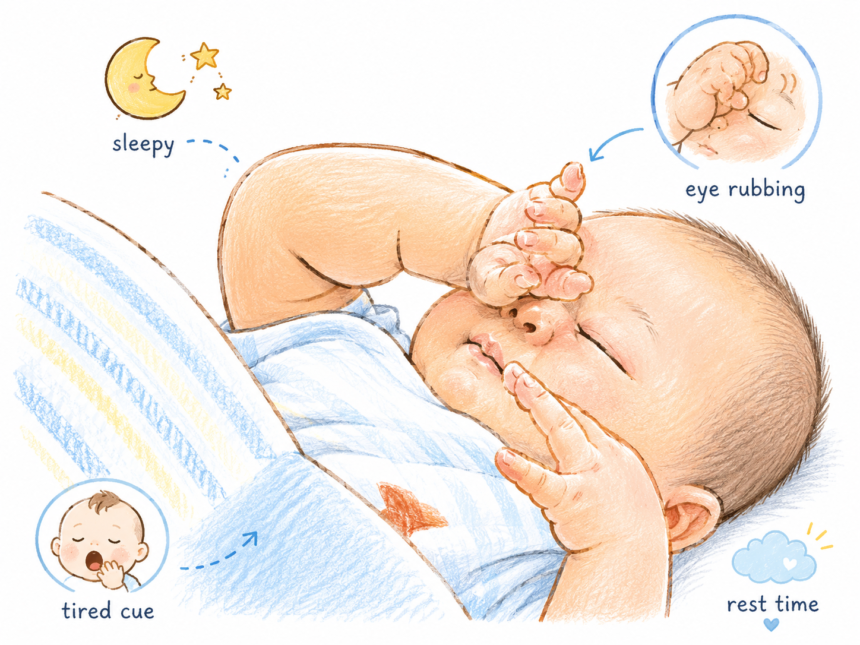
Baby rubbing eyes is one of those small actions that can make parents stop and wonder. Sometimes it simply means the baby is tired. Sometimes it happens because the eyes feel itchy, dry, watery, or uncomfortable. In other cases, eye rubbing may appear with redness, swelling, sticky discharge, fever, or unusual crying, which needs more attention.
The key is not to panic and not to ignore the whole picture. A baby cannot say, “My eye feels itchy,” or “I am sleepy,” so parents have to read small signs. Eye rubbing alone is often not serious. Eye rubbing with other symptoms can give a clearer clue.
A useful way to think about it is this: the rubbing is not the diagnosis. It is a signal. The parent’s job is to look at what came before it, what comes with it, and what happens after it.
Medical note: This article is for general parent education only. It does not replace advice from a doctor, health visitor, pediatrician, or eye specialist. Babies, especially newborns, should be checked quickly if they have red eyes, swollen eyelids, thick discharge, fever, injury, or seem unwell.
| What parents notice | What it may mean | What to do first |
|---|---|---|
| Rubbing eyes before nap time | Sleepiness | Start a calm sleep routine |
| Rubbing with yawning and turning away | Tired or overstimulated | Reduce noise, light, and handling |
| Rubbing with watery eyes | Irritation, allergy, or blocked tear duct | Clean gently and watch other symptoms |
| Rubbing with red eyes | Infection, irritation, allergy, or injury | Contact a healthcare professional if baby is young or symptoms persist |
| Rubbing with sticky yellow or green discharge | Possible infection | Seek medical advice |
| Rubbing after dust, smoke, perfume, or pet contact | Eye irritation | Remove trigger and clean hands |
| Rubbing with swelling or baby cannot open eye | More serious problem | Seek urgent medical help |
Why Babies Rub Their Eyes
Babies rub their eyes because the eye area is sensitive. The skin around the eye is thin, the surface of the eye reacts quickly to dryness or irritation, and babies do not yet understand how to manage discomfort safely. They may rub because they are tired, but they may also rub because their hands have found their face and the movement feels soothing.
A newborn may bring their hands toward the face without meaning to rub the eyes. An older baby may rub more on purpose when sleepy, upset, or itchy. Parents often notice a pattern after a few days. The rubbing may happen at the same time each morning, before naps, after outdoor walks, during feeding, or when the baby wakes from sleep.
A simple parent habit can help: write down when it happens. The time, room, weather, sleep stage, feeding stage, and symptoms around the eye can show a pattern that memory may miss.
| Pattern | Possible clue | Parent check |
|---|---|---|
| Rubbing near nap time | Baby is ready for sleep | Check wake window and sleepy cues |
| Rubbing after outdoor time | Pollen, dust, wind, or sunlight | Look for watery eyes or sneezing |
| Rubbing after bath | Soap, shampoo, steam, or towel fibers | Review products used |
| Rubbing after pet contact | Irritation or allergy trigger | Wash baby’s hands and clean nearby surfaces |
| Rubbing with one watery eye | Blocked tear duct or local irritation | Check if eye is red or swollen |
| Rubbing both eyes often | Tiredness, dryness, allergy, or irritation | Look for pattern across the day |
Helpful parent checks include:
- Look at both eyes in natural light.
- Check if the white part of the eye is clear or red.
- Look for sticky discharge, crusting, or swelling.
- Notice if the baby is eating normally.
- Notice if the baby is playful or unusually upset.
- Check if rubbing stops after sleep.
- Check if rubbing worsens in a certain room.
- Keep the baby’s nails trimmed to reduce scratches.
Sleepiness Is the Most Common Reason
The most common reason babies rub their eyes is tiredness. Babies use body language before they cry. Eye rubbing is often part of a sleep signal group. It may appear with yawning, slow blinking, staring away, pulling ears, fussing, sucking fingers, or turning the head away from toys and faces.
Many parents wait until crying starts before starting sleep time. By then, the baby may already be overtired. Eye rubbing can be an early warning sign. When you respond at this stage, sleep may be easier.
The simple rule is this: if eye rubbing happens near the end of a usual wake period and the baby also looks sleepy, try a calm sleep routine.
| Sleepy sign | What it looks like | What parents can do |
|---|---|---|
| Eye rubbing | Baby rubs one or both eyes with fists | Start nap or bedtime routine |
| Slow blinking | Eyelids look heavy | Reduce light and noise |
| Looking away | Baby stops engaging with toys or faces | Stop active play |
| Yawning | Mouth opens wide, body relaxes | Move to sleep space |
| Fussing | Baby sounds annoyed, not hungry | Keep routine calm |
| Ear pulling | Baby pulls or rubs ears while tired | Check for other illness signs too |
| Staring | Baby looks blank or distant | Avoid more stimulation |
How to Tell Sleepy Rubbing From Something Else
Sleepy rubbing usually has a pattern. It happens when the baby has been awake for a while. It improves after a nap. The eyes are usually not very red, swollen, or sticky. The baby may be cranky but settles with sleep support.
Rubbing from irritation may happen at random times. It may continue after rest. The baby may blink more, have watery eyes, or rub harder. One eye may look more affected than the other.
A useful parent test is the “sleep response check.” If the baby rubs eyes, then sleeps, wakes comfortable, and the eyes look normal, tiredness was likely. If rubbing continues after good sleep, look for another cause.
| Feature | Sleepy rubbing | Possible irritation or illness |
|---|---|---|
| Timing | Before nap or bedtime | Any time |
| Eye color | Usually normal | May be red or pink |
| Discharge | Usually none | May be watery, sticky, yellow, or green |
| Baby mood | Tired or fussy | Irritable, uncomfortable, or unwell |
| After sleep | Often improves | May continue |
| One eye or both | Often both | One or both |
| Other signs | Yawning, slow blinking | Swelling, tearing, crusting, fever, sneezing |
What helps with sleepy rubbing:
- Start sleep routine when rubbing begins, not after long crying.
- Dim the room.
- Stop loud play.
- Use a steady bedtime pattern.
- Keep feeds calm if feeding is part of the routine.
- Avoid passing the baby from person to person when tired.
- Put mittens only if needed, and make sure they are safe and breathable.
- Trim nails often.
Overtired Babies May Rub More Hardly
A baby who misses the right sleep window may rub the eyes harder. Parents may think, “The baby is rubbing eyes but still fighting sleep.” This can happen when the baby is overtired. The body is tired, but the baby becomes harder to settle.
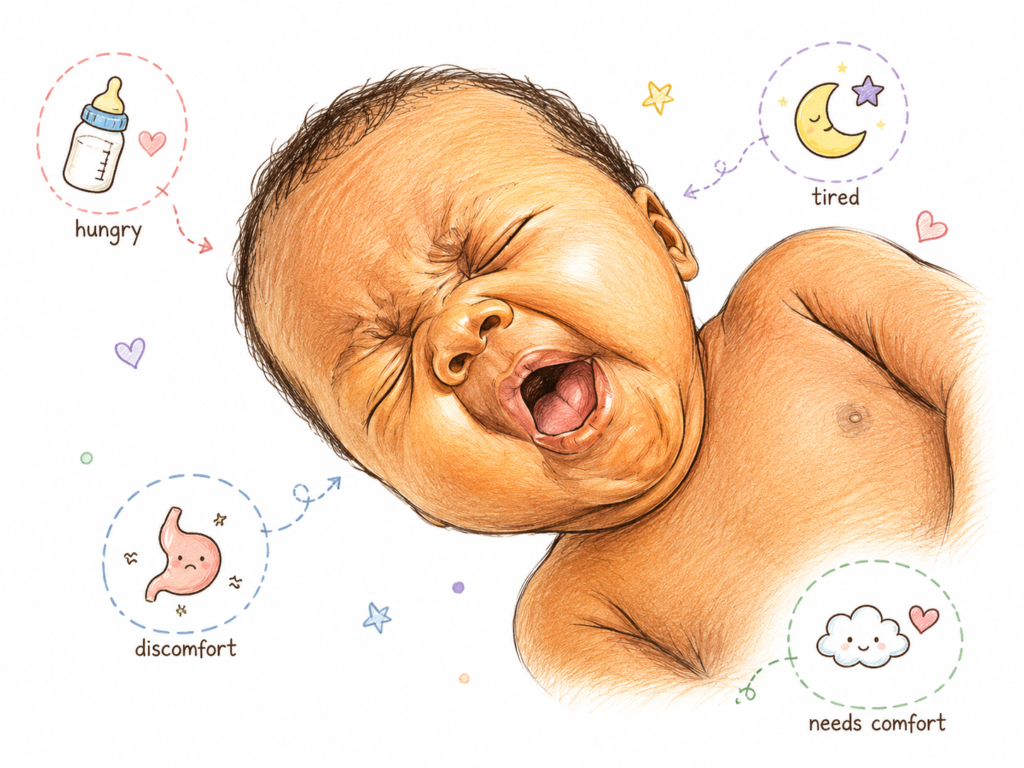
Overtired rubbing may come with arching, crying, clenched fists, red eyebrows, loud fussing, and short sleep. The baby may rub the face into your shoulder or bedding. Some babies wake themselves by rubbing their eyes during light sleep.
The answer is not to force sleep harshly. The answer is to lower stimulation and repeat a calm routine.
| Overtired sign | Parent-friendly meaning | Helpful response |
|---|---|---|
| Rubbing eyes hard | Baby is past the easy sleep stage | Make room calm quickly |
| Crying while rubbing | Baby needs help settling | Hold calmly, rock gently if that helps |
| Arching back | Baby may be overstimulated or uncomfortable | Pause and reset |
| Short naps | Baby may be stuck in tired cycle | Offer earlier next nap |
| Fighting sleep | Baby is tired but unsettled | Keep routine simple |
| Rubbing face on parent | Seeking comfort | Offer safe contact and quiet |
Practical example:
A baby usually stays awake for about ninety minutes in the morning. Today, visitors came, the room was bright, and the baby stayed awake for two hours. The baby starts rubbing eyes, crying, and pushing away the bottle. This does not always mean the baby is not hungry or is being difficult. It may mean the sleep window was missed.
What parents can try:
- Move to a darker room.
- Use a calm voice.
- Hold baby in a steady position.
- Avoid changing the routine many times in ten minutes.
- Try a shorter wind-down next time.
- Watch for earlier signs tomorrow.
Dry Eyes and Dry Air Can Make Babies Rub
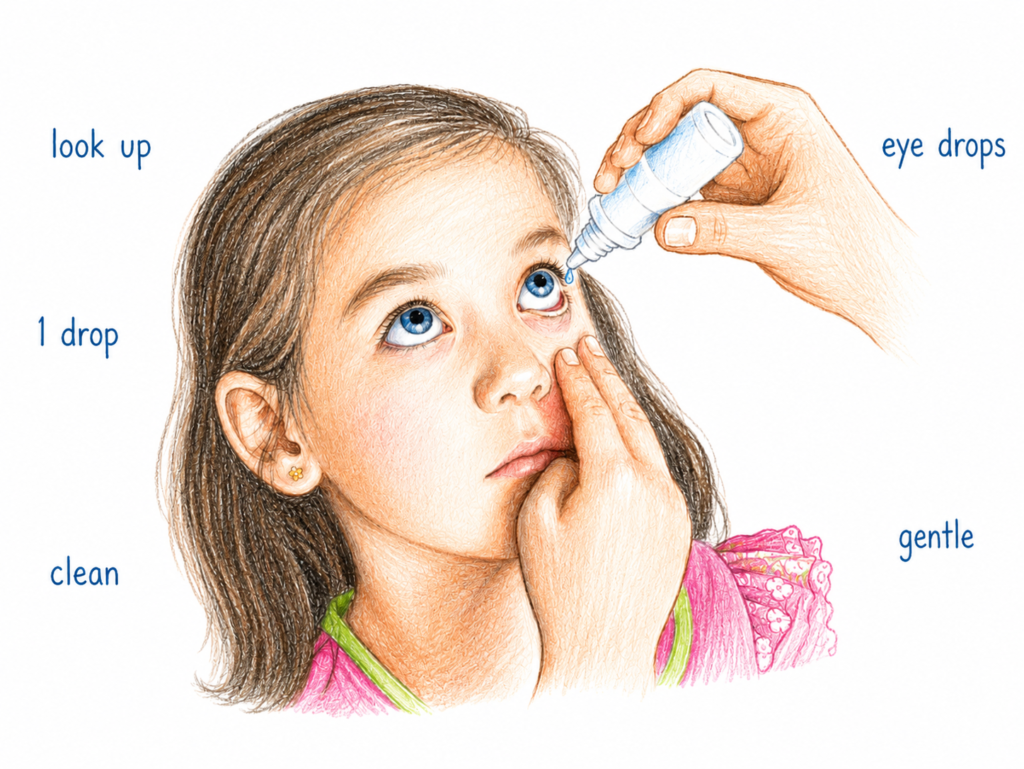
Dry air can irritate a baby’s eyes. This may happen in air-conditioned rooms, heated rooms, windy weather, or rooms with a fan blowing toward the baby. Babies may rub because the eyes feel dry, even if the eye does not look infected.
Dryness may also happen after long crying. Tears can dry on the skin and leave the area feeling tight. The baby may rub the eyes or cheeks because the face feels uncomfortable.
| Possible dry-eye trigger | What parents may notice | Simple change |
|---|---|---|
| Fan blowing toward baby | More rubbing during sleep or rest | Aim fan away |
| Air conditioning | Dry skin, dry nose, watery eyes | Keep airflow gentle |
| Heated room | More rubbing at night | Avoid overheating |
| Wind outside | Watery eyes after walk | Use stroller shade carefully |
| Long crying | Red skin around eyes | Clean gently after baby settles |
| Low humidity | Dry lips or skin too | Discuss safe room humidity with a clinician if needed |
Home Steps for Mild Dryness
For mild dryness without redness, swelling, discharge, or illness signs, parents can focus on comfort and prevention. Do not put random drops, oils, breast milk, herbal water, or home mixtures into the baby’s eyes. A baby’s eyes are delicate, and unsafe products can cause more irritation or infection.
Helpful steps include:
- Keep the baby away from direct fan air.
- Avoid smoke, incense, strong perfume, and cleaning spray near the baby.
- Wipe tears from the skin with clean damp cotton or soft cloth.
- Keep the face dry after cleaning.
- Use baby-safe skincare only around the outer skin if advised.
- Wash your hands before touching the baby’s face.
- Keep nails short.
| Safe action | Why it helps | What to avoid |
|---|---|---|
| Clean outer eyelids gently | Removes dried tears and dust | Do not rub the eyeball |
| Use clean water on cotton wool | Lowers irritation risk | Do not use scented wipes |
| Move fan away | Reduces drying | Do not point air at baby’s face |
| Keep smoke away | Protects eyes and lungs | Do not allow indoor smoking |
| Ask a doctor before drops | Babies need age-safe advice | Do not self-treat with adult eye drops |
Dust, Smoke, Perfume, and Household Products
Babies can rub their eyes when something in the environment irritates them. The trigger may be small and easy to miss. A new detergent, room spray, perfume, shampoo, dust from bedding, pet hair, or cooking smoke may be enough.
Parents often look for a medical reason first, but the home setting can matter a lot. A baby spends many hours near bedding, clothing, blankets, towels, and the caregiver’s shoulder. Anything on those surfaces can reach the eyes.
| Trigger | Where it may come from | Better option |
|---|---|---|
| Fragrance | Perfume, lotion, air freshener | Use fragrance-free products near baby |
| Smoke | Cigarettes, cooking smoke, incense | Keep baby away from smoke |
| Dust | Bedding, curtains, old toys | Wash and air items safely |
| Pet dander | Cats, dogs, carpets | Clean surfaces and wash hands |
| Soap | Bath products, shampoo | Use mild baby products carefully |
| Detergent | Clothes, sheets, burp cloths | Use baby-suitable detergent |
| Spray cleaner | Floors, furniture, glass | Clean when baby is away from area |
How to Find the Trigger
Parents can use a simple “change and watch” method. Change one thing at a time. If you change detergent, shampoo, room spray, and bedding all at once, you may not know what helped.
Better steps include:
- Stop strong room sprays near baby first.
- Wash baby bedding with a mild product.
- Keep pets away from the sleep area.
- Avoid perfume on the shoulder where baby rests.
- Clean dust from fans and curtains.
- Watch for improvement over several days.
- Note if rubbing comes back after the same trigger returns.
| Parent question | Why it matters |
|---|---|
| Did we change detergent recently? | Clothes and sheets touch baby’s face |
| Did someone wear strong perfume? | Baby may rub after being held |
| Is the fan dusty? | Air can blow dust toward the face |
| Did we use a new shampoo? | Bath products can reach the eyes |
| Was baby outside in wind? | Wind can dry and irritate eyes |
| Are pets close to baby’s blanket? | Hair and dander can irritate eyes |
Sticky Eye and Blocked Tear Duct
Some babies, especially young babies, have watery or sticky eyes because a tear duct is narrow or blocked. Tears normally drain from the eye toward the nose. If that tiny path is not open well, tears may pool. The eye may look watery even when the baby is not crying. The eyelashes may stick together after sleep.
A blocked tear duct is often not dangerous, but it can be annoying and messy. The important point is to tell the difference between a simple sticky eye and signs of infection.
| Sign | More like blocked tear duct | More like infection |
|---|---|---|
| Eye white | Usually not red | Red or pink |
| Discharge | Sticky or watery, often mild | Yellow or green, thicker |
| Eyelid | Usually not very swollen | Swollen or puffy |
| Baby comfort | Often well | May be upset or unwell |
| Fever | Usually absent | May be present |
| One eye | Common | Can be one or both |
| After sleep | Crust may appear | Eye may be stuck with redness |
What Parents Can Do for Sticky Eye
Gentle cleaning can help. The goal is to clean the eyelids, not scrub the eye. Use clean hands and clean material each time. Do not use the same cotton piece for both eyes. This reduces the chance of spreading germs from one eye to the other.
General cleaning steps:
- Wash and dry your hands.
- Use cooled boiled water or clean water as advised locally.
- Wet a clean cotton pad or soft clean cloth.
- Wipe from the inner corner outward, or as your healthcare provider advises.
- Use a fresh piece for each wipe.
- Dry the skin gently.
- Wash your hands again.
| Cleaning mistake | Why it can be a problem | Better habit |
|---|---|---|
| Using one cloth for both eyes | Can spread germs | Use separate cotton pieces |
| Scrubbing crust hard | Can irritate skin | Soften first with damp cotton |
| Touching the eyeball | Can hurt or infect | Clean eyelids only |
| Using home remedies in the eye | Can worsen irritation | Use medical advice only |
| Ignoring redness and swelling | May delay treatment | Contact a doctor |
Tear Duct Massage
Some healthcare professionals may advise tear duct massage. Parents should ask a doctor, health visitor, or eye clinician to show the correct method. The pressure and direction matter, and it should be gentle enough for a baby.
General points:
- Only do massage if advised.
- Wash hands first.
- Keep nails short.
- Stop if baby seems in pain.
- Do not press on the eyeball.
- Seek advice if swelling, redness, fever, or worsening discharge appears.
| Massage safety point | Reason |
|---|---|
| Clean hands | Lowers infection risk |
| Short nails | Lowers scratch risk |
| Gentle pressure | Protects delicate tissues |
| Correct place | Tear duct is near inner eye corner, not the eyeball |
| Stop if worse | Worsening signs need medical review |
Conjunctivitis and Eye Infection
Conjunctivitis means inflammation of the thin covering over the eye and inner eyelid. Parents may call it pink eye or red eye. It can be caused by viruses, bacteria, or allergies. In babies, red eyes with sticky discharge should be taken seriously, especially in newborns.
A baby with conjunctivitis may rub the eyes because they feel itchy, gritty, sore, or sticky. The eye may look pink or red. The eyelids may be puffy. There may be watery discharge or thicker yellow-green discharge. The lashes may stick together after sleep.
| Symptom | What it may suggest |
|---|---|
| Red or pink eye | Conjunctivitis, irritation, injury, or another eye problem |
| Yellow-green discharge | Possible bacterial infection |
| Watery discharge | Viral infection, allergy, or irritation |
| Puffy eyelids | Inflammation or infection |
| Baby avoids light | Needs medical advice |
| Fever with eye symptoms | Baby should be checked |
| Newborn with red eye | Needs urgent medical advice |
What Parents Should Not Do
Parents may hear many home ideas for baby eye infections. Some are unsafe. A baby’s eye should not be treated casually. Do not put breast milk, honey, herbal drops, oils, rose water, old antibiotic drops, adult eye drops, or saliva into the eye.
Even if something helped another child, it may not be safe for your baby. Eye infections can have different causes, and the wrong treatment can delay proper care.
| Avoid | Why |
|---|---|
| Old eye drops | May be expired or wrong type |
| Adult eye drops | Not always safe for babies |
| Breast milk in the eye | Not a proven safe treatment for infection |
| Honey | Unsafe for babies and not for eyes |
| Herbal water | Can carry germs or irritants |
| Rubbing the eye clean | Can scratch or worsen redness |
| Sharing towels | Can spread infection |
When Infection May Spread
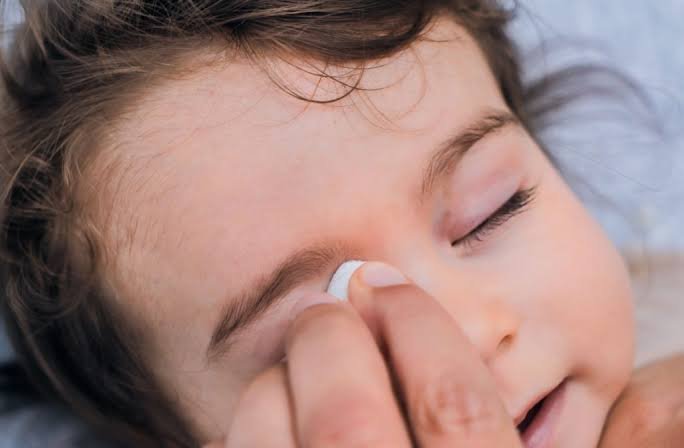
Viral and bacterial conjunctivitis can spread through hands, towels, bedding, and close face contact. Babies touch their faces often, and caregivers touch the baby many times each day. Good hygiene helps protect the baby and other family members.
Helpful steps include:
- Wash hands before and after cleaning the eye.
- Use a separate towel for the baby.
- Wash pillowcases, sheets, and cloths.
- Do not let siblings touch the baby’s eyes.
- Clean toys that the baby handles.
- Keep baby’s nails short.
- Ask a doctor about nursery or daycare rules if the baby attends.
| Hygiene habit | Benefit |
|---|---|
| Handwashing | Reduces germ spread |
| Separate towel | Protects other family members |
| Fresh cotton for each wipe | Reduces re-contamination |
| Cleaning toys | Removes discharge and germs |
| Avoiding face kissing during infection | Lowers spread risk |
Allergies Can Cause Itchy Eye Baby Rubbing Eyes Reasons
Allergies can make eyes itchy, red, and watery. Older babies and toddlers may rub both eyes again and again. They may also sneeze, have a runny nose, cough, or seem worse outside. Pollen, pets, dust, mold, and household products can all play a role.
True seasonal hay fever is less common in very young babies than in older children, but irritation and allergy-like symptoms can still happen. A doctor can help decide what is likely based on age, symptoms, season, and family history.
| Allergy clue | What parents may notice |
|---|---|
| Itchy eyes | Baby rubs both eyes often |
| Watery eyes | Clear tears without crying |
| Sneezing | More common after outdoor time |
| Runny nose | Clear mucus |
| Worse near pets | Rubbing after pet contact |
| Worse in dusty room | Rubbing in same room |
| No fever | Allergy is less likely to cause fever |
Simple Ways to Lower Allergy Triggers
Parents can reduce possible triggers without using medicine first. Medicine for babies should only be used with medical advice.
Practical steps include:
- Wash baby’s hands and face after outdoor time.
- Keep windows closed when pollen is high if this helps.
- Change clothes after dusty outdoor play.
- Keep pets away from the sleep space.
- Wash bedding often.
- Clean dust with a damp cloth.
- Avoid strong scents.
- Ask a doctor before allergy medicine.
| Trigger control | How it helps |
|---|---|
| Washing face | Removes pollen or dust from skin |
| Cleaning bedding | Lowers dust and pet hair |
| Damp dusting | Keeps dust from floating |
| Pet-free crib area | Reduces close exposure |
| Fragrance-free products | Reduces irritation |
| Medical advice before medicine | Keeps treatment age-safe |
Teething and Face Rubbing
Some babies rub the face, ears, cheeks, or eyes when teething. Teething discomfort can spread across the face, and babies may not know where the feeling comes from. This does not mean teeth directly hurt the eyes. It means the baby may rub nearby areas for comfort.
Teething is more likely if the baby is drooling, chewing, has swollen gums, wants to bite safe teething toys, and is around the usual teething age. Eye rubbing from teething should not cause thick eye discharge, major swelling, or a red eye.
| Teething sign | Eye problem sign |
|---|---|
| Drooling | Yellow-green eye discharge |
| Chewing safe objects | Red eye white |
| Gum swelling | Eyelid swelling |
| Mild fussiness | Baby seems very unwell |
| Wants pressure on gums | Avoids light |
| Rubbing cheeks and ears | Eye stuck shut with redness |
Comfort Steps for Teething-Related Rubbing
Use safe teething comfort methods. Keep the baby’s hands clean because fingers often go from mouth to eyes. This matters because germs can move easily.
Helpful steps include:
- Offer a clean, safe teething toy.
- Use a cool, not frozen, teething ring if suitable.
- Wipe drool to prevent skin irritation.
- Wash hands often.
- Keep nails short.
- Ask a doctor before pain medicine.
- Watch for eye symptoms that do not fit teething.
| Safe comfort habit | Why it helps |
|---|---|
| Clean teething toy | Gives baby something safe to chew |
| Cool teether | May soothe gums |
| Clean hands | Reduces germs near eyes |
| Short nails | Reduces scratches |
| Dry cheeks gently | Protects skin |
| Medical advice for medicine | Keeps dosing safe |
Eye Rubbing After Crying
Babies often rub their eyes after crying. Tears, salt, and skin wetness can make the area feel sticky or tight. The baby may also be tired after crying, so rubbing can come from both skin discomfort and sleepiness.
After crying, the eyelids may look a little red from pressure and tears. This should settle. If redness stays, swelling appears, or discharge develops, look further.
| After crying sign | Usually mild | Needs more attention |
|---|---|---|
| Red skin around eyes | Common after crying | Redness in the white of eye |
| Watery eyes | Expected | Thick discharge |
| Rubbing both eyes | Often tiredness | Rubbing one eye hard |
| Puffy eyes briefly | Can happen after crying | Severe swelling |
| Settles after sleep | Reassuring | Continues all day |
How to Help After Crying
The goal is gentle comfort. Avoid rubbing the area with a dry cloth because that can irritate the skin. Use a soft damp cloth if needed.
Helpful steps include:
- Hold baby calmly.
- Clean tear tracks gently.
- Pat dry, do not scrub.
- Offer sleep if baby is tired.
- Check for hunger, gas, nappy change, or overstimulation.
- Keep nails short.
- Watch if rubbing continues after baby calms.
| Parent action | Why it helps |
|---|---|
| Gentle wiping | Removes salty tears |
| Patting dry | Protects skin |
| Calm room | Helps baby settle |
| Sleep routine | Responds to tiredness |
| Checking basic needs | Finds the real reason for crying |
Scratches, Eyelashes, and Something in the Eye
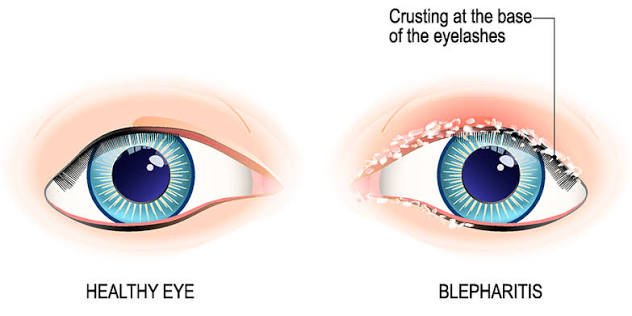
Sometimes a baby rubs because something is actually bothering the eye. It could be an eyelash, dust, a tiny fiber, or a small scratch. Babies may scratch themselves with their nails. A small scratch on the clear front part of the eye can be painful and needs medical advice.
If a baby suddenly rubs one eye hard, cries sharply, blinks a lot, or keeps one eye closed, think about irritation or injury. Do not try to remove anything stuck to the eye with fingers or tools.
| Sign | Possible concern |
|---|---|
| Sudden hard rubbing | Something may be in the eye |
| One eye watering | Local irritation or scratch |
| Baby keeps eye closed | Pain or light sensitivity |
| Crying when eye opens | Possible injury |
| Redness after scratch | Needs medical advice |
| Object or chemical exposure | Urgent medical help |
What to Do if Something May Be in the Eye
For mild dust or a loose eyelash, tears may wash it out. Parents can clean around the eye, but should not press on the eyeball. If symptoms continue, seek medical help.
Safer steps include:
- Wash your hands.
- Stop baby from rubbing if possible.
- Look gently without forcing the eye open.
- Rinse only if advised by a healthcare professional or emergency service.
- Do not use tweezers or cotton buds on the eye.
- Seek urgent help after chemical exposure, injury, or severe pain.
- Get advice if one eye stays red, watery, or closed.
| Do | Do not |
|---|---|
| Keep baby’s hands away gently | Do not press on the eyeball |
| Use clean hands | Do not use tools near the eye |
| Seek help if pain continues | Do not wait days with a painful red eye |
| Mention any injury | Do not hide chemical or product exposure |
| Bring product bottle if chemical involved | Do not try random home treatments |
Skin Problems Around the Eyes
Sometimes the eye itself is fine, but the skin around the eyes is itchy. Dry skin, eczema, drool rash, detergent sensitivity, or rubbing from tiredness can make the eyelids and under-eye area red. Babies may rub because the skin itches.
Eyelid skin is delicate. Products used on the cheeks may not be safe near the eyes. Parents should avoid strong creams close to the eyelid unless a clinician has advised them.
| Skin sign | Possible cause |
|---|---|
| Dry flaky skin near eyes | Dryness or eczema |
| Red patches on cheeks and eyelids | Skin irritation |
| Worse after bath | Soap or shampoo sensitivity |
| Worse after new detergent | Contact irritation |
| Baby scratches face | Itch or dry skin |
| Eye white stays clear | Skin issue more likely than eye infection |
Skin Care Near the Eyes
Keep skincare simple. Less is often better. Many products can irritate the eye if they move into it.
Helpful steps include:
- Use fragrance-free baby products.
- Keep bath water and shampoo away from eyes.
- Pat skin dry.
- Ask a doctor before using medicated creams near eyelids.
- Keep baby’s nails short.
- Use scratch mitts only when safe and needed.
- Watch for swelling, oozing skin, or worsening redness.
| Skin care choice | Safer approach |
|---|---|
| New cream near eye | Ask a clinician first |
| Strong scented lotion | Avoid near baby’s face |
| Rough towel rubbing | Pat dry gently |
| Frequent soap washing | Use mild cleaning only |
| Ignoring eczema flare | Ask for baby-safe treatment |
Screen Time, Bright Light, and Visual Tiredness
Babies can rub their eyes when they are visually tired. Bright lights, flashing screens, long periods of stimulation, or busy rooms can overwhelm them. Young babies do not need screens. Even older babies can become overstimulated by fast movement, loud sounds, and bright light.
Eye rubbing in this setting may not mean an eye disease. It may mean the baby’s brain and eyes need a break.
| Visual trigger | What baby may do |
|---|---|
| Bright ceiling light | Squint, turn away, rub eyes |
| Phone screen close to face | Stare, blink, become fussy |
| Busy visitors | Look away and rub face |
| Flashing toys | Become overstimulated |
| Long awake time | Rub eyes and cry |
| Sunlight | Watering, squinting |
How to Reduce Visual Overload
A calmer setting can reduce rubbing. Babies do not need constant entertainment. Quiet time is useful.
Helpful steps include:
- Keep screens away from baby’s face.
- Use soft lighting before sleep.
- Avoid flashing toys near bedtime.
- Give breaks during visitors.
- Watch for turning away as a tired sign.
- Use stroller shade outdoors without blocking airflow.
- Keep routines predictable.
| Simple change | Why it helps |
|---|---|
| Dim lights before nap | Helps sleep signals |
| Move screen away | Reduces visual strain |
| Fewer toys at once | Lowers overload |
| Quiet holding time | Helps baby reset |
| Break from visitors | Prevents overstimulation |
When Eye Rubbing Is a Habit
Some babies rub their eyes as a habit, especially when sleepy or settling. They may rub the whole face, pull ears, touch hair, or hold a blanket if they are old enough and safe to do so. Habits can be harmless, but eye rubbing can still cause scratches if nails are sharp.
Parents do not need to panic over every rub. Instead, reduce harm and watch for changes.
| Habit sign | Reassuring feature |
|---|---|
| Happens during sleep routine | Fits tired pattern |
| No redness | Less concerning |
| No discharge | Less likely infection |
| Baby feeds well | General health seems okay |
| Stops after sleep | Fits sleepy cue |
| Same pattern daily | Habit or routine cue |
How to Reduce Harm Without Making It a Battle
Trying to forcefully stop every rub can upset the baby and make bedtime harder. A softer approach works better.
Helpful steps include:
- Keep nails trimmed.
- Use soft sleep clothing.
- Offer a safe comfort routine.
- Put baby down before overtired rubbing starts.
- Keep hands clean.
- Distract gently during daytime rubbing.
- Seek advice if rubbing becomes constant.
| Parent goal | Gentle method |
|---|---|
| Protect eyes | Trim nails |
| Reduce rubbing | Start sleep earlier |
| Keep hands busy | Offer safe toy when awake |
| Avoid infection | Wash hands |
| Avoid stress | Do not scold or panic |
| Notice problems | Track redness, swelling, discharge |
How Age Changes the Meaning
A newborn rubbing eyes is different from a toddler rubbing eyes. Age matters. Newborns have developing tear ducts, limited hand control, and higher risk when red eyes appear. Older babies may show clearer sleep habits, teething behaviors, allergies, or environmental reactions.
Newborn eye symptoms should be handled with more caution. A red eye in a very young baby needs medical advice quickly.
| Baby age | Common possibilities | Parent caution |
|---|---|---|
| Newborn | Reflex hand movements, sticky eye, infection | Red eye or discharge needs quick advice |
| Young infant | Sleepiness, blocked tear duct, dry air | Watch feeding and fever |
| Older baby | Sleep cues, teething, irritation, allergies | Look for patterns |
| Toddler | Allergy, tiredness, screen strain, infection | Ask about pain if possible |
Newborn Eye Rubbing
Newborns may not truly “rub” with intention. Their hands brush the face. But if a newborn has red eyes, swelling, or discharge, do not assume it is normal. Newborn eye infection can need prompt treatment.
Parent checks for newborns:
- Is the eye white clear or red?
- Is there yellow or green discharge?
- Are eyelids swollen?
- Is baby feeding well?
- Does baby have fever or feel unusually cold?
- Is baby hard to wake?
- Did symptoms start soon after birth?
| Newborn sign | What to do |
|---|---|
| Mild sticky corner with clear eye | Ask health visitor or doctor if unsure |
| Red eye | Seek medical advice quickly |
| Swollen eyelid | Seek urgent advice |
| Thick discharge | Contact doctor |
| Fever or poor feeding | Urgent medical help |
| Baby seems very unwell | Emergency care |
What to Do at Home First
For a baby who is rubbing eyes but has no red eye, no swelling, no discharge, no fever, no injury, and is feeding well, parents can start with safe home steps.
The first goal is to lower irritation. The second goal is to prevent scratches. The third goal is to watch for change.
| Home step | Why it helps |
|---|---|
| Wash baby’s hands | Reduces germs near eyes |
| Trim nails | Reduces scratches |
| Clean face gently | Removes tears, dust, or milk |
| Start nap routine | Helps if baby is tired |
| Remove strong scents | Reduces irritation |
| Aim fan away | Reduces dryness |
| Watch symptoms | Helps decide if medical advice is needed |
A Simple Parent Plan
Use this plan when symptoms look mild:
- Check the eyes in good light.
- Wash your hands.
- Clean only the outside of the eyelids if needed.
- Move baby away from dust, smoke, scent, or wind.
- Offer sleep if baby is tired.
- Keep baby’s hands clean.
- Watch for redness, swelling, discharge, fever, or pain.
- Call a healthcare professional if symptoms worry you.
| Question | If yes | If no |
|---|---|---|
| Is baby due for sleep? | Start sleep routine | Look for irritation |
| Is one eye red? | Seek advice, especially if young baby | Keep watching |
| Is there thick discharge? | Contact doctor | Clean gently if watery only |
| Is eyelid swollen? | Seek urgent advice | Continue safe care |
| Did something enter the eye? | Get medical advice | Review environment |
| Is baby unwell? | Seek medical help | Monitor pattern |
When to Call a Doctor
Parents should seek medical advice when rubbing is not the only symptom. Eye problems can change quickly in babies. A doctor can check for infection, blocked tear duct, scratch, allergy, or other causes.
It is better to ask early than to wait with a baby who has a red, swollen, painful, or sticky eye.
| Call a doctor if | Why it matters |
|---|---|
| Baby is under two years and has red eye | Young children need careful checks |
| Newborn has red eyes | Needs prompt review |
| Yellow or green discharge appears | May need treatment |
| Eyelid is swollen | Could be infection or injury |
| Baby cannot open eye | Needs urgent assessment |
| Eye looks cloudy | Could affect vision |
| Baby seems very unwell | Eye symptom may be part of illness |
| Fever appears | Babies need age-based advice |
| Rubbing follows injury | Scratch or foreign body possible |
| Baby avoids light | Can be serious |
| Symptoms keep returning | Needs proper cause check |
Emergency Warning Signs
Some eye symptoms should not wait for a routine appointment. Seek urgent care if the baby has a serious injury, chemical exposure, severe swelling, a cloudy eye, major pain, or seems very unwell.
| Urgent sign | Action |
|---|---|
| Chemical in eye | Emergency help now |
| Eye injury | Urgent medical care |
| Baby cannot open eye due to swelling | Urgent care |
| Cloudy front of eye | Urgent care |
| Severe redness and pain | Urgent care |
| Baby under three months with fever | Urgent medical advice |
| Baby is floppy, very sleepy, or not feeding | Emergency care |
| Light seems painful | Urgent care |
Common Parent Mistakes
Most parents are trying to help, but baby eyes are delicate. A few common mistakes can make things worse.
| Mistake | Better choice |
|---|---|
| Using old eye drops | Ask doctor first |
| Rubbing crust away dry | Soften with damp cotton |
| Using scented wipes near eyes | Use clean water and cotton |
| Letting baby scratch with long nails | Trim nails |
| Assuming all discharge is blocked duct | Check redness and swelling |
| Waiting too long with newborn red eye | Seek medical advice quickly |
| Sharing towels during infection | Use separate towels |
| Trying many remedies at once | Keep care simple and safe |
Why Simple Care Is Often Best
Baby eye care should be clean, gentle, and careful. Parents do not need a long list of products. Many mild cases improve when the baby sleeps, the environment is calmer, and the eye area is kept clean.
Helpful simple care includes:
- Clean hands.
- Clean cotton.
- Gentle wiping.
- Short nails.
- Less dust and scent.
- Better sleep timing.
- Medical advice when warning signs appear.
| Simple care | Good reason |
|---|---|
| Handwashing | Prevents spreading germs |
| Gentle cleaning | Protects skin |
| Sleep routine | Fixes common tired rubbing |
| Trigger removal | Reduces irritation |
| Symptom tracking | Helps doctor if needed |
Practical Examples for Parents
Real-life examples can make eye rubbing easier to understand. These examples are not diagnoses. They show how parents can think through the situation.
| Situation | Likely clue | Best next step |
|---|---|---|
| Baby rubs eyes every evening after ninety minutes awake | Sleep cue | Start bedtime earlier |
| Baby rubs after being held by someone wearing perfume | Irritation | Avoid fragrance near baby |
| Baby wakes with one sticky eye but eye white is clear | Possible blocked tear duct | Clean gently and ask health visitor if unsure |
| Baby has red eye and yellow-green discharge | Possible infection | Contact doctor |
| Baby rubs both eyes after park visit and sneezes | Allergy or irritation | Wash face and reduce triggers |
| Baby rubs one eye hard after playing on dusty floor | Something in eye | Stop rubbing and seek advice if it continues |
| Baby rubs eyes with drooling and chewing | Teething may add face rubbing | Offer safe teething comfort but watch eyes |
Example of Sleepy Rubbing
A four-month-old baby starts rubbing both eyes around mid-morning. The baby yawns, turns away from a toy, and becomes fussy when the parent tries more play. The eyes are not red. There is no discharge. The baby feeds normally.
This pattern fits tiredness. The best step is a calm nap routine. Tomorrow, the parent can start the routine ten minutes earlier.
Helpful action list:
- Stop active play.
- Dim the room.
- Use the same nap steps.
- Keep voice quiet.
- Watch if rubbing stops after sleep.
Example of Possible Infection
A two-month-old baby rubs one eye. The white part looks pink. The lashes are stuck after sleep. There is yellow discharge in the corner. The eyelid looks puffy.
This needs medical advice. Cleaning can help comfort, but it should not replace a doctor’s check.
Helpful action list:
- Wash hands.
- Clean discharge gently.
- Use fresh cotton each time.
- Do not use old drops.
- Contact doctor.
Example of Environmental Irritation
A baby rubs eyes after a family cleaning day. The room smells strongly of spray cleaner. The baby has watery eyes but no fever and no thick discharge.
The first step is to move the baby to fresh air away from fumes and avoid using strong products near the baby. If symptoms continue, seek medical advice.
Helpful action list:
- Move baby away from smell.
- Wash caregiver hands.
- Wipe baby’s face gently.
- Ventilate safely.
- Avoid sprays near baby spaces.
How to Track Eye Rubbing
Tracking does not need to be complicated. A small note on your phone can help you see patterns. This is also useful if you need to speak with a doctor.
| What to write | Example |
|---|---|
| Time | After morning nap |
| Which eye | Left, right, or both |
| Eye color | Clear, pink, red |
| Discharge | None, watery, sticky, yellow, green |
| Baby mood | Happy, tired, crying, unwell |
| Trigger | Bath, pet, outdoor walk, fan, perfume |
| What helped | Sleep, cleaning, moving room |
| How long it lasted | Ten minutes, all day, repeated |
Parent Observation Template
You can copy this simple style:
- Baby rubbed both eyes before nap.
- No redness.
- No discharge.
- Baby yawned and looked away.
- Slept after ten minutes.
- Woke with normal eyes.
Or:
- Baby rubbed right eye after waking.
- Eye looked pink.
- Yellow discharge on lashes.
- Cleaned with cotton and water.
- Baby rubbed again.
- Called doctor for advice.
| Pattern after tracking | What it suggests |
|---|---|
| Always before sleep | Sleep cue |
| Always after outdoor walks | Pollen, wind, or dust |
| Always after bath | Product irritation |
| One watery eye since early infancy | Blocked tear duct possibility |
| Red eye with discharge | Needs medical advice |
| Hard rubbing after injury | Needs urgent check |
Prevention Tips
Parents cannot stop every eye rub. They can reduce the chance of irritation, scratches, and infection. Prevention is mostly about clean hands, safe sleep timing, and a low-irritant home setting.
| Prevention habit | Why it helps |
|---|---|
| Trim nails twice a week if needed | Reduces scratches |
| Wash hands often | Reduces germs |
| Keep towels separate | Reduces infection spread |
| Avoid smoke and strong scents | Protects eyes |
| Clean bedding | Lowers dust |
| Watch sleepy cues | Prevents overtired rubbing |
| Keep pets away from crib | Lowers hair and dander |
| Use mild baby products | Reduces skin and eye irritation |
Daily Eye Comfort Routine
A simple routine can help babies who rub often:
- Check eyes during morning face wash.
- Clean only if needed.
- Keep baby’s hands clean.
- Keep nails short.
- Watch for sleepy cues.
- Keep the sleep area free from strong scents.
- Use clean bedding.
- Keep fans away from the face.
- Ask for medical advice if symptoms change.
| Time of day | Quick check |
|---|---|
| Morning | Any crust, redness, or swelling? |
| Before nap | Is rubbing a sleepy cue? |
| After outdoor time | Any watery eyes or sneezing? |
| After bath | Any redness from products? |
| Bedtime | Are nails short and hands clean? |
Questions Parents Often Ask
Parents often ask the same questions because baby eye rubbing can look worrying. The answers depend on symptoms and age.
| Question | Simple answer |
|---|---|
| Is eye rubbing always bad? | No, it is often a sleepy cue |
| Should I stop every rub? | Gently reduce rubbing if frequent, but do not panic |
| Can rubbing scratch the eye? | Yes, especially with long nails |
| Can blocked tear duct cause rubbing? | Yes, watery or sticky eyes can feel irritating |
| Can teething cause eye rubbing? | It can cause face rubbing, but eye symptoms still matter |
| Are home eye drops safe? | Not unless advised for your baby |
| When should I worry? | Redness, swelling, discharge, fever, pain, injury, or newborn symptoms |
Can Baby Rub Eyes Because of Hunger?
Hunger can make babies fussy, but eye rubbing is more often linked with tiredness or eye comfort. Some babies rub eyes while crying from hunger because they are upset and moving their hands. Look at the full pattern.
| Hunger clue | Sleep clue |
|---|---|
| Rooting | Yawning |
| Sucking hands | Slow blinking |
| Calms with feeding | Calms with sleep routine |
| Feeding time is due | Wake window is ending |
| Cry grows stronger | Turns away from play |
Can Baby Rub Eyes While Sleeping?
Yes. Some babies rub during light sleep or while waking between sleep cycles. If the eyes look normal and the baby is otherwise well, it may be part of settling. If rubbing wakes the baby many times or causes redness, check nails, sleep timing, room dryness, and possible irritation.
| Sleep rubbing cause | Helpful step |
|---|---|
| Overtiredness | Earlier bedtime |
| Dry air | Move fan away |
| Habit | Keep nails short |
| Itchy skin | Review detergent and skincare |
| Eye discharge | Seek medical advice |
Should Babies Wear Mittens?
Mittens can help protect from scratches for short periods, especially in newborns. They should fit safely and not overheat the baby. Older babies need hands for development, so mittens should not be used all day without reason.
| Mittens may help when | Be careful when |
|---|---|
| Nails are sharp after birth | Mittens are loose |
| Baby scratches face during sleep | Baby overheats |
| Short-term protection is needed | Used all day without breaks |
| Doctor suggests protection | Baby needs hands for play |
Final Thoughts
Baby rubbing eyes is usually a clue, not a crisis. The most common reason is tiredness, especially when rubbing comes with yawning, slow blinking, fussing, or turning away. In that case, a calmer sleep routine and earlier nap timing may solve the problem.
Eye rubbing needs more attention when it comes with redness, swelling, thick discharge, fever, injury, light sensitivity, cloudy eye, or a baby who seems unwell. Newborn eye symptoms deserve extra care because young babies need prompt checks.
Parents do not need fancy products or strong treatments. The safest first steps are simple: clean hands, short nails, gentle wiping, less dust and scent, better sleep timing, and medical advice when warning signs appear.
A baby’s eyes are small, but the signs around them can tell a big story. Watch the pattern, protect the eyes gently, and ask for help when the symptoms do not look like simple tiredness.