


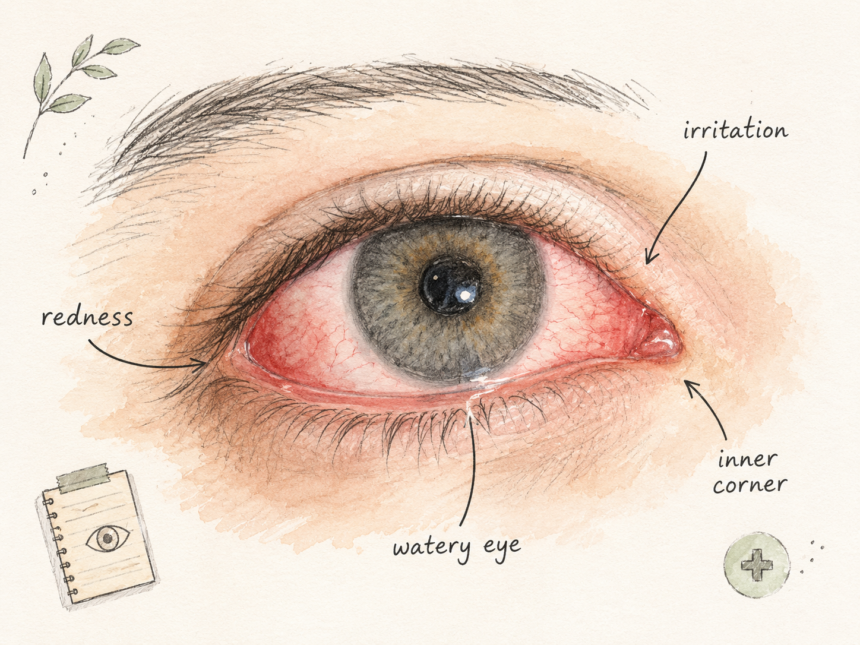
Conjunctivitis is often called pink eye. It can make the eye red, watery, itchy, sticky, swollen, or sore. Many people worry about how long it can stay on surfaces because pink eye can spread quickly in homes, schools, offices, clinics, and shared spaces.
The first thing to understand is simple. Conjunctivitis itself does not survive on surfaces. Conjunctivitis is the name of the eye condition. The germs that cause contagious conjunctivitis can stay on surfaces for different lengths of time. Viral and bacterial conjunctivitis can spread from person to person. Allergic conjunctivitis does not spread because it is caused by things like pollen, dust, pet dander, or other irritants.
The survival time depends on the cause. Some viruses linked with pink eye, especially adenoviruses, can stay active on surfaces for hours, days, and sometimes longer under certain conditions. Bacteria may also survive for some time, but the risk changes based on the surface, moisture, temperature, cleaning habits, and how much eye discharge is present.
This article explains the topic in simple words. It also gives clear tables, home care tips, cleaning steps, and practical examples so you can understand how pink eye spreads and how to reduce the risk.
| Main question | Simple answer |
|---|---|
| Does conjunctivitis itself live on surfaces? | No, the germs that cause it may survive |
| Which type spreads easily? | Viral and bacterial conjunctivitis |
| Which type does not spread? | Allergic conjunctivitis |
| Can viruses survive on surfaces? | Yes, some can survive for hours to days and sometimes longer |
| Can cleaning reduce risk? | Yes, cleaning and handwashing help a lot |
| Should you panic about every surface? | No, focus on hands, towels, pillows, phones, and shared items |
What Conjunctivitis Survive on Surfaces Means
Conjunctivitis means swelling or irritation of the conjunctiva. The conjunctiva is the thin clear layer that covers the white part of the eye and the inside of the eyelid. When this layer becomes irritated or infected, the eye may look pink or red.
Pink eye can happen for different reasons. Some cases come from viruses. Some come from bacteria. Some come from allergies. Some come from smoke, chemicals, contact lenses, or other irritants. The type matters because only some forms are contagious.
Viral and bacterial forms are the main concern when talking about surfaces. These germs can move from the eye to hands, towels, pillows, makeup, phones, toys, desks, and door handles. Then another person may touch the surface and touch their eye.
| Type of conjunctivitis | Can it spread to others? | Common clues |
|---|---|---|
| Viral conjunctivitis | Yes | Watery eye, redness, cold symptoms |
| Bacterial conjunctivitis | Yes | Thick discharge, sticky eyelids |
| Allergic conjunctivitis | No | Itching, both eyes, allergy symptoms |
| Irritant conjunctivitis | No | Starts after smoke, dust, chemical, or lens irritation |
Why the Cause Matters
The cause matters because it changes both the risk and the cleaning plan. If the conjunctivitis is allergic, surfaces are not the main problem. If it is viral or bacterial, surfaces can be part of the spread.
A person may not know the type at first because symptoms can overlap. Redness, watery eyes, and irritation can happen in more than one type. This is why careful hygiene is a good idea until the cause is clear.
Helpful points to remember:
- Viral pink eye can spread easily
- Bacterial pink eye can also spread
- Allergic pink eye does not spread from person to person
- Eye rubbing increases surface contamination
- Handwashing lowers the chance of spread
- Shared towels and makeup are high-risk items
- Contact lens users should be extra careful
| If symptoms look like this | It may be |
|---|---|
| Watery eye and cold symptoms | Viral conjunctivitis |
| Thick yellow or green discharge | Bacterial conjunctivitis |
| Very itchy eyes with sneezing | Allergic conjunctivitis |
| Redness after smoke or chemical exposure | Irritant conjunctivitis |
| Pain with contact lenses | Needs fast eye care advice |
How Allergy Looks Different
Allergic conjunctivitis often causes strong itching. It may happen during certain seasons or after contact with pets, dust, or pollen. The eyes may water a lot, but thick pus-like discharge is less common.
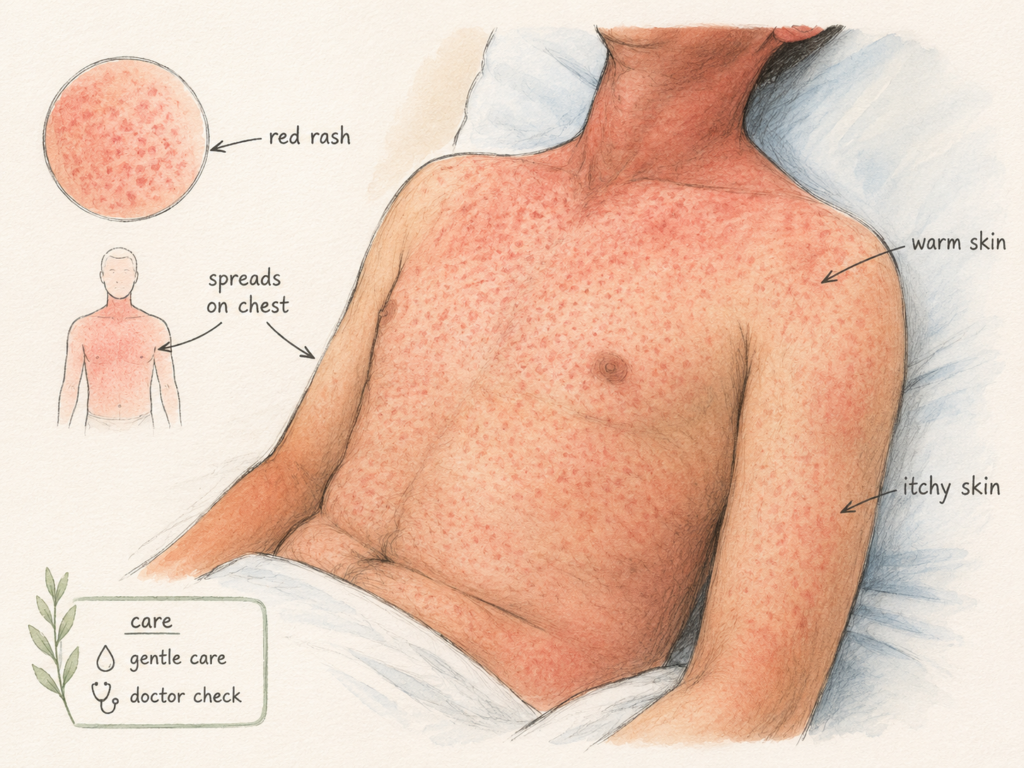
Clues that allergy may be involved include:
- Both eyes itch
- Sneezing or runny nose
- Symptoms return during pollen season
- Symptoms happen around pets
- No fever
- No thick discharge
- Eye rubbing makes it worse
| Allergy clue | Why it matters |
|---|---|
| Itching is strong | Common allergy sign |
| Both eyes affected | Allergy often affects both |
| Watery eyes | Common in allergy |
| Seasonal pattern | Pollen may be involved |
| Pet or dust trigger | Allergen exposure likely |
The Simple Answer About Surface Survival
The simple answer is that germs linked with contagious conjunctivitis can survive on surfaces from hours to days. Some adenoviruses, which are a common cause of viral pink eye, can be tough and may survive longer than many people expect. Under certain test conditions, some adenovirus types have been found on surfaces for much longer.
In daily life, the risk is not only about time. A surface may have germs on it, but infection also depends on whether enough germs transfer to your hand and then to your eye. Cleaning, drying, sunlight, heat, soap, disinfectant, and time can all lower the risk.
Eye care note: The biggest danger is usually not the surface by itself. The bigger risk is touching an infected eye, touching a surface, then another person touching that surface and touching their own eye.
| Surface survival factor | Why it matters |
|---|---|
| Type of germ | Some viruses last longer than others |
| Surface type | Plastic and metal may hold germs longer |
| Moisture | Wet discharge can protect germs |
| Cleaning | Good cleaning removes and lowers germs |
| Time | Germ levels often drop with time |
| Hand habits | Touching eyes spreads germs faster |
| Shared items | Towels and makeup raise risk |
A Practical Time Guide
There is no single exact time that fits every case. A fresh eye discharge mark on a tissue, pillowcase, towel, or phone is more concerning than a dry cleaned surface. Viral conjunctivitis caused by adenovirus can be especially stubborn.
A practical way to think about risk is to place surfaces into time-based groups. This is not a perfect rule, but it helps with daily cleaning decisions.
| Time after contamination | Practical risk idea |
|---|---|
| Right away | Highest risk, especially if wet discharge is present |
| First few hours | Still important, especially on hands and shared items |
| Same day | Clean frequently touched surfaces |
| Next day | Risk may remain on some surfaces if not cleaned |
| Several days | Some hardy viruses may still be a concern on certain surfaces |
| After proper cleaning | Risk is much lower |
Why Viral Pink Eye Can Last Longer on Surfaces
Viral conjunctivitis is often caused by adenoviruses. These viruses can be hardy. That means they can stay active outside the body longer than some other germs, especially on hard surfaces. This is one reason viral pink eye can spread in families, schools, daycare centers, clinics, and shared workplaces.
Adenoviruses can spread through eye discharge, respiratory droplets, hands, towels, and medical equipment if cleaning is poor. In eye clinics, special cleaning steps are needed because some forms of adenoviral eye infection can spread through equipment and surfaces.
The key point is not to panic. The key point is to clean the right items, wash hands often, and avoid sharing things that touch the face.
| Viral pink eye spread route | Example |
|---|---|
| Eye to hand | Rubbing the infected eye |
| Hand to surface | Touching a phone or doorknob |
| Surface to hand | Another person touches it |
| Hand to eye | Person rubs their eye |
| Shared fabric | Towels, pillowcases, washcloths |
| Shared beauty items | Mascara, eyeliner, eye brushes |
Why Adenovirus Is a Special Concern
Adenovirus is a common cause of viral conjunctivitis. It can also cause cold-like symptoms, sore throat, cough, or fever in some people. When pink eye happens with a cold, viral spread is more likely.
Adenovirus can be hard to remove if surfaces are not cleaned well. It can also resist some common disinfectants. This is why handwashing and careful cleaning matter.
Important adenovirus facts:
- It can cause viral pink eye
- It can spread through hands and surfaces
- It may survive longer on hard surfaces
- It can spread in groups
- It can be linked with eye clinic outbreaks
- It needs proper cleaning to reduce spread
- Touching the eye is a major risk habit
| Adenovirus feature | What it means at home |
|---|---|
| Hardy virus | Clean shared surfaces well |
| Spreads through touch | Wash hands often |
| Can affect both eyes | Avoid touching one eye then the other |
| Can spread with cold symptoms | Cover coughs and wash hands |
| Can stay on items | Do not share towels or eye products |
Bacterial Conjunctivitis and Surface Risk
Bacterial conjunctivitis can also spread through hands, towels, tissues, and shared items. It often causes thicker discharge than viral pink eye. Eyelids may stick together, especially after sleep. The discharge can transfer to fabric, fingers, and nearby objects.
Bacteria may survive for different lengths of time depending on the type and surface. Some may not last long once dry. Others may remain longer in moist discharge. The main point is that fresh discharge is risky and should be cleaned carefully.
If a clinician gives antibiotic eye drops for bacterial conjunctivitis, follow the instructions. Do not share drops with another person. Do not touch the dropper tip to the eye, fingers, or any surface.
| Bacterial spread concern | Why it matters |
|---|---|
| Thick discharge | Can carry bacteria |
| Sticky eyelids | Hands may touch eyes more often |
| Shared towels | Can pass discharge |
| Dirty tissues | Can spread germs |
| Dropper tip contamination | Can re-contaminate the eye |
| Poor handwashing | Raises household spread |
Signs That Bacteria May Be Involved
Only a healthcare professional can confirm the cause, but some signs can suggest bacterial conjunctivitis. Bacterial cases often involve thicker mucus or pus-like discharge. The eye may crust shut after sleeping.
Still, symptoms can overlap. Viral pink eye can also cause discharge, and allergies can cause redness and watering. If symptoms are strong, one-sided, painful, or not improving, it is better to get medical advice.
Possible bacterial signs include:
- Thick yellow or green discharge
- Eyelids stuck together after sleep
- Redness in one eye that spreads
- Gritty feeling
- Mild swelling
- Discharge returning soon after cleaning
- Crust on lashes
| Symptom | Possible meaning |
|---|---|
| Thick discharge | Bacterial cause may be possible |
| Watery discharge | Viral or allergic cause may be possible |
| Strong itching | Allergy may be possible |
| Pain or light sensitivity | Needs urgent advice |
| Contact lens use with redness | Needs fast eye check |
Allergic Conjunctivitis Does Not Survive on Surfaces
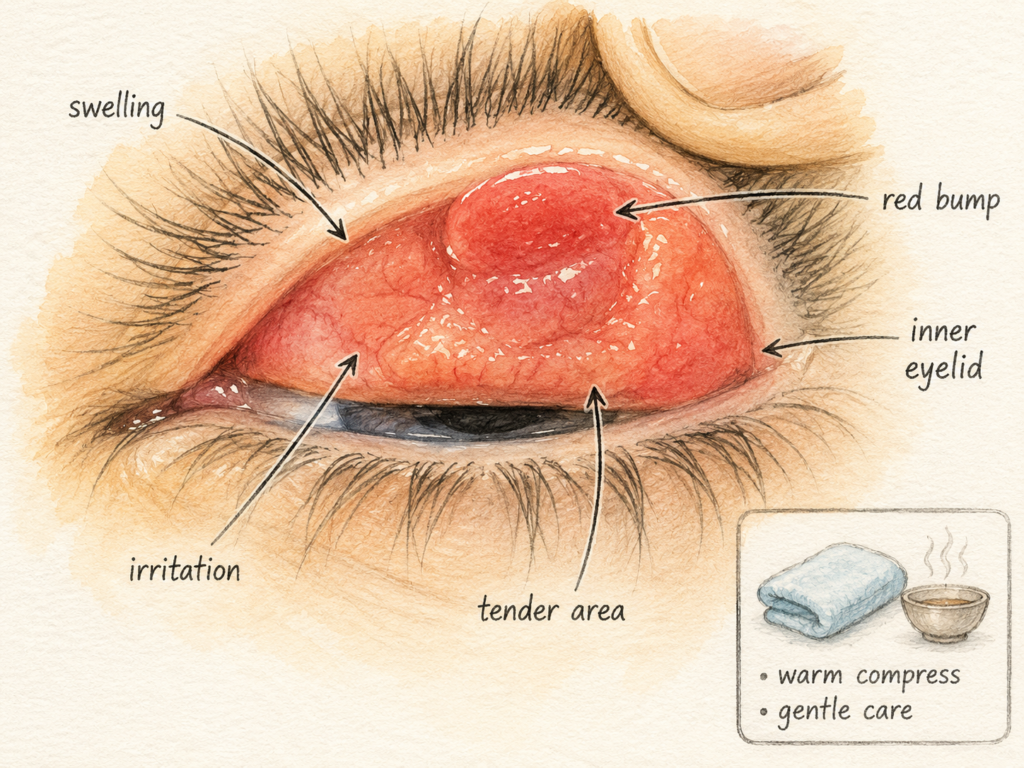
Allergic conjunctivitis is not contagious. It happens when the eyes react to allergens such as pollen, dust mites, pet dander, mold, or certain products. Since it is not caused by an infection, it does not spread from surfaces to other people.
This is important because many people worry when someone has red eyes. Red eyes do not always mean contagious pink eye. If the cause is allergy, the person cannot pass it through towels, pillows, or doorknobs.
Still, cleaning can help with allergies because dust, pollen, and pet dander can sit on surfaces. Cleaning in this case reduces triggers, not infection.
| Allergic conjunctivitis point | Simple meaning |
|---|---|
| Contagious? | No |
| Surface survival? | No infectious germ from allergy |
| Common signs | Itching, watery eyes, sneezing |
| Often affects | Both eyes |
| Cleaning purpose | Removes dust, pollen, and dander |
Which Surfaces Carry the Most Risk
Not all surfaces carry the same risk. Items that touch the face, eyes, hands, or bedding are usually more important than surfaces across the room. A phone, towel, pillowcase, tissue, makeup brush, or contact lens case may be more relevant than a wall or floor.
High-touch surfaces also matter because many people touch them. Door handles, light switches, desk surfaces, remote controls, taps, and shared keyboards can carry germs if an infected person touches them after rubbing their eye.
Eye care note:
The best cleaning plan starts with the items closest to the eyes and hands.
| Higher-risk surface | Why it matters |
|---|---|
| Towels | Touch the face and eyes |
| Pillowcases | Eye discharge can transfer during sleep |
| Phones | Hands and face touch them often |
| Door handles | Many people touch them |
| Makeup items | Direct contact near eyes |
| Contact lens cases | Direct eye-related item |
| Tissues | Hold eye discharge |
| Shared desks | Hands touch them often |
Surface Risk Table
This table helps you decide what to clean first. It is not about fear. It is about using your energy wisely.
| Surface or item | Risk level | Best action |
|---|---|---|
| Used tissue | High | Throw away right after use |
| Towel used by infected person | High | Do not share, wash often |
| Pillowcase | High | Wash and change regularly |
| Phone | High | Clean often with safe method |
| Makeup | High | Do not share, replace if contaminated |
| Contact lens case | High | Follow lens care advice |
| Door handle | Medium | Clean during illness |
| Desk or table | Medium | Clean if touched often |
| Floor | Low | Normal cleaning is usually enough |
Why Hands Matter More Than Surfaces Alone
Surfaces are part of the spread, but hands are usually the bridge. A contaminated surface does not infect the eye by itself. The usual chain is surface to hand, then hand to eye. This means handwashing can break the chain even if a surface was touched.
Many people rub their eyes without noticing. During pink eye, the eye feels itchy, gritty, or wet. That makes touching more likely. Every time the eye is touched, germs can move to fingers. Then fingers can move germs to objects.
Handwashing with soap and water is one of the simplest ways to lower spread. Hand sanitizer can help when soap and water are not available, but hands should be washed when they are visibly dirty or have discharge on them.
| Spread chain | How to break it |
|---|---|
| Eye to hand | Avoid rubbing eyes |
| Hand to phone | Wash hands before using phone |
| Phone to hand | Clean phone often |
| Hand to other eye | Wash before touching face |
| Hand to towel | Use separate towel |
| Surface to family member | Clean high-touch surfaces |
Better Hand Habits During Pink Eye
Hand habits need to be extra careful while symptoms are active. This does not mean washing every minute. It means washing at key times.
Wash hands:
- After touching the eye
- Before and after using eye drops
- After cleaning eye discharge
- After throwing away tissues
- Before eating
- After using the bathroom
- After touching shared surfaces
- Before handling contact lenses
- Before touching another person’s face
| Habit | Why it helps |
|---|---|
| Wash after eye contact | Removes germs from fingers |
| Use clean tissues | Avoids spreading discharge |
| Avoid eye rubbing | Lowers contamination |
| Keep nails short | Less dirt under nails |
| Use personal towel | Reduces household spread |
How Long Germs May Stay on Common Items
The exact survival time depends on the germ and item. Hard nonporous items like plastic, metal, and glass may allow some viruses to remain longer than soft porous items. Soft fabrics may absorb moisture, but towels and pillowcases are still important because they touch the face and can hold eye discharge.
A fresh wet towel or pillowcase is more concerning than a clean dry one. A phone touched many times during the day can keep moving germs back to the hands. Makeup and contact lens items are special concerns because they go near the eye.
| Item | Practical concern |
|---|---|
| Phone | Repeated hand and face contact |
| Pillowcase | Eye discharge during sleep |
| Towel | Direct face contact |
| Makeup | Direct eye area contact |
| Contact lens case | Eye infection risk |
| Glasses | Close to eyes and hands |
| Keyboard | Shared hand contact |
| Toys | Children touch eyes and toys often |
Home Item Guide
Use this guide to manage common household items during a contagious pink eye episode.
| Item | What to do |
|---|---|
| Pillowcase | Change often while symptoms are active |
| Towel | Use a separate towel and wash it |
| Washcloth | Use once, then wash |
| Phone | Clean daily or more often if touched after eye rubbing |
| Glasses | Clean carefully with safe lens method |
| Makeup | Avoid using eye makeup during infection |
| Contact lenses | Stop wearing until cleared by an eye professional |
| Remote control | Clean if shared |
| Toys | Clean items children touch often |
Cleaning Surfaces the Safe Way
Cleaning helps remove dirt, eye discharge, and many germs. Disinfecting can lower germs further on high-touch surfaces. For homes, the safest plan is to clean visibly dirty surfaces first, then use a household disinfectant that is safe for that surface.
Always follow the product label. Do not mix cleaning products. Strong cleaners can irritate eyes, skin, and lungs if used wrongly. If you are young or unsure, ask an adult for help before using disinfectants.
Eye care note:
Cleaning is not about using the strongest product. It is about using the right product safely and consistently.
| Cleaning step | Simple reason |
|---|---|
| Remove visible dirt first | Disinfectants work better on clean surfaces |
| Use safe product | Protects people and surfaces |
| Follow label time | Product needs time to work |
| Wear gloves if needed | Protects skin |
| Ventilate the room | Reduces strong smell |
| Do not mix products | Prevents harmful fumes |
Safe Cleaning Tips
Focus on surfaces touched often. Do not waste energy cleaning every object in the house many times a day. Start with the items most likely to carry eye discharge or hand germs.
Safe cleaning tips include:
- Throw away used tissues quickly
- Wash hands after handling laundry
- Use separate towels
- Clean phones and screens with safe products for electronics
- Wash pillowcases and towels
- Clean door handles and taps
- Clean bathroom surfaces
- Avoid touching the eyes while cleaning
- Keep cleaning products away from children and pets
| Area | What to clean |
|---|---|
| Bedroom | Pillowcase, bedside table, phone |
| Bathroom | Taps, towel area, sink handle |
| Living room | Remote, shared table, switches |
| School or work bag | Glasses case, phone, personal items |
| Child area | Toys, tablets, desk surface |
Laundry and Fabric Items
Fabric items matter because they can touch the eyes and face. Towels, pillowcases, washcloths, blankets, and eye masks can pick up discharge. If another person uses them, germs may move to their hands or face.
During contagious conjunctivitis, each person should use their own towel. Washcloths used to clean the eye should not be reused before washing. Pillowcases should be changed often, especially if there is heavy tearing or discharge at night.
Use normal laundry care suitable for the fabric. Dry items fully before using them again because moisture can help some germs last longer.
| Fabric item | Risk | Best care |
|---|---|---|
| Towel | High | Do not share, wash often |
| Pillowcase | High | Change often |
| Washcloth | High | Use once, then wash |
| Blanket | Medium | Wash if discharge gets on it |
| Eye mask | High | Avoid during infection or wash well |
| Clothing | Low to medium | Wash if contaminated |
Laundry Habits That Help
Laundry does not need to become stressful. The main goal is to keep eye discharge away from shared items.
Helpful habits include:
- Give the infected person a separate towel
- Use clean washcloths each time
- Place used tissues in the bin
- Wash pillowcases more often during symptoms
- Avoid shaking dirty laundry near the face
- Wash hands after handling used towels
- Dry laundry fully before use
| Laundry mistake | Better habit |
|---|---|
| Sharing towels | Use separate towels |
| Reusing washcloths | Use a clean one each time |
| Sleeping on same pillowcase for days | Change more often |
| Touching laundry then face | Wash hands first |
| Leaving damp towels piled up | Dry or wash them |
Phones, Screens, and Shared Devices
Phones are one of the most important surfaces during pink eye. People touch phones many times each day. Phones may also touch the cheek, ear, or face. If someone rubs an infected eye and then uses a phone, germs can move onto the device.
Shared tablets, keyboards, gaming controllers, and remote controls can also pass germs between hands. Cleaning these items safely is important, but electronics need care. Do not soak them or spray liquid directly into openings. Use a method that is safe for the device.
| Device | Why it matters |
|---|---|
| Phone | Hands and face touch it often |
| Tablet | Shared by children and family |
| Keyboard | Many finger contacts |
| Mouse | Frequent hand contact |
| Remote control | Shared in homes |
| Gaming controller | Long hand contact |
Device Cleaning Tips
Clean devices more often while symptoms are active, especially if they are shared. Wash hands before and after using shared devices.
Helpful tips include:
- Clean phone after touching eyes
- Avoid sharing phones during infection
- Use safe wipes made for electronics when suitable
- Do not spray liquid directly on screens
- Clean phone cases too
- Wash hands before using a shared keyboard
- Keep devices away from used tissues
- Avoid holding phone against the infected eye side
| Device habit | Better choice |
|---|---|
| Using phone after eye rubbing | Wash hands first |
| Sharing tablet without cleaning | Clean between users |
| Keeping phone on pillow | Place it on a clean surface |
| Touching screen then eyes | Avoid face touching |
| Ignoring phone case | Clean case too |
Makeup and Beauty Items
Eye makeup can become contaminated during conjunctivitis. Mascara, eyeliner, eye shadow brushes, and lash tools touch very close to the eye. If used during infection, they can hold germs and may reintroduce them later.
Do not share eye makeup at any time, especially during or after pink eye. If makeup was used while symptoms were present, it may need to be replaced. This is especially true for mascara and liquid eyeliner because they are harder to clean and touch close to the eye.
Eye care note:
Eye makeup can turn one short infection into a repeat problem if contaminated products are used again.
| Beauty item | Risk level | What to do |
|---|---|---|
| Mascara | High | Avoid during infection, replace if used |
| Liquid eyeliner | High | Avoid, replace if contaminated |
| Pencil eyeliner | Medium to high | Avoid near infection |
| Eye shadow brush | Medium | Clean properly or avoid |
| Lash curler | Medium | Clean before reuse |
| Face towel | High | Do not share |
Makeup Safety During Pink Eye
It is better to stop eye makeup until the eye has healed. This protects the eye and lowers spread.
Makeup safety tips include:
- Do not use mascara during infection
- Do not share eye makeup
- Replace products used during symptoms
- Clean makeup brushes properly
- Avoid lash tools until healed
- Do not test makeup on irritated eyes
- Wash hands before touching cosmetic items
- Keep makeup away from children
| If this happened | Best action |
|---|---|
| Mascara used on infected eye | Replace it |
| Brush touched watery eye | Clean it well before reuse |
| Makeup was shared | Stop sharing and monitor symptoms |
| Eye still red | Wait before using eye makeup |
| Contact lenses and makeup used together | Ask eye professional for advice |
Contact Lenses and Lens Cases
Contact lens users need extra care with conjunctivitis. Contact lenses touch the eye directly. If the eye is infected or irritated, wearing lenses can make things worse or hide a more serious problem. Redness with contact lens use should be taken seriously.
Lens cases can also hold germs if not cleaned and replaced as advised. Do not wear contact lenses while you have symptoms unless an eye professional says it is safe. Glasses are usually a safer option until the eye is fully better.
| Contact lens concern | Why it matters |
|---|---|
| Lens touches eye | Can worsen irritation |
| Lens case can hold germs | May cause repeat infection |
| Red eye in lens wearer | Can be more serious |
| Poor lens cleaning | Raises infection risk |
| Sleeping in lenses | Increases eye risk |
Contact Lens Safety Tips
If you wear contact lenses and get a red, painful, watery, or sticky eye, contact an eye care professional. Do not guess.
Helpful steps include:
- Stop wearing lenses during symptoms
- Use glasses instead
- Do not reuse lenses worn during infection unless advised
- Replace or clean the lens case as directed
- Wash hands before touching lenses
- Do not touch dropper tips to the eye
- Seek help fast if there is pain, light sensitivity, or vision change
| Symptom with contacts | Best action |
|---|---|
| Redness | Stop lenses and ask for advice |
| Eye pain | Get checked quickly |
| Light sensitivity | Urgent eye advice |
| Blurry vision | Urgent eye advice |
| Discharge | Avoid lenses until cleared |
Schools, Daycare, and Shared Spaces
Conjunctivitis can spread easily in schools and daycare because children touch their eyes, toys, desks, and each other’s belongings. Younger children may not wash hands well unless reminded. Shared items like crayons, tablets, toys, sports gear, and nap mats can become part of the spread.
Rules about staying home can vary by school, location, and the cause of pink eye. A child with fever, heavy discharge, pain, or trouble following hygiene should not be in close contact settings until advice is given.
| Shared space | Main risk |
|---|---|
| Daycare | Close contact and shared toys |
| School | Desks, supplies, hand contact |
| Sports | Towels and face touching |
| Dorm room | Shared bedding and bathroom items |
| Office | Keyboards, phones, door handles |
| Clinic | Medical equipment and close contact |
Simple School and Home Plan
A simple plan can lower spread without making the child feel blamed or embarrassed.
Helpful steps include:
- Teach the child not to rub eyes
- Send tissues if allowed
- Remind them to wash hands
- Do not share towels
- Keep personal items separate
- Clean tablets and shared toys
- Tell the school if symptoms are contagious
- Follow school policy and medical advice
| Child habit | Safer habit |
|---|---|
| Rubbing eyes | Use tissue, then wash hands |
| Sharing towels | Use personal towel |
| Touching toys after eye rubbing | Wash hands first |
| Sleeping on shared pillow | Use personal bedding |
| Hiding symptoms | Tell a parent or teacher |
How Long Is Pink Eye Contagious
Surface survival is one part of the question. Another important question is how long the person is contagious. Viral pink eye can be contagious while symptoms are active. Bacterial pink eye can also spread while there is discharge and active infection. Antibiotic drops may lower spread in bacterial cases, but the person should follow clinician advice.
Allergic pink eye is not contagious. Irritant pink eye is not contagious unless a separate infection is also present.
| Type | Contagious period idea |
|---|---|
| Viral | Often while symptoms are active |
| Bacterial | While discharge and infection are active |
| Allergic | Not contagious |
| Irritant | Not contagious |
| Unknown cause | Use hygiene care until clear |
Signs Risk May Be Lower
Risk is usually lower when symptoms have improved, discharge has stopped, and the person can avoid touching the eyes. Still, some redness may remain after the worst symptoms improve. A healthcare professional can give the best advice for school, work, or contact lenses.
Signs of lower spread risk may include:
- Less discharge
- Eyes no longer stuck shut
- Less tearing
- Less eye rubbing
- Better hand hygiene
- No fever
- Symptoms clearly improving
- Medical advice says return is safe
| Still higher risk | Lower risk |
|---|---|
| Thick discharge | Discharge stopped |
| Frequent eye rubbing | Can avoid touching eyes |
| Fever or illness | Feeling well |
| Symptoms getting worse | Symptoms improving |
| Shared towels used | Personal items kept separate |
Common Mistakes That Spread Pink Eye
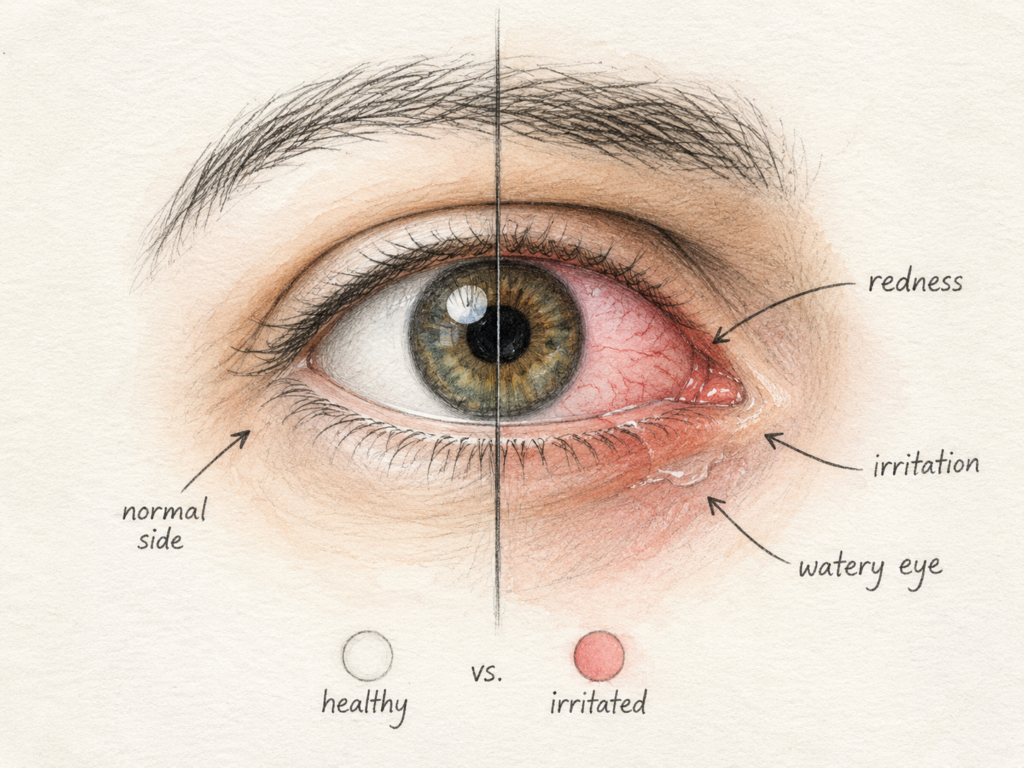
Many pink eye cases spread because of small daily habits. These habits may seem harmless, but they move germs from eyes to surfaces and from surfaces to eyes.
The most common mistake is rubbing the infected eye, then touching shared objects. Another mistake is using the same towel or pillowcase as others. Sharing makeup or contact lens items is also risky.
| Mistake | Why it spreads germs |
|---|---|
| Rubbing eyes | Moves germs to fingers |
| Sharing towels | Transfers eye discharge |
| Reusing dirty washcloth | Puts germs back near eye |
| Sharing makeup | Direct eye area contact |
| Touching dropper tip | Contaminates medicine bottle |
| Not cleaning phone | Keeps germs in hand cycle |
| Wearing contacts during symptoms | Can worsen eye problems |
Better Choices
Better choices are simple and practical. The aim is to break the eye-hand-surface-eye chain.
Safer choices include:
- Use tissues once and throw them away
- Wash hands after touching eyes
- Keep towels separate
- Change pillowcases often
- Clean phone and glasses
- Avoid eye makeup
- Stop contact lenses until cleared
- Do not share eye drops
- Keep hands away from the face
| Instead of this | Do this |
|---|---|
| Wipe eye with sleeve | Use clean tissue |
| Share towel | Use your own towel |
| Keep using mascara | Stop and replace if contaminated |
| Touch eye drop tip | Keep tip clean and away from eye |
| Ignore phone cleaning | Clean it safely |
Surface Survival in Real Life Versus Lab Tests
Lab studies can show that some germs survive for a long time on surfaces. These tests are useful, but real life is more complicated. In real homes, surfaces are touched, cleaned, dried, exposed to light, and affected by temperature and humidity. Germ levels may fall over time.
This means a long lab survival time does not always mean a surface will easily infect someone weeks later. But it does show why cleaning matters, especially for hardy viruses and eye-related items.
Eye care note: Lab survival tells us what is possible. Daily risk depends on contact, cleaning, hand habits, and whether germs reach the eye.
| Lab setting | Real life setting |
|---|---|
| Controlled temperature | Changing room conditions |
| Known amount of virus | Unknown amount of discharge |
| No normal cleaning | Surfaces may be cleaned |
| Measured survival | Actual infection risk varies |
| Useful for safety planning | Needs practical judgment |
A Smarter Way to Think About Risk
Instead of asking only “how many days,” ask better questions. These questions help you decide what to clean and how careful to be.
Ask yourself:
- Did the item touch the infected eye?
- Did it touch eye discharge?
- Is it shared?
- Is it used near the face?
- Is it hard or soft?
- Has it been cleaned?
- Are hands being washed?
- Is the infected person still having discharge?
- Is someone in the home at higher risk?
| Better question | Why it helps |
|---|---|
| Is it shared? | Shared items spread germs more |
| Does it touch the face? | Face items are higher risk |
| Is discharge present? | Fresh discharge raises risk |
| Was it cleaned? | Cleaning lowers risk |
| Are symptoms active? | Active symptoms raise spread risk |
Special Care for Babies, Older Adults, and Weaker Immune Systems
Some people need extra care when eye infections are possible. Babies, older adults, and people with weaker immune systems may need medical advice sooner. Newborn eye redness or discharge should be checked quickly because some newborn eye infections can be serious.
People with chronic health issues, recent eye surgery, or contact lens use should also be careful. Pink eye is often mild, but not every red eye is simple pink eye.
| Person or situation | Why extra care matters |
|---|---|
| Newborn baby | Eye infection can be serious |
| Contact lens user | Higher risk of cornea problems |
| Recent eye surgery | Needs professional advice |
| Weak immune system | Infection may be harder to control |
| Severe pain | May not be simple pink eye |
| Vision changes | Needs urgent eye check |
Warning Signs That Need Medical Advice
Do not treat every red eye as simple conjunctivitis. Some symptoms need fast help.
Get medical advice if there is:
- Eye pain
- Light sensitivity
- Blurred vision
- Vision loss
- Severe swelling
- Injury to the eye
- Chemical exposure
- Contact lens use with redness
- Symptoms in a newborn
- Fever with eye infection
- Symptoms getting worse
- No improvement after several days
| Warning sign | Why it matters |
|---|---|
| Pain | Could be more serious than pink eye |
| Light sensitivity | Cornea may be involved |
| Vision change | Needs urgent check |
| Contact lens redness | Higher risk problem |
| Newborn discharge | Needs fast medical care |
| Chemical exposure | Emergency eye care may be needed |
Practical Cleaning Plan for the First Few Days
The first few days are often the most important because discharge and eye touching may be common. A simple cleaning plan can lower risk without making the home feel like a hospital.
Focus on personal items first, then shared high-touch surfaces. Keep towels and bedding separate. Clean phones and glasses. Throw away tissues. Wash hands at key times.
| Day-to-day focus | What to do |
|---|---|
| Personal towels | Keep separate and wash |
| Pillowcases | Change often |
| Phone | Clean safely |
| Bathroom taps | Clean if touched often |
| Door handles | Clean shared handles |
| Tissues | Throw away after use |
| Hands | Wash often |
Simple Daily Checklist
Use this checklist while symptoms are active.
Daily checklist:
- Wash hands often
- Avoid touching or rubbing eyes
- Use clean tissue for discharge
- Throw tissue away right after use
- Use separate towel
- Change pillowcase often
- Clean phone
- Clean glasses
- Avoid makeup
- Avoid contact lenses unless cleared
- Clean shared surfaces
- Keep eye drops personal
| Task | How often during symptoms |
|---|---|
| Handwashing | Many times daily |
| Phone cleaning | Daily or after eye contact |
| Towel change | Often, especially if damp or used |
| Pillowcase change | Often if discharge is present |
| Shared surface cleaning | Daily for high-touch items |
| Tissue disposal | Right after use |
What to Do After Symptoms Improve
When symptoms improve, do not forget the items used during the infection. Wash towels and pillowcases. Clean glasses, phone, and personal items. Replace eye makeup that may have been contaminated. Follow contact lens advice before wearing lenses again.
If the eye is still red but there is no discharge, the risk may be lower, but it depends on the cause. If you are unsure, ask a healthcare professional, especially before returning to contact lenses.
| After symptoms improve | Why it helps |
|---|---|
| Wash bedding | Removes possible discharge |
| Wash towels | Prevents reuse of contaminated fabric |
| Clean phone | Stops hand cycle |
| Replace eye makeup | Reduces repeat irritation or infection |
| Check contact lenses | Protects eye health |
| Keep hand hygiene | Prevents spread if still contagious |
Return to Normal Routine
Return to normal habits slowly and safely. If symptoms come back, treat it as active again and contact a healthcare professional if needed.
Helpful steps include:
- Keep using good hand habits
- Do not share eye items
- Replace contaminated makeup
- Use clean pillowcases
- Clean glasses
- Restart contact lenses only when safe
- Watch for pain or vision changes
- Seek help if redness returns
| Normal item | Safe return tip |
|---|---|
| Makeup | Use fresh or clean items |
| Contacts | Wait for professional advice |
| Towels | Use clean washed towels |
| Pillowcase | Use fresh bedding |
| Phone | Keep cleaning regularly |
| Eye drops | Do not share bottles |
Myths About Pink Eye on Surfaces
There are many myths about pink eye. Some people think every red eye is contagious. Others think pink eye germs die instantly once they leave the eye. Both ideas are wrong.
Some germs can survive outside the body long enough to spread. But not every surface contact causes infection. The chain still needs enough germs, transfer to the hand, and contact with the eye.
| Myth | Truth |
|---|---|
| Conjunctivitis lives on surfaces | Germs may survive, not the condition itself |
| All red eyes are contagious | Allergies and irritants are not contagious |
| Germs die right away | Some can survive for hours or days |
| Cleaning once fixes everything | High-touch items may need repeated cleaning |
| Only children spread pink eye | Adults can spread it too |
| If one eye is infected, the other is safe | Germs can move to the other eye by touch |
Better Wording for Patients
Better wording helps people understand the risk without fear.
Use these simple phrases:
- “The germs from pink eye may be on surfaces.”
- “The main risk is touching the eye and then touching shared items.”
- “Cleaning and handwashing lower the risk.”
- “Allergic pink eye does not spread.”
- “A red eye with pain or vision change needs medical advice.”
- “Do not share towels, makeup, or contact lens items.”
| Less clear phrase | Better phrase |
|---|---|
| Pink eye is everywhere | Germs may be on high-touch items |
| The surface infected me | My hand may have carried germs to my eye |
| Every red eye spreads | Only infectious types spread |
| I cleaned once, so done | Keep cleaning high-touch items while symptoms last |
| It is just pink eye | Some red eyes need urgent care |
Unique Insight: The Eye Hand Surface Loop
A helpful way to understand pink eye spread is the eye hand surface loop. This loop starts when someone touches an infected eye. Germs move to the fingers. The fingers touch a surface. Another person touches that surface. Then that person touches their eye.
Breaking just one part of the loop can lower spread. You do not need perfect cleaning if hand hygiene is strong. You do not need to fear every surface if personal items are kept separate and high-touch areas are cleaned.
| Part of the loop | How to break it |
|---|---|
| Eye | Avoid rubbing |
| Hand | Wash often |
| Surface | Clean high-touch items |
| Shared item | Keep personal items separate |
| Other person’s eye | Avoid face touching |
How to Use This Idea at Home
Use the loop to find weak points in your routine. For example, if the infected person keeps rubbing their eye and using the TV remote, clean the remote and remind them to wash hands. If they sleep with watery eyes, change the pillowcase. If they use a shared towel, separate towels right away.
Practical examples:
- Eye rubbing plus phone use means clean phone more often
- Discharge at night means change pillowcase
- Shared bathroom means clean taps and towel area
- Child with pink eye means clean toys and tablets
- Makeup use during infection means replace eye products
- Contact lens redness means stop lenses and get advice
| Situation | Best focus |
|---|---|
| Adult with phone use | Phone and handwashing |
| Child with toys | Toys and handwashing |
| Heavy discharge | Tissues, towels, pillowcases |
| Shared bathroom | Taps, handles, towels |
| Makeup user | Stop and replace eye makeup |
| Contact lens user | Stop lenses and seek advice |
Helpful Home Example
Think about a person with viral pink eye at home. They wake up with watery discharge, wipe the eye with their hand, pick up their phone, open the bathroom door, and use a towel. Each step can move germs.
A better routine would be different. They use a clean tissue, throw it away, wash hands, use their own towel, clean the phone, and avoid touching the eye. This breaks the chain.
| Risky routine | Safer routine |
|---|---|
| Wipe eye with hand | Use clean tissue |
| Keep tissue on table | Throw it away |
| Touch phone after eye | Wash hands first |
| Share towel | Use personal towel |
| Sleep on same pillowcase | Change pillowcase often |
| Use eye makeup | Avoid until healed |
Family Protection Tips
If one person in a home has contagious pink eye, the whole family does not need to panic. A few careful habits can help a lot.
Family tips include:
- Give the infected person separate towels
- Do not share pillows
- Clean high-touch surfaces
- Wash hands often
- Keep tissues near the person
- Avoid sharing makeup
- Avoid sharing eye drops
- Clean phones and glasses
- Teach children not to touch eyes
- Watch for symptoms in others
| Family item | Best rule |
|---|---|
| Towels | One person, one towel |
| Pillows | Do not share |
| Eye drops | Do not share |
| Makeup | Do not share |
| Phones | Clean and avoid sharing |
| Toys | Clean often if child is infected |
Final Thoughts
Conjunctivitis does not survive on surfaces because it is the name of an eye condition. The germs that cause contagious conjunctivitis can survive on surfaces. Viral and bacterial pink eye can spread through hands, towels, tissues, pillows, phones, makeup, contact lens items, and shared surfaces.
The exact survival time depends on the germ, surface, moisture, temperature, cleaning, and hand habits. Some viruses linked with pink eye, especially adenoviruses, can survive for hours to days and sometimes longer in certain conditions. That is why cleaning and handwashing are important.
The best way to lower risk is simple. Do not rub the eyes. Wash hands often. Use separate towels. Change pillowcases. Clean phones and high-touch surfaces. Avoid sharing makeup, eye drops, and contact lens items. Stop wearing contact lenses if the eye is red or irritated and ask an eye care professional for advice.
| Final takeaway | Simple meaning |
|---|---|
| Conjunctivitis itself does not live on surfaces | Germs may survive |
| Viral and bacterial types spread | Allergic type does not |
| Adenovirus can be tough | Cleaning matters |
| Hands are the main bridge | Wash hands often |
| Face items are higher risk | Towels, pillows, phones, makeup |
| Red flags need care | Pain, vision change, light sensitivity |
Simple Closing Checklist
Before you worry about every surface, focus on the highest-risk habits and items.
Ask yourself:
- Did someone touch the infected eye?
- Were hands washed after eye contact?
- Are towels shared?
- Was the pillowcase changed?
- Is the phone being cleaned?
- Is eye makeup being used?
- Are contact lenses being avoided?
- Are tissues thrown away?
- Are door handles and taps cleaned?
- Are symptoms getting worse?
| If yes | Best action |
|---|---|
| Towels are shared | Separate them right away |
| Phone is touched often | Clean it safely |
| Eye is rubbed often | Wash hands and use tissues |
| Pillowcase has discharge | Change and wash it |
| Makeup was used | Replace eye products |
| Contact lenses are worn | Stop and seek advice |
| Pain or vision change | Get medical help |
Medical facts were checked with reliable sources. CDC says viral and bacterial pink eye can spread easily and recommends handwashing, avoiding eye rubbing, not sharing personal items, and cleaning items used by the infected person. (CDC) CDC also notes adenoviruses can cause conjunctivitis and can remain infectious on environmental surfaces and medical instruments for hours, while CDC guidance for epidemic keratoconjunctivitis says adenoviruses can survive on surfaces and equipment for extended periods. (CDC) A review on pathogen persistence reports that adenoviruses can persist for long periods under laboratory conditions, and an older Ophthalmology study found adenovirus type 19 could be recovered up to 35 days from plastic in testing conditions.