


Humidifier and Sinus Headache Relief Tips
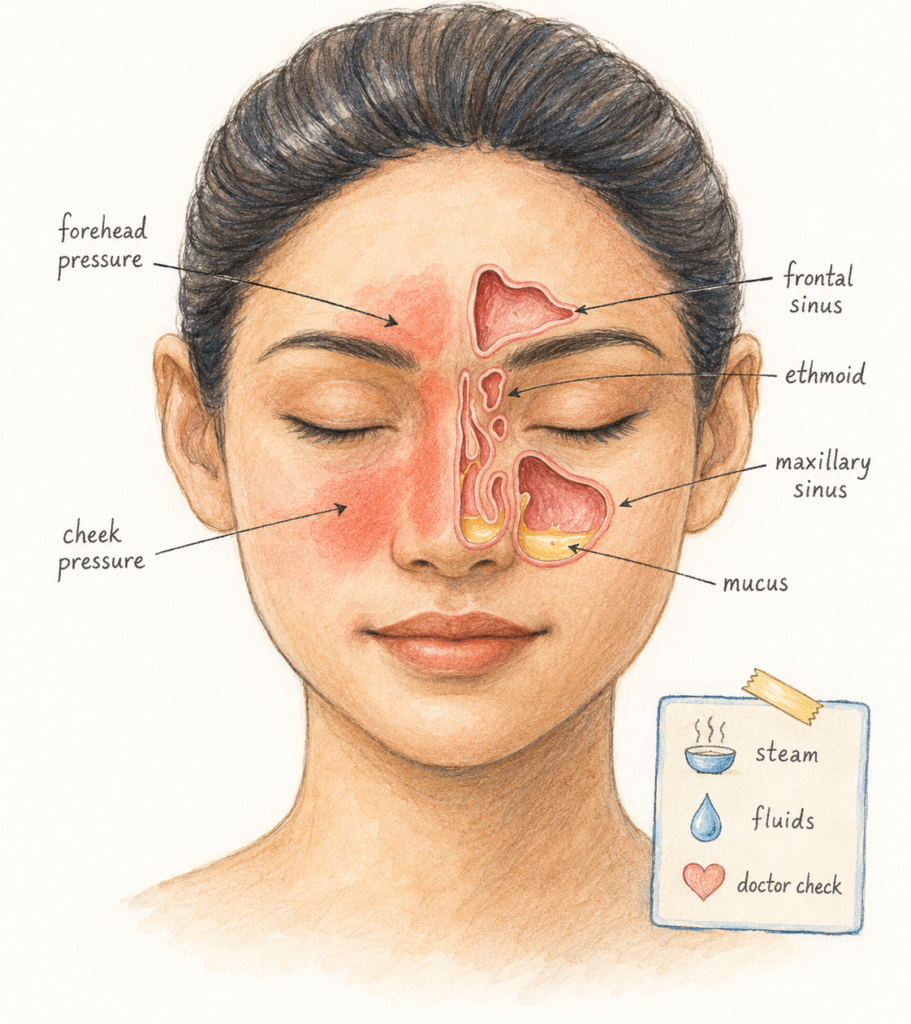
Sinus headache can feel like pressure around the forehead, cheeks, nose, or eyes. Some people feel worse when they bend forward, lie down, or wake up in a dry room. A blocked nose, thick mucus, postnasal drip, sore throat, cough, tiredness, or tooth pressure may also happen when the sinuses are irritated or infected.
A humidifier may help some people when dry indoor air is making the nose and sinuses feel dry, blocked, or irritated. A humidifier adds moisture to the air. This can help keep nasal passages moist, loosen thick mucus, and reduce dryness in the nose and throat. But a humidifier is not a cure for every sinus headache. If the headache is from migraine, tooth infection, high fever, severe sinus infection, or another medical problem, a humidifier will not fix the real cause.
A humidifier can also make symptoms worse if it is dirty or if the room becomes too damp. Too much moisture can help mold and dust mites grow. A dirty humidifier can release bacteria, mold, or minerals into the air. This can irritate the nose, throat, and lungs. The safest way to use a humidifier is to keep humidity in a healthy range, clean the machine often, use the right water, and stop using it if breathing symptoms get worse.
| Main question | Simple answer |
|---|---|
| Can a humidifier help sinus headache? | It may help if dry air is adding to sinus dryness or congestion |
| Does a humidifier cure sinus infection? | No, it only supports comfort |
| Can a humidifier make sinus symptoms worse? | Yes, if dirty or if humidity is too high |
| What humidity level is safer? | Many experts suggest keeping indoor humidity below 50 percent |
| Is cool mist or warm mist better? | Both add moisture, but cool mist is safer around children |
| When should you see a doctor? | Severe pain, fever, symptoms over 10 days, or symptoms that worsen after improving |
What Is a Sinus Headache
A sinus headache is pain or pressure felt around the sinuses. The sinuses are air-filled spaces behind the forehead, cheeks, nose, and eyes. When they become swollen or filled with fluid, pressure may build and cause discomfort.
A true sinus headache is usually linked with sinus inflammation or sinus infection. But many people who think they have sinus headaches may actually have migraine or tension-type headaches. This matters because the right treatment depends on the real cause.
Sinus-type pain often feels like pressure, fullness, or aching in the face. It may feel worse when bending forward. There may also be nasal congestion, mucus, cough, sore throat, or reduced smell.
| Symptom | What it may mean |
|---|---|
| Pressure around cheeks | Sinus pressure possible |
| Forehead pain | Frontal sinus irritation possible |
| Pain worse when bending | Sinus pressure or migraine can both do this |
| Stuffy nose | Cold, allergy, or sinus infection |
| Thick mucus | Sinus inflammation possible |
| Postnasal drip | Mucus draining into throat |
| Upper tooth ache | Sinus pressure can feel like tooth pain |
| No nasal symptoms | Migraine or other headache may be more likely |
Why Sinus Headache Is Often Confused With Migraine

Sinus pain and migraine can feel similar. Both can cause pressure around the face. Both can feel worse with movement. Migraine can also cause nasal symptoms such as a runny nose, watery eyes, or facial pressure. This can make people think it is sinus trouble.
A humidifier may help nasal dryness, but it will not treat migraine. If headaches keep returning, are one-sided, come with nausea, light sensitivity, sound sensitivity, or strong throbbing, a medical check is helpful.
Possible migraine clues include:
- Throbbing head pain
- Nausea
- Light sensitivity
- Sound sensitivity
- Headache on one side
- Headache that returns often
- Pain made worse by activity
- Clear watery nasal discharge without thick mucus
- Headache without fever or thick nasal drainage
| Pattern | Possible direction |
|---|---|
| Facial pressure with thick mucus | Sinus infection or sinus inflammation possible |
| Head pain with nausea and light sensitivity | Migraine possible |
| Pain only after poor sleep or stress | Tension headache or migraine possible |
| Pain with fever and worsening congestion | Sinus infection possible |
| Pain that keeps returning | Medical review is useful |
How Dry Air Can Affect Sinuses
Dry air can make the nose and throat feel irritated. When the air is too dry, the lining inside the nose may become dry, crusty, or sore. Mucus may feel thicker and harder to clear. Some people wake up with a dry throat, blocked nose, or pressure in the face.
Dry indoor air is common in cold weather when heating systems are used. It can also happen in air-conditioned rooms, dry climates, or rooms with poor air balance. A humidifier may help if dryness is part of the problem.
Care note: A humidifier helps by adding moisture to the air. It does not remove infection, allergies, or migraine triggers.
| Dry air effect | What you may feel |
|---|---|
| Dry nasal lining | Burning, crusting, or irritation |
| Thick mucus | Harder to blow out |
| Dry throat | Scratchy feeling in morning |
| Nosebleeds | Dry lining may crack |
| More congestion feeling | Swollen dry tissue may feel blocked |
| Poor sleep | Blocked nose can wake you |
Signs Dry Air May Be Part of Your Sinus Headache
Dry air may be adding to your symptoms if they are worse in certain rooms, during winter, or after sleeping with heat running. You may also notice dry lips, dry skin, dry throat, or nosebleeds.
Clues that dryness may matter include:
- Symptoms worse in the morning
- Nose feels dry or crusty
- Thick mucus is hard to clear
- Dry throat when waking
- Lips feel cracked
- Nosebleeds happen more often
- Symptoms worsen when heat is on
- Symptoms improve after steam shower or moist air
- Indoor humidity feels very low
| Clue | What it suggests |
|---|---|
| Morning dryness | Bedroom air may be dry |
| Crusty nose | Nasal lining needs moisture |
| Thick mucus | Moisture may help loosen it |
| Dry lips and throat | Whole room may be dry |
| Better after shower | Moist air may help symptoms |
| Worse with heater | Indoor humidity may be low |
How a Humidifier May Help Sinus Headache
A humidifier may help by adding moisture to dry air. This can make the nose feel less dry and may help mucus move more easily. When mucus is too thick, it can feel stuck and add to pressure. Moist air may make breathing feel easier for some people.
A humidifier is most helpful when sinus discomfort is linked with dry air, winter heating, dry climate, dry throat, or thick mucus. It may be less helpful when the problem is migraine, severe infection, allergies from mold or dust mites, or a blocked sinus that needs medical care.
| How humidifier may help | Simple meaning |
|---|---|
| Adds moisture | Air feels less dry |
| Soothes dry nose | Nasal lining feels less irritated |
| Helps thick mucus | Mucus may loosen |
| Reduces dry throat | Sleep may feel more comfortable |
| Supports comfort during cold | Can ease stuffy feeling |
| May reduce dry nosebleeds | Moist lining may crack less |
When a Humidifier Is Most Likely to Help
A humidifier may be useful when the room air is dry and symptoms match dryness. It works best as one part of care, not as the only step.
It may help if:
- Your room air is dry
- You wake with dry throat
- Your nose feels crusty
- Mucus feels thick
- Symptoms are worse in winter
- Heating makes your nose feel blocked
- You have dry lips or dry skin
- You feel better after moist air
- Your doctor says humidifier use is safe for you
| Situation | Humidifier usefulness |
|---|---|
| Dry bedroom air | May help |
| Thick mucus from dryness | May help |
| Dry throat at night | May help |
| Migraine symptoms | Humidifier alone is not enough |
| Mold allergy | Humidifier may worsen if humidity is high |
| Dirty humidifier | Can make symptoms worse |
Safe Humidity Level for Sinus Comfort
The goal is not to make the room wet. The goal is to keep the air comfortable without encouraging mold. Too much humidity can cause damp walls, wet windows, musty smell, mold growth, and dust mite increase. These can worsen allergies and sinus symptoms.
A simple room humidity meter can help. Many people use a hygrometer to check indoor humidity. Some humidifiers have built-in settings, but an extra meter can give a clearer room reading.
| Humidity level | What it may mean |
|---|---|
| Under 30 percent | Air may feel too dry for some people |
| Around 30 to 50 percent | Often a comfortable target range |
| Over 50 percent | Mold and dust mites may become more likely |
| Condensation on windows | Room may be too humid |
| Damp carpet or curtains | Humidifier is too high or too close |
| Musty smell | Mold risk needs attention |
How to Know If the Room Is Too Damp
Too much moisture can make sinus symptoms worse instead of better. If you see condensation, damp fabric, or a musty smell, reduce humidifier use and dry the area.
Signs the room is too damp include:
- Water on windows
- Damp walls
- Wet floor near humidifier
- Musty odor
- Mold spots
- Dusty white powder near humidifier
- Bedding feels damp
- Cough or wheezing worsens
- Allergy symptoms get worse
| Damp sign | What to do |
|---|---|
| Window condensation | Lower humidifier setting |
| Wet carpet | Move humidifier and reduce output |
| Musty smell | Stop use and check for mold |
| Mold spots | Clean safely and reduce humidity |
| Cough worsens | Stop use and seek advice |
| White dust | Use distilled water and clean unit |
Cool Mist Versus Warm Mist Humidifier
Both cool mist and warm mist humidifiers add moisture to the air. The choice often depends on safety, comfort, cleaning, and the room. Cool mist humidifiers are often safer around children because they do not use boiling water. Warm mist units can cause burns if spilled or touched.
Warm mist may feel soothing to some adults, but it still needs cleaning. Cool mist units also need cleaning because water can sit in the tank and allow germs to grow.
| Type | Pros | Cautions |
|---|---|---|
| Cool mist | Safer around children, adds moisture | Needs careful cleaning |
| Warm mist | Some people find it soothing | Burn risk from hot water or steam |
| Ultrasonic | Quiet and common | Can release minerals if tap water is used |
| Evaporative | Uses wick or filter | Filter must be changed |
| Central humidifier | Whole-home moisture | Needs maintenance |
| Steam vaporizer | Heats water | Burn risk and cleaning still matter |
Which One Is Better for Sinus Headache
There is no single best humidifier for every sinus headache. The best choice is the one you can clean well, use safely, and control properly. For a child’s room, cool mist is usually safer. For adults, either type may help dry air, but safe use is still important.
Choose based on:
- Safety around children and pets
- Ease of cleaning
- Tank size
- Noise level
- Room size
- Ability to control humidity
- Filter replacement needs
- Whether it creates white dust
- Whether you can use distilled water
- Manufacturer instructions
| Need | Better choice idea |
|---|---|
| Child’s bedroom | Cool mist is usually safer |
| Easy maintenance | Choose a simple tank design |
| Hard water area | Use distilled water or suitable filter |
| Quiet room | Ultrasonic may be quieter but needs mineral control |
| Whole home dryness | Ask about central humidifier care |
| Allergy or asthma | Ask clinician before regular use |
How to Use a Humidifier for Sinus Headache Relief
A humidifier works best when used correctly. It should not blow mist directly into your face. It should not make bedding, carpet, or curtains damp. It should be placed on a flat surface where air can move around it.
Use it when the room is dry, especially at night if morning dryness is a problem. Start with a low or moderate setting. Check humidity with a meter and adjust from there.
| Use tip | Why it matters |
|---|---|
| Place on flat surface | Prevents spills |
| Keep away from bedding | Avoids damp fabric |
| Use clean water | Reduces buildup |
| Empty daily | Reduces germ growth |
| Keep humidity under control | Lowers mold risk |
| Clean often | Keeps mist safer |
| Do not add oils unless allowed | Oils can irritate or damage unit |
Best Room Placement
Placement can change how well a humidifier works. If it is too close to walls or bedding, moisture can collect in one area. If it is too far away or too small for the room, it may not raise humidity enough.
Better placement tips include:
- Keep it on a stable table or stand
- Place it away from the bed edge
- Keep it away from walls and curtains
- Do not place it directly on carpet
- Keep mist away from electronics
- Keep it out of reach of children
- Avoid pointing mist at your face
- Check nearby surfaces for dampness
- Move it if condensation appears
| Placement mistake | Better choice |
|---|---|
| Mist blowing on pillow | Point mist into open room |
| Unit on carpet | Place on stable surface |
| Close to wall | Leave space around it |
| Near curtains | Move away from fabric |
| Within child reach | Place safely out of reach |
| Beside electronics | Keep moisture away |
Cleaning a Humidifier Safely
Cleaning is one of the most important parts of humidifier use. A dirty humidifier can release bacteria, mold, or minerals into the air. This may irritate the nose, sinuses, throat, or lungs. People with asthma, allergies, lung disease, children, and older adults may be more sensitive.
Follow the maker’s instructions first. If instructions are missing, use safe general care. Empty the tank daily, dry surfaces, refill with clean water, and clean the unit often. Do not mix cleaning products.
| Cleaning task | Why it matters |
|---|---|
| Empty tank daily | Reduces standing water |
| Wipe dry | Slows germ growth |
| Refill with clean water | Keeps mist cleaner |
| Clean every few days | Removes scale and film |
| Rinse well after cleaning | Prevents chemical mist |
| Dry before storage | Prevents mold growth |
Simple Cleaning Routine
A simple routine can make humidifier use safer. Always unplug the unit before cleaning.
Daily care:
- Turn off and unplug the humidifier
- Empty old water
- Rinse the tank
- Wipe surfaces dry
- Refill with clean water before use
- Check for slimy film, smell, or discoloration
Regular cleaning:
- Take apart removable parts
- Clean tank and base as directed
- Remove mineral scale or film
- Use the cleaning method listed by the maker
- Rinse many times after any cleaning product
- Let parts dry before reusing
- Replace filters as directed
| If you notice this | What it may mean |
|---|---|
| Slimy film | Germ growth possible |
| Musty smell | Mold or bacteria possible |
| White crust | Mineral scale |
| Pink or black spots | Stop and clean carefully |
| White dust in room | Minerals from water |
| Symptoms worsen after use | Stop using and seek advice |
Water Choice for Humidifiers
Water choice matters, especially for ultrasonic and cool mist humidifiers. Tap water can contain minerals. Some machines can spread these minerals into the air as fine white dust. Mineral scale inside the humidifier can also create places where germs may grow.
Distilled water has lower mineral content and is often a better choice for many portable humidifiers. Some machines also use demineralization cartridges or filters, but these must be changed as directed.
| Water type | What to know |
|---|---|
| Tap water | May contain minerals and cause scale or white dust |
| Distilled water | Lower mineral content |
| Spring water | May still contain minerals |
| Mineral water | Not a good choice for low minerals |
| Filtered water | Mineral level depends on filter type |
| Boiled water | May not remove all minerals |
Why White Dust Matters
White dust is usually mineral residue from water. It can settle on furniture and surfaces. It may also be breathed in, especially if the humidifier releases minerals into the air. This is more common with ultrasonic and impeller humidifiers when mineral-rich water is used.
Ways to reduce white dust include:
- Use distilled water
- Clean mineral scale often
- Replace cartridges as directed
- Avoid mineral water
- Watch for dust near the unit
- Keep humidity under control
- Choose a unit that fits the room
- Follow the maker’s care guide
| Problem | Helpful step |
|---|---|
| White dust on furniture | Use distilled water |
| Crust in tank | Clean scale often |
| Hard water at home | Avoid tap water if possible |
| Bad smell | Empty and clean unit |
| Breathing irritation | Stop use and get advice |
| Repeated buildup | Consider another humidifier type |
Humidifier Mistakes That Can Worsen Sinus Symptoms
A humidifier can help, but wrong use can make symptoms worse. Many people run it all night without checking humidity. Some forget to empty old water. Others place the machine too close to the bed, making pillows damp.
The best humidifier habit is clean, controlled, and limited to times when the air is dry.
| Mistake | Why it can worsen symptoms |
|---|---|
| Not cleaning the unit | Mold and bacteria can grow |
| Humidity over 50 percent | Mold and dust mites may increase |
| Using old water | Germs can build |
| Mist aimed at face | Can irritate or dampen bedding |
| Adding essential oils | Can irritate airways or damage unit |
| Ignoring white dust | Minerals may be spreading |
| Running it in damp room | Raises mold risk |
Better Habits
Small habits can make humidifier use safer and more useful.
Better habits include:
- Use only when air is dry
- Check humidity with a meter
- Empty and dry the tank daily
- Clean the unit often
- Use distilled water when possible
- Keep mist away from bedding
- Stop use if cough or breathing symptoms worsen
- Do not use oils unless the unit allows it
- Store the unit dry when not in use
- Replace old filters
| Bad habit | Better habit |
|---|---|
| Leaving water in tank | Empty and dry daily |
| Guessing humidity | Use a hygrometer |
| Cleaning once a month | Clean often as directed |
| Using tap water with white dust | Use distilled water |
| Running all day in damp room | Use only when needed |
| Adding fragrance | Keep mist plain |
Sinus Headache Relief Tips With a Humidifier
A humidifier works best when combined with other gentle sinus care. The aim is to thin mucus, soothe pressure, reduce dryness, and help the nose drain better. If symptoms are severe or long-lasting, medical advice is needed.
Do not use several strong medicines at once without asking a clinician or pharmacist. Some decongestants are not safe for everyone, especially people with certain heart, blood pressure, thyroid, or medication concerns.
| Relief tip | Why it may help |
|---|---|
| Humidifier in dry room | Adds moisture |
| Warm compress | May ease facial pressure |
| Saline nasal spray | Moistens nasal passages |
| Steam from shower | Short-term moisture comfort |
| Water intake | Helps mucus stay thinner |
| Rest | Supports recovery |
| Avoid smoke | Reduces irritation |
Gentle Relief Routine
This routine may help mild sinus pressure linked with dryness or a cold.
Try:
- Drink water through the day
- Use a clean humidifier if room air is dry
- Keep humidity in a safe range
- Use saline nasal spray if suitable
- Place a warm compress over cheeks or forehead
- Take a warm shower for steam comfort
- Sleep with the head slightly raised if it helps
- Avoid smoke and strong smells
- Rest when sick
- Ask a clinician about safe medicine if needed
| Time | Simple care idea |
|---|---|
| Morning | Drink water and use saline spray if helpful |
| Afternoon | Warm compress for pressure |
| Evening | Clean humidifier and check humidity |
| Bedtime | Run humidifier only if room is dry |
| During symptoms | Avoid smoke and strong scents |
Saline Spray and Nasal Rinse
Saline products can help moisten the nose and loosen mucus. A saline spray is simple and gentle for many people. A nasal rinse can help some people clear mucus, but it must be done safely with the right water.
For nasal rinsing, use distilled, sterile, or previously boiled and cooled water. Do not use plain tap water for rinsing inside the nose unless it has been properly boiled and cooled, because unsafe water can carry germs.
| Saline option | How it helps |
|---|---|
| Saline spray | Moistens nasal passages |
| Saline drops | Often used for children with guidance |
| Saline rinse bottle | Helps wash mucus from nose |
| Neti pot | Can rinse nasal passages |
| Saltwater gargle | May soothe sore throat from drip |
Safe Nasal Rinse Tips
If you use a nasal rinse, cleanliness matters.
Helpful tips include:
- Use distilled, sterile, or boiled and cooled water
- Wash hands first
- Clean the rinse bottle or pot after use
- Let it air dry
- Do not share nasal rinse devices
- Stop if it causes pain or ear pressure
- Ask a doctor before use after sinus surgery
- Ask a clinician for children
- Do not use very hot water
- Follow product directions
| Mistake | Better choice |
|---|---|
| Using unsafe tap water | Use safe water |
| Sharing rinse bottle | Use your own device |
| Leaving device wet | Clean and air dry |
| Forcing rinse | Use gentle flow |
| Ignoring pain | Stop and ask for advice |
| Using too much salt | Follow packet directions |
Warm Compress for Sinus Pressure
A warm compress can help sinus pressure feel better for some people. Warmth may soothe facial discomfort and help the nose feel less tight. It is simple and low risk when done safely.
Use warm, not hot, water. The skin on the face can burn easily, especially around the eyes.
| Compress tip | Why it matters |
|---|---|
| Use warm cloth | Soothes pressure |
| Place over cheeks or forehead | Targets sinus area |
| Keep away from too much heat | Prevents burns |
| Use for short periods | Comfort without irritation |
| Repeat if helpful | Gentle support |
How to Use a Warm Compress
Simple steps:
- Wet a clean cloth with warm water
- Wring out extra water
- Place it over cheeks, nose bridge, or forehead
- Keep eyes closed if placing near eyes
- Use for a short time
- Rewarm if needed
- Stop if skin feels too hot
- Wash the cloth after use if you are sick
| Do | Avoid |
|---|---|
| Use warm water | Hot water |
| Check temperature first | Placing hot cloth on face |
| Use clean cloth | Reusing dirty cloth |
| Stop if burning | Pushing through discomfort |
| Combine with rest | Expecting it to cure infection |
Hydration and Sinus Headache
Drinking enough fluids can help mucus stay thinner. When the body is dehydrated, mucus may feel thicker and harder to clear. Water is a simple support step during colds, allergies, or dry-air irritation.
Hydration alone will not cure a sinus infection or migraine, but it supports comfort and recovery.
| Hydration sign | What it may suggest |
|---|---|
| Dark urine | Need more fluids possible |
| Dry mouth | Dehydration or mouth breathing |
| Thick mucus | Fluids may help |
| Dry throat | Fluids and humidity may support comfort |
| Headache with thirst | Dehydration may be adding to symptoms |
Simple Hydration Tips
Helpful habits include:
- Sip water through the day
- Drink more when fever or sweating is present
- Use warm fluids if they feel soothing
- Limit drinks that make you feel dry
- Eat water-rich foods
- Keep water near the bed if dry throat wakes you
- Ask a clinician if you have fluid limits for medical reasons
| Good choice | Why it helps |
|---|---|
| Water | Simple hydration |
| Warm tea without too much caffeine | Soothing for throat |
| Soup | Fluid and comfort |
| Fruit with water content | Adds fluid |
| Oral fluids during illness | Helps replace losses |
Allergies, Humidifiers, and Sinus Pressure
Allergies can cause nasal congestion, sneezing, itchy eyes, runny nose, postnasal drip, and sinus pressure. A humidifier may help dryness, but it can worsen allergies if it makes the room too damp. Dust mites and mold like moisture. If humidity stays high, allergy symptoms may increase.
If your sinus headache happens with sneezing, itchy eyes, seasonal symptoms, pet exposure, dust, or mold, allergy control may matter more than humidifier use.
| Allergy clue | What it may mean |
|---|---|
| Itchy eyes | Allergy pattern |
| Sneezing | Allergy or cold |
| Clear runny nose | Allergy or viral illness |
| Worse near pets | Pet allergy possible |
| Worse in damp room | Mold or dust mites possible |
| Seasonal pattern | Pollen may be involved |
Allergy-Safe Humidifier Tips
If you have allergies, be extra careful with humidity.
Helpful tips include:
- Keep humidity below 50 percent
- Avoid making bedding damp
- Clean humidifier often
- Stop use if musty smell appears
- Check for mold in room
- Wash bedding regularly
- Keep pets out of bedroom if they trigger symptoms
- Use a clean filter if your unit has one
- Ask a clinician about allergy treatment
- Do not use humidifier as the only allergy plan
| Allergy problem | Better action |
|---|---|
| Dust mites | Keep humidity controlled |
| Mold smell | Stop humidifier and check room |
| Pet trigger | Reduce bedroom exposure |
| Pollen season | Keep windows closed when needed |
| Itchy eyes and sneezing | Ask about allergy care |
| Damp bedding | Move or lower humidifier |
Sinus Infection and When Antibiotics Are Needed
Many sinus infections are caused by viruses and improve without antibiotics. Antibiotics do not help viral infections. A health care provider can decide if antibiotics are needed.
Symptoms that last more than 10 days without improvement, symptoms that get worse after improving, severe facial pain, severe headache, or fever lasting several days should be checked. These patterns can suggest a bacterial infection or another problem.
| Symptom pattern | What it may mean |
|---|---|
| Symptoms under 10 days and improving | Often viral or self-limited |
| Symptoms over 10 days without improvement | Medical review needed |
| Worse after getting better | Possible bacterial infection |
| Severe facial pain | Needs care |
| Fever lasting several days | Needs care |
| Multiple sinus infections yearly | Needs medical review |
What a Humidifier Can and Cannot Do During Infection
A humidifier may make breathing feel more comfortable when air is dry. It may soothe the nose and throat. But it does not kill infection inside the sinuses.
| Humidifier can help with | Humidifier cannot do |
|---|---|
| Dry nose | Cure bacterial infection |
| Thick mucus from dry air | Replace antibiotics when needed |
| Dry throat | Diagnose sinus headache |
| Comfort at night | Treat migraine |
| Moist air support | Fix nasal polyps |
| Temporary relief | Replace medical care for red flags |
Red Flags That Need Medical Care
Most sinus symptoms are not dangerous, but some warning signs need medical care. Severe or unusual symptoms should not be managed with only a humidifier.
Get medical advice if symptoms are severe, last more than 10 days without improvement, get worse after improving, or include fever for several days. Get urgent help for vision changes, swelling around the eye, confusion, severe stiff neck, severe headache that is different from normal, or trouble breathing.
| Warning sign | Why it matters |
|---|---|
| Severe headache | Needs medical review |
| Severe facial pain | Sinus infection or other issue possible |
| Fever lasting several days | Infection concern |
| Symptoms over 10 days | May need medical care |
| Worse after improving | Possible bacterial infection |
| Eye swelling | Urgent concern |
| Vision changes | Urgent concern |
| Confusion | Emergency concern |
| Trouble breathing | Emergency concern |
When to Stop Using the Humidifier
Stop using the humidifier and seek advice if symptoms seem linked to the unit. A dirty or contaminated humidifier can cause throat irritation, cough, wheezing, chest tightness, or flu-like symptoms.
Stop use if you notice:
- Cough gets worse after humidifier use
- Wheezing starts
- Chest tightness
- Shortness of breath
- Musty smell from unit
- Mold inside tank
- Slimy film
- Fever or chills after use
- Dusty mist or white dust
- Headache worse in damp room
| Humidifier problem | Best action |
|---|---|
| Musty smell | Stop and clean |
| Mold visible | Stop use until cleaned or replace unit |
| Breathing symptoms | Stop and call clinician |
| White dust | Use distilled water and clean unit |
| Damp room | Lower setting or stop |
| Repeated illness after use | Medical advice |
Using a Humidifier for Children
Children can get dry noses, stuffy noses, and colds. A cool mist humidifier may help comfort in a dry room. Warm mist or steam units can burn children if spilled or touched, so cool mist is usually safer around children.
Children should not have humidifiers placed where they can pull cords, tip the unit, or touch mist openings. The unit must be cleaned carefully because children can be more sensitive to dirty mist.
| Child safety point | Why it matters |
|---|---|
| Use cool mist | Lowers burn risk |
| Keep out of reach | Prevents spills |
| Hide cords safely | Prevents pulling |
| Clean often | Reduces germ exposure |
| Keep humidity controlled | Reduces mold risk |
| Ask before medicines | Some cold medicines are not safe for young children |
Child Bedroom Tips
Helpful tips include:
- Use cool mist rather than steam
- Place unit away from crib or bed
- Keep cords out of reach
- Do not point mist at bedding
- Empty and dry daily
- Clean as directed
- Use distilled water if needed
- Watch for coughing or breathing trouble
- Stop use if room gets damp
- Ask a clinician if symptoms are severe
| Mistake | Safer choice |
|---|---|
| Steam near child | Cool mist unit |
| Unit beside crib | Place out of reach |
| Wet bedding | Move unit and lower setting |
| Old water in tank | Empty daily |
| No humidity check | Use hygrometer |
| Strong scents in unit | Use plain water only |
Humidifier and Asthma or Lung Problems
People with asthma, allergies, or lung disease should be careful with humidifiers. Dry air can irritate some people, but dirty mist or too much humidity can also trigger symptoms. Mold and dust mites can worsen breathing problems.
If you have asthma or lung disease, ask a health care provider whether regular humidifier use is right for you. If you use one, cleaning and humidity control are very important.
| Concern | Why it matters |
|---|---|
| Asthma | Mold or dirty mist can trigger symptoms |
| Allergies | Dust mites and mold may worsen |
| Lung disease | Irritation may be more serious |
| Dirty humidifier | Bacteria or mold may spread |
| High humidity | Dampness can grow allergens |
| Strong scents | Can irritate airways |
Safer Use for Sensitive Lungs
Helpful steps include:
- Ask a clinician before regular use
- Keep humidity under control
- Use a hygrometer
- Clean the unit often
- Use distilled water if advised
- Avoid scented oils
- Stop if wheezing starts
- Watch for cough after use
- Keep room dry enough to prevent mold
- Replace old filters as directed
| If you have | Be careful about |
|---|---|
| Asthma | Mold, dust mites, strong scents |
| Allergies | High humidity and dirty tank |
| Chronic lung disease | Breathing changes after use |
| Frequent cough | Mist quality and room dampness |
| Wheezing | Stop use and seek advice |
Nighttime Sinus Headache Relief Plan
Many people feel sinus pressure at night or in the morning. This can happen because mucus drains differently when lying down, room air is dry, or congestion worsens during sleep. A bedtime plan can help reduce dryness and pressure.
The plan should be simple and safe.
| Bedtime issue | Helpful step |
|---|---|
| Dry room | Use clean humidifier if needed |
| Thick mucus | Drink water and consider saline |
| Facial pressure | Warm compress before bed |
| Postnasal drip | Raise head slightly if comfortable |
| Dust allergy | Wash bedding and control humidity |
| Damp room | Do not use humidifier |
Simple Bedtime Routine
Try this routine if symptoms are mild and there are no red flags:
- Check room humidity
- Clean and refill humidifier if using it
- Use only if room is dry
- Drink water
- Use saline spray if helpful
- Take a warm shower if it eases congestion
- Use warm compress for pressure
- Keep head slightly raised if comfortable
- Avoid smoke or strong smells
- Stop humidifier if room gets damp
| Step | Why it helps |
|---|---|
| Humidity check | Prevents overuse |
| Clean tank | Reduces dirty mist |
| Saline spray | Moistens nose |
| Warm compress | Eases pressure |
| Head support | May reduce drip |
| Avoid smoke | Less irritation |
Morning Sinus Pressure Tips
Morning pressure can happen when the room is too dry, too damp, dusty, or when mucus builds overnight. Notice whether symptoms improve after moving around, drinking water, or taking a warm shower.
If morning headaches happen often, are severe, or come with nausea, light sensitivity, or vision symptoms, a medical review is important.
| Morning clue | Possible cause |
|---|---|
| Dry throat | Dry air or mouth breathing |
| Thick mucus | Dryness or infection |
| Sneezing | Allergy possible |
| Headache with nausea | Migraine possible |
| Pressure with bad smell mucus | Sinus infection possible |
| Headache every morning | Needs medical review |
Morning Care Steps
Helpful steps include:
- Drink water after waking
- Rinse or spray nose with saline if suitable
- Take a warm shower
- Clean mucus gently
- Check bedroom humidity
- Check for dampness or mold
- Wash bedding regularly
- Avoid strong scents
- Track headache pattern
- Book care if morning headaches keep happening
| Morning action | Why it helps |
|---|---|
| Water | Helps dryness |
| Saline | Moistens nose |
| Shower steam | Short-term comfort |
| Humidity check | Finds dry or damp room |
| Bedding cleaning | Reduces dust triggers |
| Symptom tracking | Helps doctor |
Home Air Quality and Sinus Comfort
A humidifier is only one part of indoor air care. Sinus symptoms can also be affected by dust, smoke, strong fragrances, mold, pet dander, dry heat, and poor ventilation. If you run a humidifier in a dusty or moldy room, symptoms may not improve.
Better air habits can support sinus comfort.
| Air issue | How it can affect sinuses |
|---|---|
| Smoke | Irritates nose and sinuses |
| Dust | Can trigger allergies |
| Mold | Can worsen congestion |
| Pet dander | Can trigger allergy symptoms |
| Strong scents | Can irritate sensitive noses |
| Dry heat | Dries nasal lining |
| Damp air | Supports mold growth |
Simple Air Quality Tips
Helpful steps include:
- Avoid smoking indoors
- Keep bedroom dust lower
- Wash bedding often
- Fix leaks quickly
- Keep humidity under control
- Clean visible mold safely
- Avoid strong room sprays
- Ventilate when safe
- Change HVAC filters as advised
- Keep humidifier clean
| Tip | Why it helps |
|---|---|
| No indoor smoke | Reduces irritation |
| Clean bedding | Lowers dust and allergens |
| Fix damp areas | Prevents mold |
| Control humidity | Balances dryness and mold risk |
| Avoid strong scents | Less irritation |
| Filter care | Supports cleaner air |
Practical Example: Dry Winter Sinus Pressure
A person wakes with a dry throat, crusty nose, and pressure around the cheeks during winter. The heater runs all night. The room humidity is low. There is no fever, no severe pain, and symptoms improve after shower steam.
In this situation, dry air may be part of the problem. A clean humidifier used at a safe humidity level may help. The person should still watch symptoms and get medical advice if pain becomes severe, fever develops, or symptoms last more than 10 days without improving.
| Clue | Meaning |
|---|---|
| Winter heater use | Air may be dry |
| Dry throat | Humidity may be low |
| Crusty nose | Nasal lining is dry |
| Better after steam | Moist air helps |
| No fever | Less urgent, but still monitor |
Practical Example: Humidifier Makes Symptoms Worse
A person uses a humidifier every night but wakes with coughing, musty smell, and worse congestion. The windows have condensation and the unit has a slimy film inside.
In this situation, the humidifier may be adding too much moisture or releasing dirty mist. The safest step is to stop using it, clean it carefully, lower room humidity, check for mold, and seek medical advice if breathing symptoms continue.
| Clue | Meaning |
|---|---|
| Musty smell | Mold or dampness possible |
| Slimy tank | Germ growth possible |
| Condensation | Humidity too high |
| Worse cough | Stop use and seek advice |
| Damp bedding | Humidifier placed too close or too high |
Unique Insight: The Moisture Balance Rule
A helpful way to think about humidifiers and sinus headaches is the moisture balance rule. Too little moisture can dry the nose and thicken mucus. Too much moisture can support mold, dust mites, and dirty mist problems. The best place is the middle.
This means humidifier use should be measured, not guessed. A small humidity meter can help you know whether the air is actually dry. Without a meter, many people run the humidifier longer than needed.
| Moisture level | Sinus effect |
|---|---|
| Too dry | Nose and throat may feel irritated |
| Balanced | Mucus may feel easier to clear |
| Too damp | Mold and dust mites may grow |
| Dirty moisture | Cough, irritation, or worse symptoms |
| Controlled moisture | Safer comfort support |
How to Use the Moisture Balance Rule
Use the rule with simple steps:
- Check room humidity
- Use humidifier only when air is dry
- Keep humidity below 50 percent
- Do not allow wet windows or damp fabric
- Empty and dry tank daily
- Clean the unit often
- Use distilled water when helpful
- Stop if symptoms worsen
- Treat allergies or infection separately
- Seek care for red flags
| Problem | Balance fix |
|---|---|
| Dry nose | Add moisture carefully |
| Thick mucus | Use fluids, saline, and safe humidity |
| Damp room | Turn humidifier down or off |
| Musty smell | Stop use and check for mold |
| White dust | Change water type |
| Recurring headache | Check for migraine or medical cause |
Common Myths About Humidifiers and Sinus Headache
There are many myths about humidifiers. Some people think more moisture is always better. Others think a humidifier can cure a sinus infection. Some think cleaning once in a while is enough. These ideas can lead to unsafe use.
| Myth | Truth |
|---|---|
| More humidity is always better | Too much moisture can worsen mold and allergies |
| Humidifier cures sinus infection | It only supports comfort |
| Dirty humidifier is harmless | Dirty mist can irritate breathing |
| Tap water is always fine | It may cause mineral dust in some units |
| Warm mist is always better | It can burn and still needs cleaning |
| Sinus headache is always sinus infection | Many are migraine or tension headache |
Better Ways to Think About Humidifier Use
A humidifier is a support tool. It helps the room air when the air is too dry. It should be clean, measured, and used only when needed.
Better thinking includes:
- Use moisture only when air is dry
- Measure humidity when possible
- Clean the unit often
- Keep the room from becoming damp
- Use distilled water for mineral problems
- Do not add scents unless allowed
- See a clinician if symptoms are severe or lasting
- Remember that not all facial pressure is sinus infection
| Old thinking | Better thinking |
|---|---|
| I should run it all night every night | I should use it when humidity is low |
| More mist means more relief | Balanced humidity is safer |
| I can clean it later | Standing water can grow germs |
| My headache is sinus for sure | Migraine can feel similar |
| A humidifier replaces medicine | It is only one comfort step |
When to See a Doctor
A humidifier can help mild dryness, but medical care is needed for certain symptoms. Sinus infections, migraines, allergies, dental infections, and other conditions can all cause head or face pain. A clinician can help find the real cause.
See a health care provider if symptoms are severe, last more than 10 days without improvement, get worse after improving, or happen often.
| Reason to seek care | Why it matters |
|---|---|
| Severe headache | Needs medical review |
| Severe facial pain | Infection or other cause possible |
| Symptoms over 10 days | May need medical care |
| Symptoms worsen after improving | Possible bacterial infection |
| Fever lasting several days | Infection concern |
| Repeated sinus infections | Needs further check |
| Headache with nausea or light sensitivity | Migraine possible |
| Tooth pain | Dental infection or sinus issue possible |
Urgent Warning Signs
Seek urgent care if you have:
- Trouble breathing
- Swelling around the eye
- Vision changes
- Confusion
- Severe stiff neck
- Severe headache unlike your usual headaches
- High fever
- Face swelling that worsens quickly
- Weakness or trouble speaking
- Severe dehydration
- Symptoms after head injury
| Urgent sign | Best action |
|---|---|
| Vision change | Urgent care |
| Eye swelling | Urgent care |
| Confusion | Emergency help |
| Trouble breathing | Emergency help |
| Severe stiff neck | Emergency help |
| Sudden unusual headache | Emergency help |
| Face swelling | Urgent medical advice |
Final Thoughts
A humidifier may help sinus headache symptoms when dry air is making the nose, throat, and sinus passages feel irritated. It may ease dryness, loosen thick mucus, and make sleep more comfortable. But it is not a cure for every sinus headache.
The safest humidifier plan is simple. Use it only when the air is dry. Keep humidity controlled. Do not let the room become damp. Empty and dry the tank daily. Clean the unit often. Use distilled water when mineral dust is a problem. Keep the mist away from bedding, walls, and the face.
Also remember that sinus headache is often confused with migraine. If headaches keep coming back, are severe, include nausea or light sensitivity, or do not improve with simple care, a medical check is wise. If symptoms last more than 10 days, get worse after improving, or come with fever, severe facial pain, eye swelling, or vision changes, seek medical care.
| Final takeaway | Simple meaning |
|---|---|
| Humidifier can help dry air symptoms | It adds moisture |
| It does not cure all sinus headaches | Cause matters |
| Clean use is important | Dirty mist can worsen symptoms |
| Humidity should not be too high | Damp rooms can grow mold |
| Saline and warm compress may help | Gentle care supports comfort |
| Red flags need care | Do not rely only on humidifier |
Simple Closing Checklist
Ask yourself these questions before using a humidifier for sinus headache:
- Is the room air actually dry?
- Do I have a humidity meter?
- Is the humidifier clean?
- Did I empty old water?
- Am I using the right water?
- Is the mist making bedding damp?
- Is there condensation on windows?
- Do I smell mold or mustiness?
- Are symptoms worse after using it?
- Do I have fever or severe facial pain?
- Have symptoms lasted more than 10 days?
- Could this headache be migraine?
| If your answer is yes | Best next step |
|---|---|
| Room is dry | Clean humidifier may help |
| Humidifier is dirty | Clean before use |
| Room is damp | Stop or lower humidifier |
| White dust appears | Use distilled water |
| Cough worsens | Stop use and seek advice |
| Fever or severe pain | Medical care |
| Headache keeps returning | Ask about migraine or other causes |