


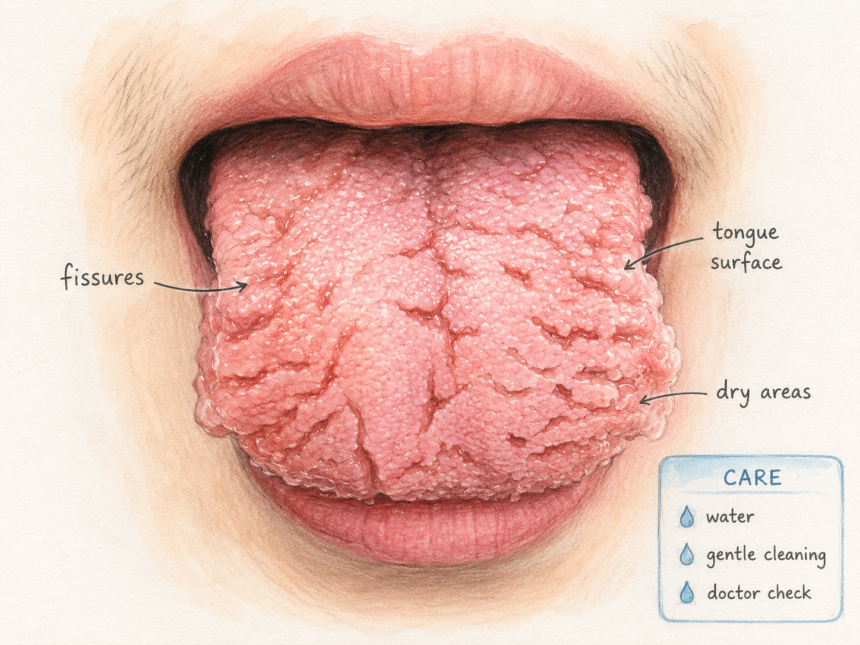
Cracks on the tongue can look worrying when you first notice them. You may see one deep line down the middle of the tongue, small grooves across the top, or several uneven splits on the surface. Some people feel no pain at all. Others may feel burning, soreness, bad breath, food stuck in the grooves, or irritation after eating spicy or acidic foods.
In many cases, cracks on the tongue are linked with a harmless condition called fissured tongue. This means the tongue has grooves or lines on its surface. It is usually not dangerous and often does not need treatment. The main care is keeping the tongue clean in a gentle way so food and bacteria do not sit inside the grooves.
Still, not every cracked tongue is the same. Tongue cracks can feel worse because of dry mouth, poor oral hygiene, irritation, vitamin shortage, oral thrush, geographic tongue, injury, smoking, dentures, braces, or some health conditions. If the cracks are painful, bleeding, growing, changing, or linked with white patches, swelling, fever, trouble swallowing, or a sore that does not heal, you should see a dentist or doctor.
| Main question | Simple answer |
|---|---|
| Are tongue cracks always serious? | No, many are harmless |
| What is the common name for tongue cracks? | Fissured tongue |
| Can food get stuck in tongue cracks? | Yes, especially when grooves are deep |
| Can dry mouth make cracks feel worse? | Yes |
| Do tongue cracks need treatment? | Usually not unless there are symptoms |
| When should you get help? | Pain, bleeding, white patches, swelling, or lasting sores need a check |
What Does a Cracked Tongue Mean
A cracked tongue means there are grooves, lines, or splits on the top surface of the tongue. These cracks may be shallow or deep. They may appear in the middle of the tongue, across the sides, or in several small areas.
In many people, a cracked tongue is just a natural tongue pattern. It may be present for years without causing any trouble. Some people only notice it when they look closely in the mirror or when food starts getting stuck in the grooves.
Health note: A cracked tongue is often harmless, but the grooves can collect food, bacteria, and coating if they are not cleaned gently.
| Tongue appearance | What it may mean |
|---|---|
| One long line in the middle | Common fissured tongue pattern |
| Many small cracks | Fissured tongue or dryness |
| Red smooth patches with cracks | Geographic tongue may also be present |
| White coating inside cracks | Food, bacteria, or thrush possible |
| Painful cracks | Dryness, irritation, injury, or infection possible |
| Bleeding cracks | Needs dental or medical check |
Why Tongue Cracks May Look Worse Some Days
Tongue cracks can look deeper or darker on some days. This does not always mean they are getting worse. The tongue may look different when the mouth is dry, after eating colored foods, after spicy meals, during illness, or when there is a coating on the tongue.
The grooves may hold small food particles. This can make the cracks look darker than usual. Dry mouth can also make the tongue surface look rougher.
Common reasons cracks look worse include:
- Dry mouth
- Mouth breathing
- Dehydration
- Food stuck in grooves
- White or yellow coating
- Spicy food irritation
- Acidic food irritation
- Smoking or tobacco use
- Poor sleep
- Recent illness
- New toothpaste or mouthwash
- Stress-related dryness
| Trigger | How it affects the tongue |
|---|---|
| Dry mouth | Makes grooves feel rougher |
| Food debris | Makes cracks look darker |
| Spicy food | Can cause burning |
| Acidic drinks | May sting the tongue |
| Poor cleaning | Coating builds inside grooves |
| Mouth breathing | Dries the tongue overnight |
What Is Fissured Tongue
Fissured tongue is a condition where grooves or cracks appear on the tongue surface. These grooves can be shallow or deep. Some people have one clear line in the middle. Others have many small lines across the tongue.
Most people with fissured tongue do not have pain. The cracks themselves are usually harmless. The main issue happens when food, bacteria, or coating gets trapped inside the grooves. This can lead to bad breath, irritation, soreness, or a bad taste.
Care note: A cracked tongue is often not dangerous. The important thing is whether it hurts, bleeds, changes quickly, or has white patches or swelling.
| Fissured tongue feature | Simple meaning |
|---|---|
| Grooves on top of tongue | Main sign |
| Usually painless | Many people feel nothing |
| Can be shallow or deep | Looks different in each person |
| May collect food | Gentle cleaning helps |
| Can happen with geographic tongue | Both may appear together |
| Often long-term | It may not fully go away |
Common Signs of Fissured Tongue
Fissured tongue can look different from one person to another. Some tongues have a deep center line. Some have many small grooves that make the surface look wrinkled.
You may notice:
- A long crack down the middle of the tongue
- Small cracks branching from the main line
- Several grooves across the tongue
- A folded or wrinkled tongue surface
- Food stuck in the grooves
- Mild bad breath
- Burning after spicy foods
- No pain at all
- A rough feeling when the mouth is dry
| Sign | What it suggests |
|---|---|
| No pain | Often harmless |
| Food stuck in cracks | Needs better gentle cleaning |
| Bad breath | Bacteria or debris may be trapped |
| Burning | Irritation may be present |
| Red patches too | Geographic tongue may also be present |
| White coating | Hygiene issue or thrush possible |
Why Tongue Cracks Happen
The exact reason for fissured tongue is not always known. In many people, it may be linked with natural tongue shape, age, family tendency, or other harmless tongue patterns. Some people have tongue cracks for many years and never have symptoms.
Tongue cracks may also become more visible when the mouth is dry, irritated, coated, or inflamed. This means the cracks may not be new, but they may look more noticeable because the mouth has changed.
| Possible reason | How it may affect the tongue |
|---|---|
| Natural tongue shape | Grooves may be present without illness |
| Age | Grooves may become more noticeable |
| Family tendency | Similar tongue pattern may run in families |
| Dry mouth | Cracks may feel rough or sore |
| Poor cleaning | Debris can sit inside grooves |
| Tongue irritation | Burning or soreness may happen |
| Health conditions | Some conditions may be linked |
Why You May Notice the Cracks Suddenly
Many people feel shocked because they notice the cracks suddenly. But the cracks may have been there for a long time. You may only notice them after checking your tongue closely, feeling burning, or seeing coating inside the grooves.
Possible reasons you notice them now include:
- You looked at your tongue more closely
- Your mouth became dry
- A white coating formed
- Food started getting trapped
- You had a recent illness
- You ate something that irritated the tongue
- You changed toothpaste or mouthwash
- You started a new medicine
- You became more aware of mouth symptoms
- Your tongue became sore from rubbing on teeth
| New change | Possible reason |
|---|---|
| Cracks look darker | Food or coating in grooves |
| Tongue burns | Irritation or dryness |
| Bad breath starts | Debris or bacteria buildup |
| Cracks feel deeper | Dryness may make them stand out |
| White patches appear | Thrush or coating should be checked |
| Pain begins | It may not be simple harmless fissures |
Dry Mouth and Tongue Cracks
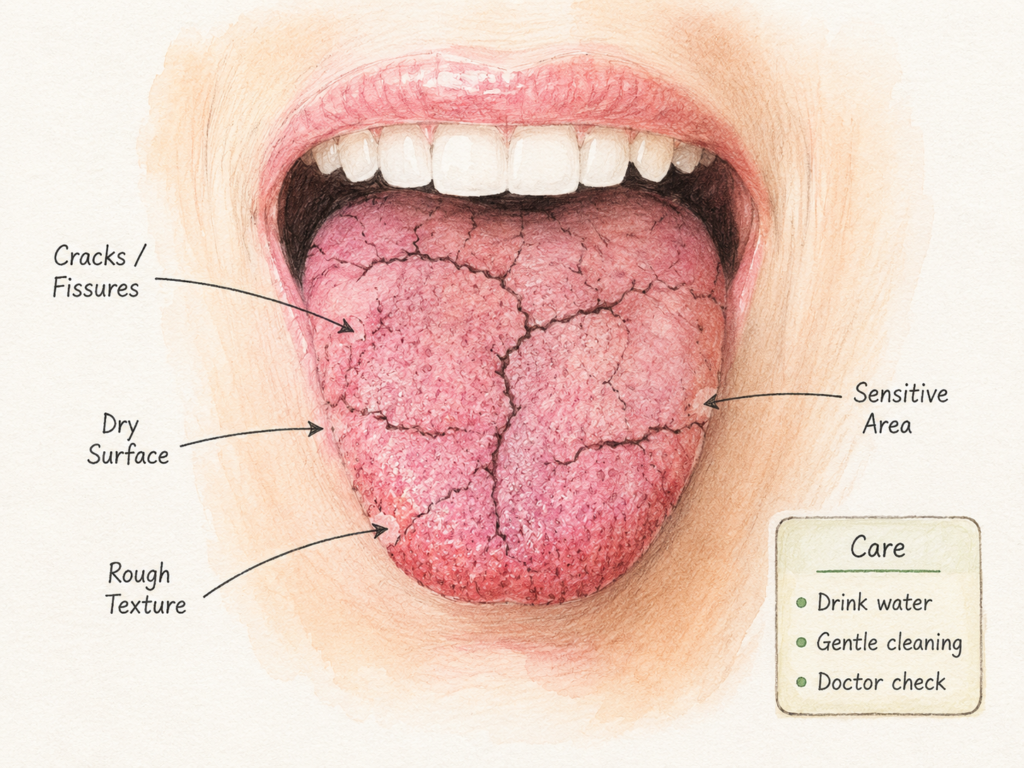
Dry mouth can make tongue cracks feel worse. Saliva keeps the mouth moist, washes away food, helps with swallowing, and protects the mouth from germs. When saliva is low, the tongue can feel rough, sticky, dry, sore, or cracked.
Dry mouth may make old cracks look more obvious. It may also cause burning, bad breath, thick saliva, and trouble swallowing dry foods. If dry mouth happens often, it should be checked because it can raise the risk of cavities, gum problems, and mouth infections.
| Dry mouth sign | What you may feel |
|---|---|
| Sticky mouth | Low moisture |
| Dry tongue | Rough or cracked feeling |
| Thick saliva | Less natural washing |
| Bad breath | More bacteria buildup |
| Burning tongue | Irritated surface |
| Cracked lips | General dryness |
| More thirst at night | Mouth breathing or dryness |
Common Causes of Dry Mouth
Dry mouth can happen for many reasons. Sometimes it is simple, such as not drinking enough water. Sometimes it is linked with medicine or a health condition.
Common causes include:
- Not drinking enough water
- Mouth breathing
- Snoring
- Blocked nose
- Stress or anxiety
- Some allergy medicines
- Some blood pressure medicines
- Some mood medicines
- Smoking or tobacco use
- Too much caffeine
- Alcohol use
- Diabetes
- Some autoimmune conditions
- Radiation treatment to the head or neck
| Cause | What may help |
|---|---|
| Dehydration | Drink water through the day |
| Mouth breathing | Check blocked nose or snoring |
| Medicine side effect | Ask doctor or pharmacist |
| Smoking | Ask for support to stop |
| Too much caffeine | Reduce intake if it worsens dryness |
| Ongoing dryness | See dentist or doctor |
How to Help Dry Mouth
If dry mouth is making tongue cracks sore, the goal is to support moisture and protect the mouth. Do not scrub the tongue hard because that can make irritation worse.
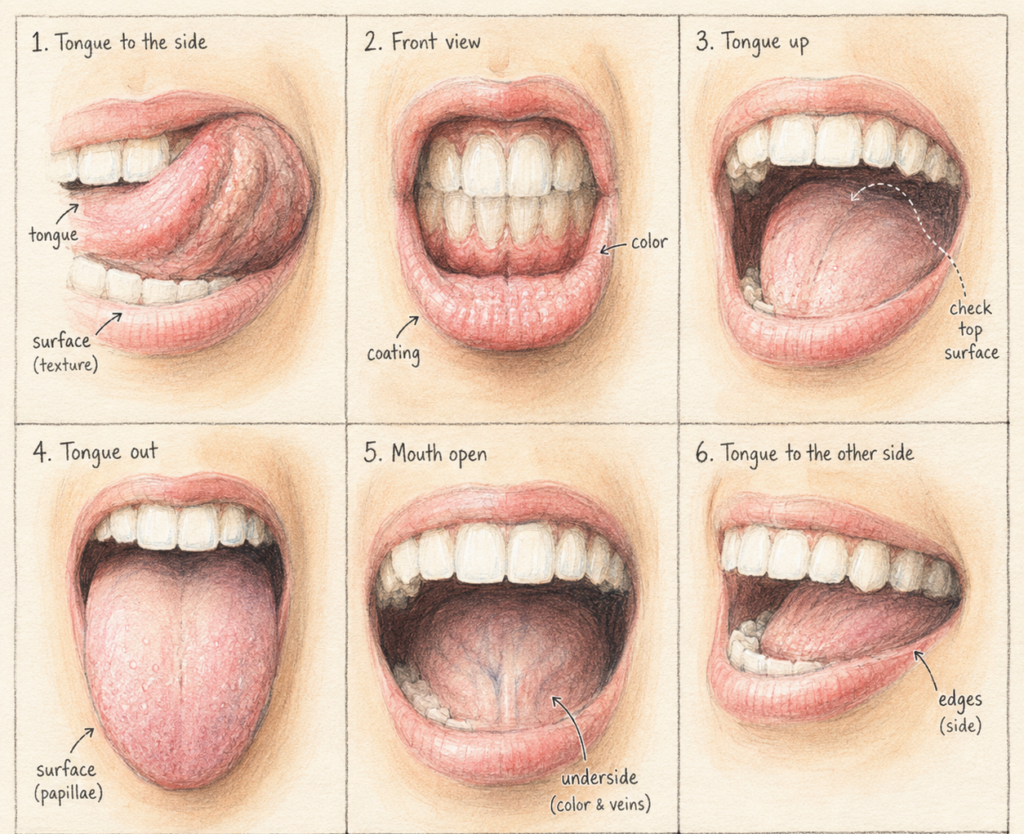
Helpful steps include:
- Sip water often
- Chew sugar-free gum if safe for you
- Avoid smoking and tobacco
- Limit caffeine if it worsens dryness
- Use alcohol-free mouth rinse if advised
- Use a humidifier at night if air is dry
- Ask about dry mouth gel or spray
- Brush and floss daily
- Ask a dentist about fluoride if dry mouth is ongoing
- Speak with a clinician if medicine may be causing dryness
| Helpful step | Why it helps |
|---|---|
| Water | Moistens the tongue |
| Sugar-free gum | May help saliva flow |
| Alcohol-free rinse | Less drying |
| Humidifier | Helps night dryness |
| Dental advice | Protects teeth and mouth |
| Medicine review | May find the cause |
Poor Oral Hygiene and Food Stuck in Cracks
Tongue cracks can trap food, plaque, and bacteria. This does not mean you are dirty. It simply means the grooves can act like small pockets. If trapped debris stays there, it can cause bad breath, a coated tongue, irritation, or a bad taste.
The tongue does not need harsh scraping. It needs gentle cleaning. Brushing too hard can injure the tongue and make soreness worse.
| Hygiene issue | What it may cause |
|---|---|
| Food stuck in cracks | Bad breath or bad taste |
| Coated tongue | White or yellow layer |
| Bacteria buildup | Smell and irritation |
| Not brushing tongue | Debris remains |
| Rough scraping | Soreness or bleeding |
| Poor tooth cleaning | More mouth bacteria |
Better Tongue Cleaning
Gentle tongue cleaning can help keep cracks clear. Use a soft toothbrush or tongue scraper lightly. Do not press hard into the grooves.
Helpful cleaning tips include:
- Brush teeth twice daily
- Clean the tongue gently
- Rinse with water after meals
- Do not scrape until it hurts
- Use a soft toothbrush
- Clean from back to front gently
- Floss daily
- Drink water after sticky foods
- Replace old toothbrushes
- See a dentist for ongoing bad breath or coating
| Cleaning step | Why it helps |
|---|---|
| Gentle tongue brushing | Removes food and bacteria |
| Water rinse | Clears loose debris |
| Flossing | Lowers overall bacteria |
| Soft toothbrush | Reduces irritation |
| Regular dental cleaning | Removes plaque and tartar |
| Avoid harsh scraping | Protects tongue tissue |
Geographic Tongue and Tongue Cracks
Geographic tongue is a harmless tongue condition that causes smooth red patches on the tongue. The patches may have white or light-colored borders and may move from one area to another. Some people with geographic tongue also have tongue cracks.
The tongue may look like a map. It can be painless, but some people feel burning or sensitivity with spicy, salty, acidic, sweet, or hot foods.
| Geographic tongue sign | What it may look like |
|---|---|
| Red smooth patches | Areas missing normal tiny bumps |
| Light border | Patch edges may look pale or raised |
| Changes location | Patches may move over time |
| Burning with food | Trigger sensitivity |
| Cracks also present | Can occur with fissured tongue |
| Usually harmless | Often does not cause serious problems |
What Helps Geographic Tongue Irritation
If geographic tongue does not hurt, it may not need treatment. If it burns, avoiding personal triggers can help.
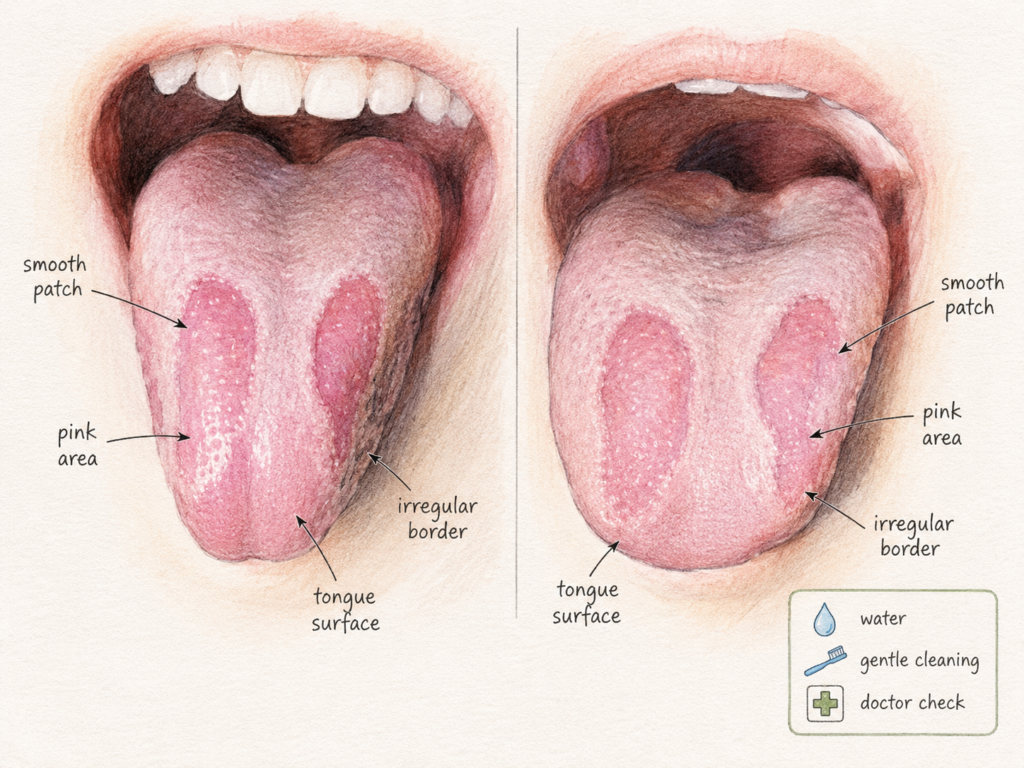
Helpful steps include:
- Avoid spicy foods if they sting
- Avoid acidic foods if they burn
- Let hot drinks cool
- Use gentle toothpaste
- Avoid strong mouthwash
- Keep the tongue clean
- Drink water
- Ask a dentist if pain continues
- Ask about mouth rinse if symptoms are strong
| Trigger | Better choice |
|---|---|
| Spicy food | Mild food |
| Very hot tea | Warm or cool drink |
| Citrus fruit | Less acidic option |
| Strong mouthwash | Gentle alcohol-free rinse |
| Harsh toothpaste | Ask about a gentle toothpaste |
Vitamin and Mineral Shortages
Some vitamin or mineral shortages can make the tongue sore, smooth, red, swollen, or more sensitive. Low vitamin B12, iron, folate, zinc, and other nutrients may affect mouth tissues. A person may also feel tired, weak, dizzy, numb, or have pale skin depending on the cause.
A cracked tongue alone does not prove a vitamin problem. But if cracks come with burning, soreness, smooth red areas, mouth ulcers, fatigue, or tingling, a medical check may be useful.
| Possible shortage | Mouth or body signs |
|---|---|
| Vitamin B12 | Sore tongue, tingling, tiredness |
| Iron | Tiredness, pale skin, sore tongue |
| Folate | Mouth soreness, fatigue |
| Zinc | Taste changes or slow healing |
| General poor diet | Weakness and mouth changes |
| Low fluid intake | Dry tongue and cracked lips |
When to Ask About Blood Tests
Blood tests can help if tongue symptoms happen with body symptoms. Do not take high-dose supplements without advice because too much of some nutrients can be harmful.
Ask a doctor about testing if you have:
- Tongue soreness with cracks
- Burning mouth
- Ongoing fatigue
- Dizziness
- Pale skin
- Tingling in hands or feet
- Frequent mouth ulcers
- Poor appetite
- Unexplained weight loss
- A very limited diet
- Digestive problems that affect nutrition
| Symptom | What to ask about |
|---|---|
| Fatigue and sore tongue | Iron, B12, folate |
| Tingling and tongue pain | B12 and nerve check |
| Pale skin | Anemia testing |
| Mouth ulcers often | Nutrition and immune review |
| Limited diet | Diet and blood tests |
| Taste changes | Zinc or other causes |
Oral Thrush and Cracked Tongue
Oral thrush is a yeast infection in the mouth. It can cause creamy white patches on the tongue, inner cheeks, gums, roof of the mouth, or throat. Sometimes the tongue may feel sore, cracked, burning, or coated.
Thrush is more likely in babies, older adults, people with weak immune systems, people with diabetes, people taking antibiotics, people using inhaled steroid medicine, and people wearing dentures. It can also happen with dry mouth.
| Thrush sign | What it may look or feel like |
|---|---|
| Creamy white patches | Coating on tongue or mouth |
| Soreness | Tender mouth tissue |
| Burning | Irritated tongue |
| Bleeding when rubbed | Tissue may be inflamed |
| Loss of taste | Food tastes dull |
| Cracks at mouth corners | Soreness near lips |
| Dry mouth | Can raise risk |
What to Do If Thrush Is Possible
Do not try to scrape white patches hard. That can cause bleeding and pain. A dentist or doctor can check if it is thrush and may prescribe antifungal treatment.
Helpful steps include:
- See a dentist or doctor
- Keep the mouth clean
- Clean dentures daily
- Rinse after using steroid inhalers if prescribed
- Manage dry mouth
- Control diabetes if relevant
- Avoid smoking
- Do not share toothbrushes
- Replace toothbrush if advised
- Follow treatment fully if given
| What not to do | Why |
|---|---|
| Scrape patches hard | Can cause bleeding |
| Ignore painful patches | Infection may worsen |
| Keep dirty dentures in | Yeast can return |
| Stop medicine early | Thrush may come back |
| Use harsh mouthwash | Can worsen soreness |
Tongue Injury and Irritation
Tongue cracks can feel worse after injury or irritation. You may bite your tongue, burn it with hot food, scrape it on a rough tooth, or irritate it with sharp dental work. Spicy foods, acidic foods, alcohol, tobacco, and strong mouthwash can also irritate tongue tissue.
If the tongue is already fissured, irritation can make the grooves sore or more noticeable. A small injury should improve within days. A sore that does not heal should be checked.
| Irritation cause | What it can do |
|---|---|
| Hot food burn | Soreness and peeling |
| Tongue bite | Pain and swelling |
| Sharp tooth edge | Repeated rubbing |
| Strong mouthwash | Burning |
| Spicy food | Stinging |
| Acidic food | Burning or soreness |
| Tobacco | Dryness and irritation |
How to Soothe an Irritated Tongue
Gentle care can help the tongue calm down. Avoid triggers for a short time while the tissue heals.
Helpful steps include:
- Drink cool water
- Avoid spicy foods
- Avoid acidic foods if they sting
- Let hot drinks cool
- Use a soft toothbrush
- Avoid strong mouthwash
- Avoid tobacco
- Keep teeth and tongue clean
- Ask a dentist to check sharp teeth or dental work
- Get help if a sore lasts more than two weeks
| Helpful choice | Avoid for now |
|---|---|
| Cool water | Very hot drinks |
| Mild foods | Spicy foods |
| Soft foods | Sharp chips |
| Gentle toothpaste | Strong burning products |
| Dental check | Ignoring sharp tooth edges |
Smoking, Tobacco, and Tongue Cracks
Smoking and tobacco can dry and irritate the mouth. They can also stain the tongue, change mouth bacteria, and raise the risk of gum disease and mouth cancer. Tobacco may not directly cause fissured tongue in every person, but it can make tongue cracks more irritated, coated, or stained.
If you use tobacco and notice a sore, lump, white patch, red patch, bleeding area, or tongue change that does not heal, you should see a dentist or doctor.
| Tobacco effect | Possible result |
|---|---|
| Dry mouth | Cracks feel worse |
| Staining | Tongue looks yellow or brown |
| Irritation | Burning or soreness |
| More plaque | Bad breath |
| Slower healing | Sores last longer |
| Higher oral cancer risk | Lasting patches need check |
Warning Signs for Tobacco Users
Mouth changes should be checked early, especially if tobacco is involved.
Watch for:
- Sore that does not heal
- White patch
- Red patch
- Lump on tongue
- Bleeding without clear cause
- Numbness
- Trouble swallowing
- Pain in one area
- Ear pain with tongue symptoms
- Tongue movement trouble
| Warning sign | Best action |
|---|---|
| Patch lasting more than two weeks | Dentist or doctor check |
| Lump | Professional exam |
| Bleeding sore | Check soon |
| Numbness | Needs medical review |
| Trouble swallowing | Medical advice |
| Ongoing pain | Dental or medical check |
Dentures, Braces, and Dental Appliances
Dental appliances can affect the tongue. Dentures, braces, retainers, night guards, or sharp dental edges may rub the tongue and make cracks feel sore. They may also trap food and bacteria, which can worsen coating and bad breath.
Dentures and retainers should be cleaned well. Poorly cleaned appliances can increase yeast, bacteria, and irritation. Poorly fitting dentures can rub the tongue or mouth tissue.
| Appliance issue | Possible tongue effect |
|---|---|
| Poorly fitting denture | Rubbing and soreness |
| Dirty retainer | Bacteria buildup |
| Braces | Tongue irritation |
| Sharp tooth edge | Cuts or sore spots |
| Night guard | Dry mouth or rubbing |
| Denture yeast buildup | Thrush risk |
Appliance Care Tips
If you wear an appliance and have tongue cracks, cleaning and fit matter.
Helpful tips include:
- Clean appliances daily
- Rinse after meals
- Brush the tongue gently
- Do not wear painful appliances without advice
- See a dentist if the fit changes
- Repair broken or sharp appliances
- Keep retainers in a clean case
- Do not share appliances
- Ask about thrush if white patches appear
| Care step | Why it helps |
|---|---|
| Daily cleaning | Lowers germs |
| Fit check | Stops rubbing |
| Repair sharp edges | Prevents injury |
| Clean case | Reduces bacteria |
| Dental review | Finds hidden irritation |
Is a Cracked Tongue Contagious
A fissured tongue itself is not contagious. You cannot pass natural tongue grooves to another person. Geographic tongue is also not contagious. However, infections that may cause tongue coating or soreness, such as thrush, may need care and good hygiene.
It is still a good idea not to share toothbrushes, tongue scrapers, retainers, or dentures. These items can carry germs.
| Condition | Contagious? |
|---|---|
| Fissured tongue | No |
| Geographic tongue | No |
| Dry mouth | No |
| Tongue injury | No |
| Oral thrush | Needs hygiene care and treatment |
| Viral mouth sores | Can be contagious depending on cause |
Hygiene Tips for Shared Spaces
Good hygiene helps prevent other mouth infections and keeps the mouth clean.
Helpful habits include:
- Do not share toothbrushes
- Do not share tongue scrapers
- Rinse dental appliances after use
- Store retainers clean and dry as advised
- Replace old toothbrushes
- Wash hands before touching the mouth
- Keep cups and utensils clean
- Follow treatment advice if infection is present
| Item | Best habit |
|---|---|
| Toothbrush | Do not share |
| Tongue scraper | Do not share |
| Retainer | Clean daily |
| Denture | Clean as advised |
| Water bottle | Keep clean |
| Toothbrush holder | Let brushes dry |
Can Tongue Cracks Go Away
If the cracks are from fissured tongue, they may not fully go away. They may stay for years or become more noticeable over time. This is usually not a problem if there is no pain, infection, or trapped debris.
If cracks look worse because of dryness, irritation, coating, or thrush, they may improve when the cause is treated. For example, a dry tongue may feel better with hydration and dry mouth care. A thrush-related coating may improve with antifungal treatment.
| Cause | Can it improve |
|---|---|
| Natural fissured tongue | May stay long-term |
| Dry mouth | Can improve with care |
| Food trapped in grooves | Improves with cleaning |
| Thrush | Needs treatment |
| Irritation | Improves when trigger stops |
| Vitamin shortage | May improve after proper treatment |
| Sharp tooth rubbing | Improves after dental repair |
What Results to Expect
It helps to have realistic expectations. The goal may not be to make every line vanish. The goal is to reduce pain, coating, smell, burning, and irritation.
Possible improvements include:
- Less bad breath
- Less food trapped
- Less burning
- Cleaner tongue surface
- Less coating
- Less soreness
- Better comfort when eating
- Better moisture
- Fewer flare-ups
| Goal | How to support it |
|---|---|
| Cleaner cracks | Gentle tongue cleaning |
| Less dryness | Water and dry mouth support |
| Less burning | Avoid triggers |
| Less coating | Brush tongue gently |
| Less pain | Check for infection or injury |
| Better comfort | Dental or medical review if needed |
When Tongue Cracks Need a Dentist or Doctor
Most fissured tongues do not need urgent care. But some symptoms should be checked. Pain, bleeding, swelling, white patches, red patches, ulcers, lumps, fever, trouble swallowing, or a sore that does not heal may point to another problem.
If you are worried about a change in your tongue, it is reasonable to book a dental or medical visit. A dentist can check the tongue, teeth, gums, dentures, and mouth hygiene. A doctor can check body causes, medicine effects, nutrition, and health conditions.
| Symptom | Why it matters |
|---|---|
| Pain that does not go away | May be irritation, infection, or another issue |
| White patches | Thrush or another condition possible |
| Bleeding | Needs check |
| Swelling | Infection or injury possible |
| Lump | Needs professional exam |
| Trouble swallowing | Medical advice needed |
| Sore lasting more than two weeks | Should be checked |
| Fever | Infection concern |
Urgent Warning Signs
Some symptoms need faster medical care. Do not wait if the tongue problem is part of a more serious pattern.
Get urgent advice if you have:
- Trouble breathing
- Trouble swallowing
- Fast swelling of the tongue or throat
- Severe pain
- High fever
- Heavy bleeding
- Signs of dehydration
- Tongue injury that will not stop bleeding
- A rapidly growing lump
- Severe allergic reaction signs
- Weak immune system with painful mouth patches
| Urgent sign | Best action |
|---|---|
| Breathing trouble | Emergency help |
| Tongue or throat swelling | Urgent care |
| Heavy bleeding | Urgent care |
| Severe pain with fever | Medical help |
| Trouble swallowing | Medical advice |
| Fast-growing lump | Prompt check |
How Dentists Check Tongue Cracks
A dentist will look at the tongue surface, the depth of cracks, any coating, red or white patches, sores, dental appliances, sharp teeth, and signs of dry mouth. They may ask if the cracks hurt, bleed, burn, or trap food.
If the tongue looks like simple fissured tongue, no special treatment may be needed. If there are white patches, infection may be considered. If a sore or patch looks unusual, further testing or referral may be needed.
| Dental check | What it helps find |
|---|---|
| Tongue exam | Grooves, coating, patches |
| Tooth edge check | Sharp rubbing areas |
| Denture check | Fit and cleaning issues |
| Gum and tooth check | Oral hygiene and infection |
| Dry mouth review | Low saliva signs |
| Medical history | Nutrient or medicine causes |
| Referral | For unclear or suspicious changes |
What to Tell the Dentist
Clear details help the dentist give better advice.
Tell them:
- When you first noticed the cracks
- Whether they hurt
- Whether they bleed
- Whether food gets stuck
- Whether you have bad breath
- Whether your mouth feels dry
- Whether you use dentures or braces
- Whether you started new medicine
- Whether you have white patches
- Whether you smoke or use tobacco
- Whether you have body symptoms like fatigue or tingling
| Detail | Why it helps |
|---|---|
| Timing | Shows if new or long-term |
| Pain | Suggests irritation or infection |
| Dry mouth | Common worsening factor |
| White patches | Thrush possible |
| Appliances | Rubbing or yeast risk |
| Medicine changes | Dry mouth cause possible |
Home Care for Cracked Tongue
Home care can help if your tongue cracks are mild and not linked with serious symptoms. The main goal is to keep the grooves clean and the tongue moist without irritating it.
Do not use strong chemicals, rough scraping, or harsh mouthwash. These can make burning and soreness worse.
| Home care goal | Simple action |
|---|---|
| Clean grooves | Brush tongue gently |
| Reduce dryness | Sip water |
| Lower irritation | Avoid triggers |
| Reduce bad breath | Clean mouth daily |
| Protect tissue | Avoid harsh products |
| Watch changes | Check the tongue calmly |
Simple Daily Tongue Care
A simple routine can make a cracked tongue more comfortable.
Try this:
- Brush teeth twice daily
- Clean the tongue gently once daily
- Use a soft toothbrush
- Rinse with water after meals
- Floss daily
- Drink enough water
- Avoid smoking
- Avoid strong mouthwash if it burns
- Avoid spicy or acidic foods when sore
- See a dentist if symptoms continue
| Daily habit | Why it helps |
|---|---|
| Gentle tongue cleaning | Removes debris |
| Water | Helps moisture |
| Flossing | Lowers mouth bacteria |
| Soft toothbrush | Prevents injury |
| Avoiding triggers | Reduces burning |
| Dental check | Finds hidden causes |
Foods and Drinks That May Irritate Cracks
Some foods can sting or burn when they touch tongue cracks. This does not always mean the food is harmful, but it can irritate sensitive tissue. If your tongue is sore, avoid triggers for a while.
Common triggers include spicy, acidic, salty, very hot, or rough foods.
| Food or drink | Why it may irritate |
|---|---|
| Chili and hot spices | Burning feeling |
| Citrus fruit | Acid stinging |
| Vinegar foods | Acid irritation |
| Very hot tea or coffee | Heat injury |
| Hard chips | Scratching |
| Salty snacks | Stinging |
| Alcohol | Dryness and burning |
Gentler Food Choices
When the tongue is sore, soft and mild foods are usually easier.
Better choices include:
- Cool water
- Yogurt
- Soft eggs
- Oatmeal that is not too hot
- Smooth soup that is warm, not hot
- Mashed potatoes
- Banana
- Soft rice
- Pasta
- Mild cooked vegetables
| Choose | Avoid while sore |
|---|---|
| Yogurt | Spicy sauce |
| Banana | Citrus fruit |
| Soft eggs | Sharp chips |
| Warm soup | Very hot soup |
| Soft rice | Vinegar-heavy foods |
| Water | Alcohol |
What Not to Do With a Cracked Tongue
It is easy to overreact when the tongue looks cracked. Some people scrub hard, use strong mouthwash, or try home remedies that burn. These actions can make the tongue more sore.
The tongue is soft tissue. Treat it gently.
| Mistake | Why to avoid it |
|---|---|
| Scraping hard | Can cause soreness or bleeding |
| Using strong mouthwash | Can burn or dry the tongue |
| Ignoring white patches | Thrush may need treatment |
| Smoking | Worsens dryness and irritation |
| Eating triggers while sore | Can increase burning |
| Self-treating with harsh products | May delay real care |
| Ignoring lasting sores | Needs professional check |
Safer Choices Instead
Gentle care is safer and often works better.
Safer choices include:
- Brush gently
- Rinse with water
- Use mild toothpaste
- Keep mouth moist
- Avoid trigger foods
- Take a photo to track changes
- Book a dental visit if symptoms last
- Ask about dry mouth
- Ask about thrush if white patches appear
- Ask about blood tests if soreness comes with fatigue or tingling
| Concern | Safer response |
|---|---|
| Food stuck in cracks | Gentle tongue cleaning |
| Burning | Avoid triggers and check causes |
| Dryness | Hydrate and ask about dry mouth care |
| White patches | See dentist or doctor |
| Painful sore | Get checked if it lasts |
| Bad breath | Clean grooves and check for infection |
Practical Example: Cracks With No Pain
A person notices a long line down the middle of the tongue. There is no pain, no bleeding, no white patch, and no swelling. They have no trouble eating. This may be simple fissured tongue.
A helpful plan would be gentle tongue cleaning, water, normal oral hygiene, and routine dental checks. No urgent treatment may be needed unless symptoms change.
| Sign | Meaning |
|---|---|
| Long central groove | Common fissured tongue pattern |
| No pain | Less concerning |
| No bleeding | Less concerning |
| No white patch | Infection less likely |
| Stable for years | Often harmless |
Practical Example: Cracks With Burning
Another person has tongue cracks plus burning after spicy food, a dry mouth, and bad breath. Food seems to sit in the grooves. This may be fissured tongue made worse by dryness and trapped debris.
Helpful steps may include:
- Drink more water
- Clean tongue gently
- Avoid spicy triggers
- Use a soft toothbrush
- Ask a dentist about dry mouth
- Check if medicines cause dryness
- Seek care if burning continues
| Symptom | Possible reason |
|---|---|
| Burning | Irritation or dryness |
| Bad breath | Debris in cracks |
| Dry mouth | Low saliva |
| Worse with spicy food | Trigger sensitivity |
| Food trapped | Deep grooves need cleaning |
Unique Insight: The Tongue Groove Cycle
A helpful way to understand cracked tongue symptoms is to think about the tongue groove cycle. The grooves trap food. Food and bacteria cause coating or smell. The person scrapes harder. Hard scraping irritates the tongue. The tongue becomes sore and dry. Then the grooves feel worse.
The goal is to break the cycle gently. Cleaning should remove debris without hurting the tissue.
| Cycle step | What happens |
|---|---|
| Tongue has grooves | Food can collect |
| Food stays in cracks | Bad breath or taste may start |
| Person scrapes hard | Tongue gets sore |
| Tissue becomes irritated | Burning increases |
| Dryness gets worse | Cracks feel deeper |
| Symptoms continue | More worry and over-cleaning |
How to Break the Cycle
Breaking the cycle means using gentle care, moisture, and trigger control.
Helpful actions include:
- Clean the tongue softly
- Rinse after meals
- Drink water
- Avoid harsh mouthwash
- Avoid hard scraping
- Treat dry mouth
- Avoid trigger foods when sore
- See a dentist if coating or pain continues
- Treat thrush if present
- Keep regular oral care
| Cycle problem | Cycle breaker |
|---|---|
| Food trapped | Gentle tongue cleaning |
| Bad breath | Clean grooves and floss |
| Hard scraping | Use light pressure |
| Dryness | Sip water and manage dry mouth |
| Burning | Avoid triggers |
| White patches | Medical or dental check |
Common Myths About Cracked Tongue
There are many myths about cracked tongue. Some people think it always means vitamin deficiency. Others think it is always infection. Some worry it is always cancer. In many cases, fissured tongue is harmless. But symptoms and changes still matter.
| Myth | Truth |
|---|---|
| Cracked tongue is always serious | Often it is harmless |
| It always means infection | Many fissures are natural |
| It always means vitamin shortage | Not always |
| It should be scrubbed hard | Gentle cleaning is safer |
| It will always go away | Natural fissures may stay |
| Pain is normal | Pain should be checked if it continues |
| All white patches are food | Thrush or other causes may need care |
Better Ways to Think About Tongue Cracks
A better way to think about tongue cracks is to ask what is happening with them. Are they painless and stable? Are they painful? Are they coated? Are there white patches? Is the mouth dry? Are there sores that do not heal?
Better thinking includes:
- Cracks can be harmless
- Symptoms matter more than appearance alone
- Dryness can make cracks worse
- Food can get trapped
- Gentle cleaning helps
- White patches need attention
- Lasting sores should be checked
- Dental review can give peace of mind
| Old thinking | Better thinking |
|---|---|
| My tongue is cracked, so something is wrong | It may be harmless fissured tongue |
| I must scrub it clean | Gentle cleaning is better |
| It is only cosmetic | I should watch symptoms too |
| White patches are always food | Thrush may need treatment |
| Pain will pass | Ongoing pain needs a check |
Final Thoughts
Cracks on the tongue are often caused by fissured tongue, a usually harmless condition where grooves form on the tongue surface. Many people have no pain and need no special treatment. The main care is gentle cleaning so food and bacteria do not stay inside the grooves.
Tongue cracks can feel worse if the mouth is dry, irritated, coated, or infected. They may also happen with geographic tongue, oral thrush, vitamin shortages, dentures, braces, sharp teeth, smoking, or certain health conditions. If the cracks are painful, bleeding, swollen, coated with white patches, or changing quickly, it is best to see a dentist or doctor.
Do not scrub the tongue hard. Use a soft toothbrush, rinse with water, stay hydrated, avoid trigger foods when sore, and keep regular dental care. If you have a sore or patch that lasts more than two weeks, trouble swallowing, a lump, heavy bleeding, or fast swelling, get medical help.
| Final takeaway | Simple meaning |
|---|---|
| Tongue cracks are often harmless | Fissured tongue is common |
| Pain is not always normal | Ongoing pain needs a check |
| Food can get trapped | Gentle cleaning helps |
| Dry mouth can worsen cracks | Moisture support matters |
| White patches may be thrush | See a clinician if present |
| Lasting sores need care | Do not ignore them |
Simple Closing Checklist
Ask yourself these questions if your tongue has cracks:
- Are the cracks painful?
- Do they bleed?
- Is there a white coating or white patches?
- Does food get stuck in the cracks?
- Do I have bad breath?
- Is my mouth often dry?
- Do spicy or acidic foods burn?
- Do I wear dentures, braces, or a retainer?
- Did I start a new medicine?
- Do I feel tired, dizzy, or have tingling?
- Is there a sore that has not healed?
- Has the tongue changed quickly?
| If your answer is yes | Best next step |
|---|---|
| No pain and stable cracks | Keep gentle oral care |
| Food gets stuck | Clean tongue gently |
| Dry mouth | Hydrate and ask about dry mouth care |
| Burning with foods | Avoid triggers and check causes |
| White patches | See dentist or doctor |
| Bleeding or swelling | Get checked |
| Sore lasting more than two weeks | Professional exam |