


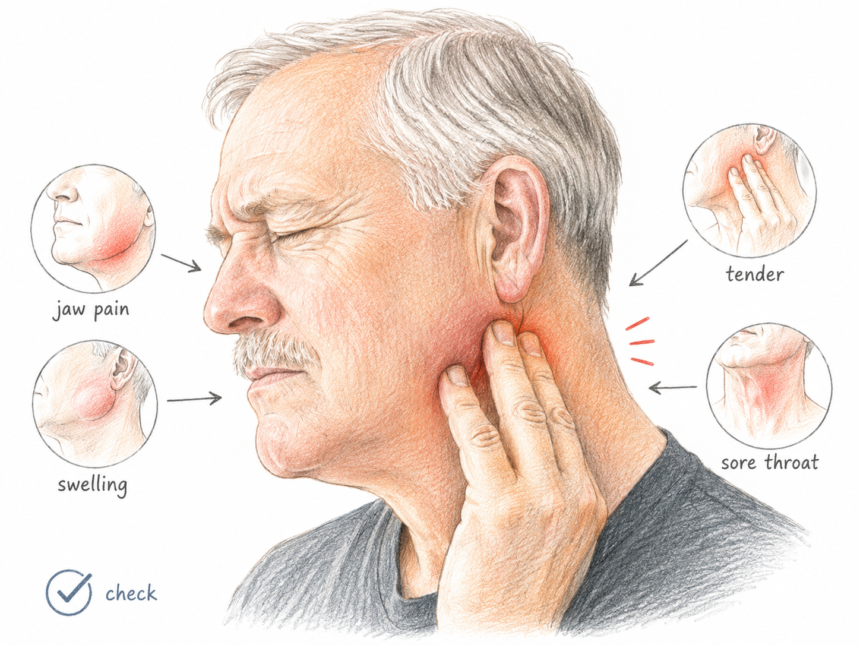
Waking up with jaw pain every morning is one of those problems that people often push to the back of their minds. They tell themselves it will go away. They blame it on sleeping in a weird position. They take a painkiller and get on with their day. But when jaw pain keeps happening morning after morning, day after day, it stops being something you can ignore.
Morning jaw pain affects more people than most realize. Surveys in dental and medical literature suggest that temporomandibular disorders — the umbrella category that covers most jaw pain conditions — affect somewhere between 5 and 12 percent of the general population at any given time, with women and people in their 20s through 40s being disproportionately represented. And a significant portion of these people notice their symptoms are worst first thing in the morning.
The jaw is one of the most used joints in the body. It opens and closes thousands of times each day for speaking, eating, yawning, and swallowing. When something goes wrong with this joint or the muscles surrounding it, the consequences show up in daily life in noticeable and often painful ways. Morning jaw pain specifically points toward things that happen during sleep — a window of time when you have no conscious awareness of what your body is doing.
This article explains the most common reasons why your jaw hurts when you wake up, what the contributing factors are, and what can actually be done about it. Every section is written in plain language so you can understand your own situation clearly.
The Basic Anatomy Behind Why Jaw Pain Happens at All
Before getting into the specific causes, it helps to understand what the jaw joint actually is and why it is prone to pain and dysfunction.
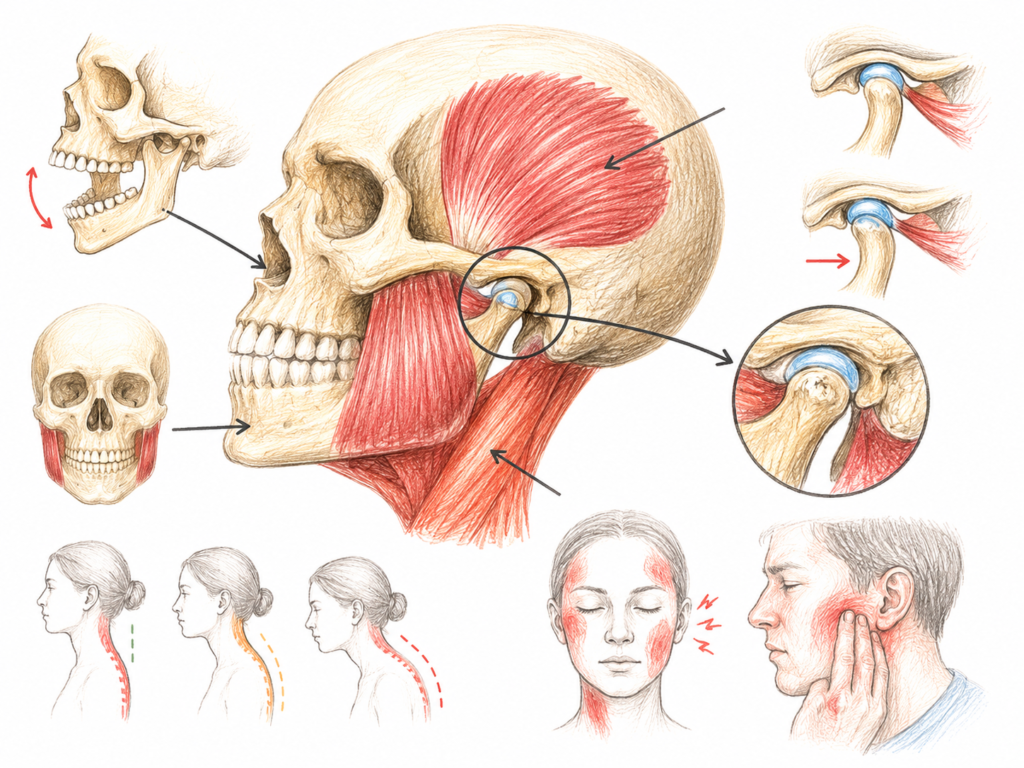
The jaw joint is called the temporomandibular joint, or TMJ. There is one on each side of the head, located just in front of each ear. Each joint connects the lower jaw (the mandible) to the temporal bone of the skull. When you open and close your mouth, the two rounded ends of the mandible (called condyles) move along the temporal bone in a combination of hinge and sliding motions that is more complex than any other joint in the body.
Between each condyle and the temporal bone sits a small disc of cartilage — the articular disc — that acts as a cushion and allows smooth movement. This disc is held in position by ligaments and is moved by muscles. When everything works properly, the joint moves silently, smoothly, and without pain. When any part of this system is disrupted — the disc shifts, the muscles become overloaded, the joint surfaces become inflamed, or the ligaments are stressed — pain, clicking, or limited movement results.
The muscles that control jaw movement are powerful. The masseter muscle — the large muscle on the side of the jaw that you can feel when you clench your teeth — is one of the strongest muscles in the body relative to its size. The temporalis muscle stretches across the side of the skull above and in front of the ear. The pterygoid muscles work from inside the mouth to provide finer movements. These muscles all work together in precise coordination. When they are overworked, chronically tensed, or fatigued from grinding or clenching during sleep, they produce the aching, heavy, tight feeling that so many people notice when they wake up in the morning.
Key structures involved in jaw pain:
| Structure | Location | Role | How It Contributes to Pain |
|---|---|---|---|
| TMJ (joint itself) | In front of ear, each side | Hinge and sliding movement | Inflammation, disc displacement, arthritis |
| Articular disc | Inside TMJ | Cushions joint movement | Displacement causes clicking and pain |
| Masseter muscle | Side of jaw | Clenching and chewing | Overuse from grinding or clenching |
| Temporalis muscle | Side of skull | Jaw closing and positioning | Tension causes temple headaches |
| Pterygoid muscles | Inside jaw | Fine jaw movements | Overuse causes deep jaw ache |
| Ligaments | Around TMJ | Stability and positioning | Stretching causes joint instabilit |
Teeth Grinding During Sleep Is the Most Common Cause
If your jaw hurts every single morning and the pain tends to ease somewhat as the day goes on, the most likely explanation is that you are grinding your teeth during sleep. This condition is called sleep bruxism, and it is remarkably common — estimates suggest that somewhere between 8 and 31 percent of adults grind their teeth during sleep to some degree, with significant grinding affecting quality of life in a smaller but still substantial proportion.
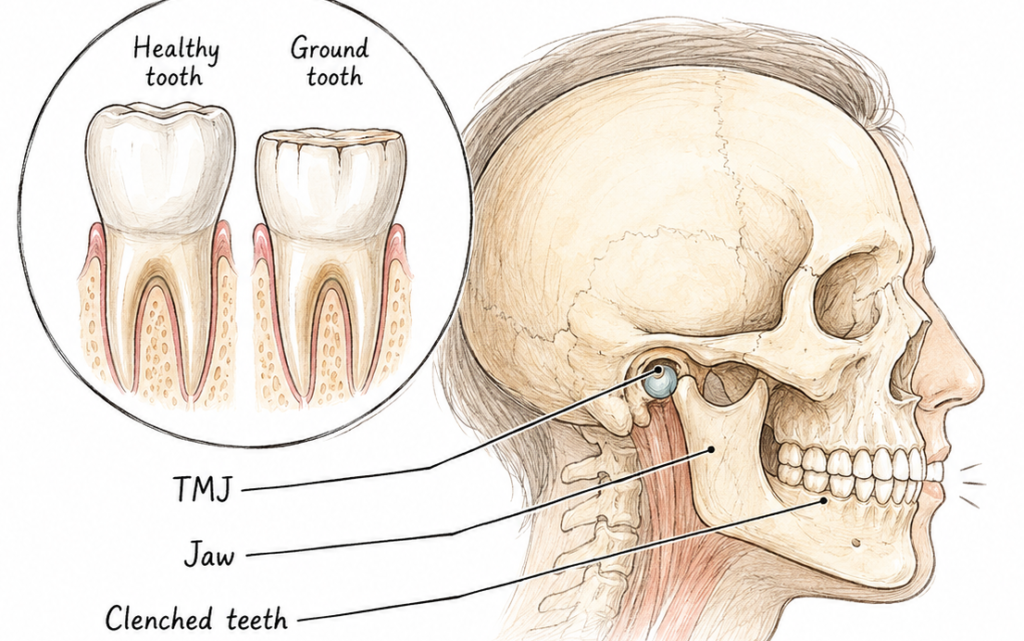
Sleep bruxism involves rhythmic or sustained contraction of the jaw muscles during sleep. The person grinds the upper and lower teeth against each other in a side-to-side or forward-backward motion, or clenches them together without movement. This happens in cycles during sleep — typically during lighter sleep stages and during transitions between sleep stages — and can occur hundreds of times in a single night.
The force generated during sleep bruxism is extraordinary. Research has shown that the clenching forces during sleep bruxism can exceed those generated during normal waking chewing by a factor of two to ten. The jaw muscles are contracting powerfully for hours at a time without the conscious regulation and rest that happens during waking hours. By morning, these muscles are essentially exhausted and inflamed — which is why the pain is worst right after waking up.
Dr. Frank Lobbezoo, a professor at the University of Amsterdam and one of the world’s leading researchers in bruxism, has described sleep bruxism as a multifactorial condition where the central nervous system plays a major regulatory role. His research has helped establish that sleep bruxism is primarily a centrally mediated behavior — driven by the brain during sleep — rather than simply a dental occlusion problem, which is an important distinction for understanding treatment.
The signs that grinding is causing your morning jaw pain include teeth that look flatter on the chewing surfaces than they should, chips or cracks in teeth, sensitivity in multiple teeth, your bed partner reporting hearing grinding sounds during the night, worn-down tooth enamel visible on dental X-rays, and tenderness specifically in the masseter muscles (the rounded muscles in the cheeks) when you press them.
Signs that sleep bruxism is causing your morning jaw pain:
- Jaw muscles feel sore, heavy, or tight immediately upon waking
- Pain eases gradually during the morning as muscles relax
- Teeth feel sensitive to temperature in the mornings
- Teeth look flatter than normal on the biting surfaces
- Visible chips or cracks in teeth without a clear cause
- Partner reports hearing grinding during sleep
- Dentist notices excessive tooth wear
- Headaches start at the temples when waking
- Inside of cheeks may show ridging from cheek biting during sleep
- Jaw feels tired or stiff when trying to chew at breakfast
Common causes and contributors to sleep bruxism:
| Contributing Factor | How It Drives Grinding | What You Can Do About It |
|---|---|---|
| Psychological stress and anxiety | Activates the nervous system even during sleep | Stress management, therapy |
| Certain medications (SSRIs, stimulants) | Increases central nervous system activity | Discuss with prescribing doctor |
| Caffeine and alcohol before bed | Disrupts sleep architecture, increases arousals | Reduce intake before bedtime |
| Sleep apnea and sleep disorders | Grinding associated with respiratory events | Treat the underlying sleep disorder |
| Smoking | Nicotine stimulates nervous system | Reduce or quit |
| Malocclusion (bite issues) | Bite irregularities may trigger reflexive grinding | Dental evaluation |
Jaw Clenching Without Grinding Is Also a Major Problem
Many people with morning jaw pain have never been told they grind their teeth — because they do not grind. They clench. Jaw clenching, called bruxism when it occurs during sleep (sleep bruxism) or awake bruxism when it happens during the day, involves pressing the upper and lower teeth firmly together without the characteristic side-to-side grinding motion.
Clenching does not make the same audible noise as grinding, so bed partners may not be aware of it. Clenchers often have no idea they are doing it because there is no sound and no obvious tooth wear to tell the story. But the muscular consequences are identical — the masseter, temporalis, and pterygoid muscles work intensely for extended periods, becoming fatigued, sore, and inflamed.
Awake clenching during the day is very common and often stress-related. People clench while concentrating intensely, during difficult conversations, while driving in traffic, or during anxious moments. Many people develop the habit of clenching their jaw as a chronic, unconscious response to daily stress. This daytime clenching contributes to overall muscle fatigue that worsens when sleep bruxism adds additional overnight strain.
A simple test to check whether you are clenching during the day: set a reminder on your phone to go off every 30 minutes. Each time it goes off, check your jaw position. Are your teeth touching? They should not be — at rest, the upper and lower teeth should be slightly apart with the lips closed. If your teeth are in contact, you are clenching. Most people who do this test are surprised to find their teeth touching almost constantly throughout the day.
Dr. Daniele Manfredini, a leading researcher in bruxism from the University of Siena, has published extensively on the distinction between sleep and awake bruxism. His research indicates that awake bruxism and sleep bruxism are different conditions with different underlying mechanisms, and that many patients have both. Addressing both components produces better outcomes than treating only one.
Differences between grinding and clenching:
| Feature | Sleep Grinding | Sleep Clenching |
|---|---|---|
| Movement | Side-to-side or forward-backward | Static, no movement |
| Sound | Audible grinding noise | Usually silent |
| Tooth wear | Flat, worn biting surfaces | May be less obvious |
| Muscle involvement | Intense rhythmic contraction | Sustained isometric contraction |
| Partner awareness | Usually aware | Often unaware |
| Pain character | Aching, fatigued muscles | Tight, heavy, pressure sensation |
| Detection | Partner report, dental examination | Harder to detect, requires assessment |
TMJ Disorders and Their Relationship to Morning Jaw Pain
Temporomandibular disorders (TMDs) is a broad term used by dentists and doctors to describe a range of conditions affecting the TMJ itself, the muscles controlling jaw movement, or both. Not all TMD is caused by grinding or clenching — the joint can be affected by arthritis, disc displacement, injury, or other conditions.
Disc displacement is one of the most common findings on TMJ imaging. The articular disc — the small cushioning disc inside the joint — can shift from its normal position, most often moving forward relative to the condyle. When the disc is displaced but reduces (snaps back) when the mouth opens, the characteristic sign is a clicking or popping sound during jaw opening. When the disc is displaced without reduction — meaning it stays displaced and does not return to its normal position — the result can be a sudden limitation in how wide the mouth can open, along with significant pain.
Disc displacement often involves morning symptoms because of the changes that occur during sleep. In certain sleeping positions, the jaw is held in a position where the disc may be more compressed. The absence of the protective muscle activity and swallowing reflexes that are present during waking hours means the disc is under different mechanical conditions for hours at a time.
Inflammation within the TMJ itself (arthritis, synovitis — inflammation of the joint lining) also tends to produce symptoms that are noticeable in the morning. The joint has been resting in a compressed or held position for hours, fluid can accumulate in the joint space, and inflammatory mediators build up. When you begin moving the jaw with the first activities of morning, this accumulated inflammation produces stiffness, aching, and sometimes sharp pain.
Research published in the Journal of Oral Rehabilitation and related journals has found that people with TMD show significantly elevated inflammatory markers in the synovial fluid of the TMJ compared to healthy controls, confirming that genuine inflammatory disease is present in many TMD patients and is not simply muscular fatigue.
Types of TMJ disorders and their morning symptoms:
| TMD Type | Primary Cause | Morning Symptom Pattern | Key Signs |
|---|---|---|---|
| Myofascial TMD | Muscle overuse, trigger points | Aching, heavy jaw and face on waking | Tender muscles on palpation |
| Disc displacement with reduction | Disc moves forward, snaps back on opening | Stiffness, clicking on first opening | Click on opening, resolves during day |
| Disc displacement without reduction | Disc stays displaced | Limited opening, significant morning pain | Sudden restriction in mouth opening |
| TMJ arthritis | Degenerative joint disease | Morning stiffness similar to other arthritic joints | Crepitus (crunching sounds), worsens with movement initially |
| Synovitis/capsulitis | Joint lining inflammation | Pain and swelling in joint area, morning stiffness | Tenderness directly over joint |
How Your Sleeping Position Stresses the Jaw Overnight
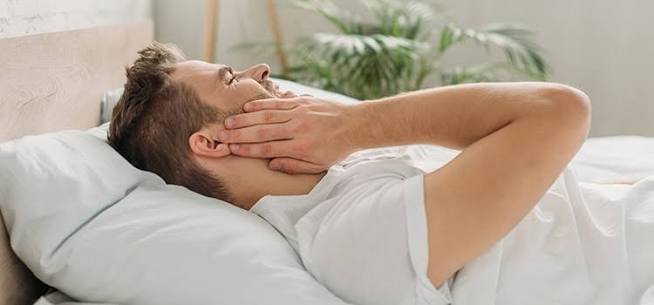
The way you sleep has a direct effect on your jaw. This is something many people have never considered, but it is a meaningful contributor to morning jaw pain for a significant number of people.
Sleeping on your side — particularly pressing your face into the pillow — puts lateral pressure on the jaw for hours at a time. If you favor one side consistently, you may notice that your jaw pain is predominantly on one side. The pressure from the pillow against the cheek and jaw compresses the TMJ and the surrounding muscles, and maintaining this compression through hours of sleep can cause localized soreness, stiffness, and pain upon waking.
Stomach sleeping is generally considered one of the worst positions for jaw health. When sleeping face-down, the head must be turned to one side to breathe, placing the jaw in an asymmetrical, twisted position for extended periods. The spine and neck are also under strain in this position, which contributes to the neck pain and headaches that often accompany jaw pain in chronic sufferers.
Sleeping with a very thick pillow that forces the neck into excessive flexion, or a pillow that is too flat and allows the head to drop back, changes the resting position of the jaw. The jaw hangs differently depending on head and neck position. An extreme position held for hours can stress the joints and muscles even without any grinding or clenching.
The best sleeping position for minimizing jaw stress is on the back with a pillow that supports the natural curve of the neck without pushing the head forward or allowing it to drop back. If side sleeping is preferred, a pillow that maintains the head at a neutral height so the neck is not bent upward or downward reduces compression on the jaw joint.
Sleep position effects on morning jaw pain:
| Sleep Position | Effect on Jaw | Recommendation |
|---|---|---|
| Back sleeping (neutral neck) | Minimal jaw stress | Best option for jaw health |
| Side sleeping with face pressed into pillow | Compresses jaw on contact side | Use pillow that prevents face pressure |
| Consistent one-side sleeping | Asymmetric loading, one-sided pain | Alternate sides or switch to back |
| Stomach sleeping (face turned) | Jaw in twisted, compressed position | Avoid if possible |
| Side sleeping with thick, raised pillow | Altered jaw position from neck angle | Use appropriately sized pillow |
| Back sleeping with head pushed too far forward | Changes jaw resting position | Choose supportive, appropriately thick pillow |
Stress and Anxiety — The Underrated Driver of Morning Jaw Pain
The connection between psychological stress and jaw pain is one of the most well-established but frequently overlooked aspects of this condition. People tend to think of jaw pain as a physical problem with a purely physical solution — a dental device, a medication, a procedure. But without addressing the stress component, even the best physical interventions often provide only partial relief.
The nervous system does not fully switch off during sleep. When psychological stress or anxiety is high, the autonomic nervous system remains in a state of elevated arousal even through the night. This increased activation promotes sleep bruxism by increasing the frequency of jaw muscle activity during sleep. It also reduces sleep quality by causing more frequent arousals and lighter sleep stages, during which bruxism tends to peak.
Research published in the Journal of Dental Research has found that people with higher levels of psychological distress — measured using validated stress and anxiety scales — show significantly higher rates of sleep bruxism and more severe TMD symptoms. The relationship is dose-dependent: the higher the stress level, the more severe the jaw grinding and muscle pain tend to be.
It is also worth understanding that morning jaw pain from stress often comes with a constellation of other symptoms. Morning headaches (often starting at the temples), neck stiffness and tension, tiredness despite adequate sleep time, difficulty concentrating, and irritability are all signs that chronic stress is affecting the nervous system and spilling over into physical symptoms.
A particularly valuable insight from clinical practice is that many people with stress-related jaw pain first notice the condition during specific life periods — a job change, the end of a relationship, an illness in the family, a demanding academic period. The jaw symptoms often begin within weeks of the stressor intensifying, confirming the direct relationship between psychological state and physical jaw symptoms.
How stress drives morning jaw pain:
- Elevated stress hormones keep the nervous system activated during sleep
- Increased sleep bruxism activity occurs in lighter sleep stages
- Muscle tension is maintained at a higher baseline even during rest
- Sleep quality is reduced, with more time in lighter stages where grinding occurs
- Chronic daytime clenching fatigues muscles before sleep even begins
- High stress reduces the threshold at which pain is perceived
Stress-related jaw pain — associated symptoms to watch for:
| Symptom | Connection to Stress | Where Pain Is Felt |
|---|---|---|
| Morning temple headaches | Temporalis muscle overuse | Sides of the head |
| Neck and shoulder tension | Postural and stress-related muscle tension | Back and sides of neck |
| Ear pain or fullness | Referred pain from pterygoid muscles | In and around the ear |
| Eye fatigue or pain | Referred from temporalis | Around and behind the eyes |
| Tooth sensitivity | Enamel wear from grinding | Multiple teeth, often all at once |
| Facial tiredness | General jaw muscle fatigue | Across cheeks and jaw |
Sleep Apnea and Its Surprising Link to Jaw Pain
Sleep apnea and jaw pain may seem like completely separate problems, but they are connected in ways that are increasingly recognized in the dental and medical literature. If you have morning jaw pain and also snore, wake up feeling unrefreshed, or experience daytime sleepiness, sleep apnea may be part of the picture.
Obstructive sleep apnea (OSA) occurs when the upper airway partially or completely collapses during sleep, cutting off breathing. The brain detects the oxygen drop and triggers an arousal — often unconscious — to restore muscle tone and reopen the airway. These arousals happen throughout the night, disrupting sleep architecture and creating the excessive daytime sleepiness that characterizes the condition.
Research has found that sleep bruxism episodes are frequently associated with sleep apnea events — grinding often occurs in the moments following an apnea event as the brain activates the muscles and the person transitions through arousal. A 2014 study in the journal Sleep found that among people with sleep apnea, the rate of sleep bruxism was significantly higher than in the general population. The relationship appears to be partly causal — the respiratory events trigger the jaw muscle activity that constitutes bruxism.
Additionally, the position and posture of the jaw affects the upper airway space. People who have a retruded mandible — a lower jaw that sits further back than ideal — have a smaller airway behind the tongue. The body’s response during sleep may be to thrust the jaw forward during arousal events, creating unusual stress on the TMJ as the jaw is repeatedly moved during the night.
This is clinically significant because if your jaw pain is being driven by sleep apnea, treating the jaw pain in isolation will produce incomplete results. A mandibular advancement device — used as a treatment for mild to moderate sleep apnea — can both open the airway and reduce the stress on the TMJ by repositioning the jaw, addressing both problems at once in appropriate cases.
Signs that sleep apnea may be contributing to your morning jaw pain:
- Loud snoring noticed by bed partner
- Waking with dry mouth in the mornings
- Feeling tired and unrefreshed despite a full night of sleep
- Morning headaches specifically at the back of the head or forehead
- Difficulty concentrating during the day
- Waking up gasping or feeling like breathing stopped
- Irritability or mood changes related to poor sleep quality
- Frequent nighttime urination (can be a sign of OSA)
- High blood pressure that is difficult to control
Rheumatoid Arthritis and Other Systemic Conditions Affecting the Jaw
Not all morning jaw pain is related to grinding, clenching, or sleep issues. A small but significant proportion of people who experience morning jaw stiffness and pain have an underlying systemic inflammatory or autoimmune condition affecting the TMJ.
Rheumatoid arthritis (RA) is an autoimmune disease that causes chronic inflammation in joints throughout the body. The TMJ is affected in a significant proportion of RA patients — estimates in research literature suggest that somewhere between 40 and 75 percent of RA patients have some degree of TMJ involvement. The morning stiffness and joint pain that characterize rheumatoid arthritis are well-known features of the disease, and the same pattern applies to the jaw. Morning jaw stiffness that lasts for 30 minutes or more before the joint loosens up, combined with stiffness in other joints, is a meaningful indicator that systemic disease may be involved.
Psoriatic arthritis, lupus, ankylosing spondylitis, and other systemic inflammatory arthritides can also affect the TMJ. Gout a metabolic disorder causing crystal deposits in joints — can affect the TMJ, though this is less common.
Fibromyalgia: a condition characterized by widespread musculoskeletal pain, fatigue, and sleep disturbance — is strongly associated with TMD. Research consistently shows high rates of overlap between the two conditions. People with fibromyalgia often have jaw pain as part of their overall pain picture, and the morning pain pattern reflects the characteristic morning stiffness and pain amplification that define fibromyalgia.
If you have morning jaw pain alongside morning stiffness in other joints, fatigue, skin changes, rashes, or other systemic symptoms, evaluation by a rheumatologist is appropriate in addition to dental evaluation.
Systemic conditions associated with TMJ and morning jaw pain:
| Condition | Joint Involvement | Morning Stiffness Duration | Other Clues |
|---|---|---|---|
| Rheumatoid arthritis | TMJ in 40 to 75% of cases | 30 minutes to several hours | Other joints affected, symmetrical |
| Psoriatic arthritis | Can affect TMJ | Moderate morning stiffness | Skin psoriasis present |
| Ankylosing spondylitis | TMJ sometimes affected | Significant morning stiffness | Primarily spine and pelvis |
| Lupus | TMJ occasionally | Variable | Rash, fatigue, multi-organ |
| Fibromyalgia | Muscular pain including jaw | Extended morning stiffness | Widespread pain, fatigue, sleep issues |
| Gout | Occasionally TMJ | Variable | Sudden onset, very tender joint |
Dental Issues That Cause the Jaw to Work Abnormally During Sleep
Sometimes morning jaw pain is driven by specific dental problems that cause the teeth to come together in an uneven or abnormal way, forcing the jaw muscles and joints to work in suboptimal positions. This is an area where dental evaluation is particularly important.
A new or high dental restoration — a crown, filling, or veneer that is even slightly taller than the surrounding teeth — can throw off the bite. The brain, which is exquisitely sensitive to changes in how the teeth come together, registers the change and the jaw muscles work to compensate. This compensation involves the muscles working in unusual patterns, which can cause fatigue and pain. This is why jaw pain that begins shortly after a dental procedure should be mentioned to the dentist promptly — a simple bite adjustment can sometimes resolve the problem entirely.
Missing teeth affect the way the jaw functions. When a tooth is missing, the opposing tooth has no partner to bite against. The surrounding teeth may drift into the space. The jaw compensates by shifting to find a stable bite position. Over time, these compensatory movements and shifted bite positions stress the TMJ and the muscles.
Orthodontic issues — bite problems such as an overbite, underbite, crossbite, or open bite — can create situations where the jaw muscles work harder than necessary to bring the teeth together or where the jaw is held in an uncomfortable resting position.
Worn-down teeth from years of grinding create their own secondary problem: as the vertical dimension of the teeth reduces, the jaw closes further than it should, compressing the TMJ and changing the muscle lengths. The shortened vertical height means the muscles work in a different length relationship, and the joint is under different loading. This can be a self-perpetuating cycle where grinding wears the teeth, the worn teeth change the bite, and the changed bite promotes further grinding.
Dental issues contributing to morning jaw pain:
| Dental Issue | How It Stresses the Jaw | What to Do |
|---|---|---|
| High dental restoration | Uneven bite causes compensatory muscle activity | See dentist for bite adjustment |
| Missing teeth | Bite shifting, uneven loading | Replacement options: implant, bridge, partial denture |
| Bite misalignment | Muscles overwork to find bite position | Orthodontic evaluation |
| Severely worn teeth | Reduced vertical height compresses TMJ | Dentist evaluation, possible bite restoration |
| Poorly fitting dentures | Unstable bite causes muscle strain | Denture refitting or replacement |
| Cracked tooth | Pain changes bite position | Dental evaluation and treatment |
Referred Pain to the My Jaw Hurt From Neck and Head Muscles
One aspect of morning jaw pain that is often missed in a dental-focused examination is that pain felt in the jaw does not always originate in the jaw. The human head and neck is a complex region where multiple muscle groups, nerves, and fascial structures are interconnected. Pain can be referred — felt at a location distant from the actual source — in ways that convincingly mimic primary jaw problems.
The sternocleidomastoid muscle (SCM) — the prominent muscle running from behind the ear down to the collarbone — is a frequent source of referred pain that can be felt in the jaw, face, ear, and temple. Trigger points (hyperirritable spots within muscle) in the SCM can send pain into the jaw in a pattern that is indistinguishable from primary TMJ pain unless the examiner specifically examines and presses on the SCM.
The upper trapezius and posterior neck muscles refer pain upward into the head, jaw, and face. People who sleep with the neck in a strained or unusual position overnight — or those who carry chronic neck tension from posture, stress, or physical work — often wake with pain that travels from the neck into the jaw area.
Research in pain science has established that chronic pain conditions often involve central sensitization — a state where the nervous system becomes hypersensitive and amplifies pain signals. In central sensitization, inputs from muscles and joints that would normally not register as painful begin to generate significant pain responses. Many chronic jaw pain sufferers show signs of central sensitization, which is why comprehensive treatment addressing the whole system — not just the jaw joint — produces better long-term outcomes.
Neck and head muscles that refer pain to the jaw area:
| Muscle | Location | Referred Pain Pattern | Common Cause |
|---|---|---|---|
| Sternocleidomastoid (SCM) | Side of neck | Jaw, ear, temple, forehead | Poor sleep position, stress, forward head posture |
| Upper trapezius | Shoulder/neck junction | Back of head, temple, jaw | Stress posture, heavy bag carrying, desk work |
| Masseter (neck attachment) | Side of jaw | Ear, lower jaw, teeth | Grinding, clenching |
| Posterior neck extensors | Back of neck | Occipital headache, jaw | Pillow position, sustained neck flexion |
| Digastric | Under the chin | Lower jaw, throat area | Swallowing disorders, posture |
| Splenius capitis | Back of neck | Eye, forehead, temple | Poor sleeping posture |
What a Dentist Looks For When You Report Morning Jaw Pain
When you visit a dentist because of morning jaw pain, a comprehensive evaluation should cover several areas — not just a glance at the teeth. Understanding what a thorough assessment involves helps you know whether the evaluation you receive is appropriately complete.
The history portion of the examination covers when the pain started, what makes it better or worse, whether it is associated with any specific activities or situations, whether there is clicking or locking in the jaw, whether you have been told you grind your teeth, and what your sleep quality is like. Information about stress levels, medications, and other health conditions is also relevant.
Physical examination includes looking at how the jaw opens and closes — measuring the maximum opening, observing whether the jaw deviates to one side during opening, and listening or feeling for joint sounds. The dentist palpates (presses) the masseter, temporalis, and other jaw muscles to check for tenderness and trigger points. The TMJ itself is palpated by placing fingers just in front of the ear and feeling the joint during movement. The bite is examined to look for wear patterns, high spots, or asymmetries.
Dental examination looks at tooth wear patterns — flat, worn biting surfaces suggest grinding. Cracks, chips, and sensitivity patterns give further information. X-rays of the TMJ (typically a panoramic radiograph as a starting point, sometimes followed by a cone beam CT for more detail) can reveal changes in the bone of the joint, degenerative changes, or significant condylar asymmetry.
Sleep apnea screening — using a validated questionnaire such as the STOP-BANG or Epworth Sleepiness Scale — should be incorporated when relevant symptoms are present. Referral to a sleep physician may follow if screening indicates risk.
What a comprehensive TMD/jaw pain evaluation includes:
| Component | What Is Assessed | Why It Matters |
|---|---|---|
| Detailed history | Timeline, triggers, associated symptoms | Identifies likely cause category |
| Jaw range of motion | Maximum opening, deviation, symmetry | Assesses joint and muscle function |
| Joint sounds | Clicking, crepitus, locking | Indicates disc position and joint condition |
| Muscle palpation | Tenderness in masseter, temporalis, SCM | Identifies muscular component |
| TMJ palpation | Tenderness over joint itself | Distinguishes joint from muscle pain |
| Bite assessment | Wear patterns, high spots, bite position | Dental contributions to jaw loading |
| Dental X-rays | Bone changes, condylar morphology | Rules out structural joint disease |
| Sleep apnea screening | Sleepiness, snoring, witnessed apneas | Identifies sleep disorder contribution |
| Stress and health history | Psychological stress, systemic conditions | Identifies systemic and behavioral drivers |
Night Guards and Occlusal Splints
The most commonly prescribed treatment for morning jaw pain related to grinding and clenching is a dental night guard, also called an occlusal splint. Night guards are custom-made acrylic devices that fit over the upper or lower teeth and are worn during sleep.
The way they work is frequently misunderstood. Many patients are told — and believe — that night guards prevent grinding. This is not accurate. Research is very clear that night guards do not stop the grinding behavior. The jaw muscles continue to contract during sleep whether the guard is in place or not. What the guard does is protect the teeth from the wear and damage that grinding would otherwise cause, and in many designs, it changes the way the forces are distributed across the jaw system in a way that reduces the strain on the TMJ and surrounding muscles.
A well-made night guard properly fitted to provide even contact across all teeth when the jaw closes — can significantly reduce morning muscle soreness for many people. The even contact may reduce the intensity of individual muscle contractions, and some designs deliberately position the jaw in a slightly different position that reduces loading on the joint.
There are different types of splints, and choosing the right one matters. A flat plane stabilization splint is the most commonly used and most evidence-supported design for general bruxism and TMD. An anterior bite plane or NTI device covers only the front teeth and reduces the amount of muscle force that can be generated — this design has strong evidence for reducing headaches but is controversial for long-term TMD management and requires careful monitoring. Repositioning splints that hold the jaw in a specific forward position can be helpful for disc displacement conditions but need careful monitoring to avoid permanent bite changes.
Night guards from a drug store or pharmacy are far inferior to custom-made devices and should only be used as a very short-term option while waiting for a proper custom device. Poorly fitting over-the-counter guards can actually worsen jaw symptoms by creating uneven contacts.
Types of night guards and their applications:
| Device Type | Design | Best For | Key Considerations |
|---|---|---|---|
| Flat plane stabilization splint | Full coverage, even contact | General bruxism, muscle pain | Most evidence-supported for general use |
| Anterior bite plane (NTI) | Covers front teeth only | Headaches, migraine prevention | Not for full-time use without monitoring |
| Soft night guard | Soft acrylic, cushioning | Mild grinding | May increase clenching in some patients |
| Hard acrylic splint | Rigid, precisely adjusted | Most TMD and bruxism | Gold standard material for fit and adjustment |
| Mandibular advancement device | Positions lower jaw forward | Sleep apnea and some TMD | Addresses both apnea and TMJ loading |
Physical Therapy and Jaw Exercises That Help Morning Pain
Physical therapy specifically for the jaw and TMJ is an effective and often underutilized treatment for morning jaw pain. Many people are surprised to learn that physical therapy applies to the jaw just as it does to the shoulder or knee — but the principles are the same. If muscles are tight, inflamed, or have developed trigger points, targeted physical therapy can provide genuine relief.
A physical therapist trained in TMD management can address the jaw from multiple angles. Manual therapy — which involves hands-on techniques to mobilize the joint, stretch restricted muscles, and treat trigger points — can dramatically reduce the muscle tightness and joint stiffness that cause morning pain. Trigger point release involves applying sustained pressure to hyperirritable spots within muscles like the masseter and temporalis until the tension releases. This can be done by the therapist during sessions and taught to the patient to do at home.
Therapeutic exercises are also important. Gentle jaw stretching exercises help restore normal range of motion when morning stiffness is limiting movement. Proprioceptive exercises — exercises that train the jaw to move in a controlled, coordinated way — help retrain abnormal movement patterns. Postural correction exercises address the forward head posture and neck tension that frequently contribute to jaw pain through referred pain mechanisms.
Heat and cold therapy is simple but effective. Applying a warm compress or heat pack to the jaw muscles for 10 to 15 minutes in the morning before getting out of bed reduces muscle stiffness and prepares the muscles for the activity of the day. Cold packs applied to the area of the TMJ for short periods can help reduce joint inflammation when the joint itself is the primary pain source.
Home exercises and self-care for morning jaw pain:
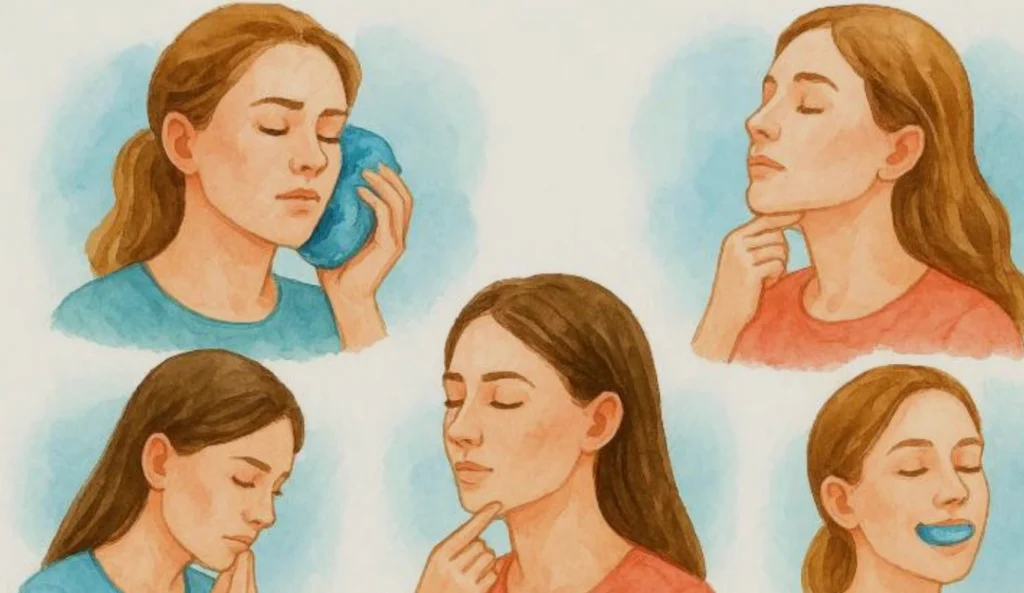
Gentle morning stretching routine (do before getting out of bed):
- Relax the jaw completely — let the teeth separate and the lips remain closed
- Slowly open the mouth as wide as is comfortable without pain — hold for 5 seconds, close slowly — repeat 5 times
- Move the jaw gently from side to side, about 5 to 10 mm each direction — 10 repetitions each side
- Move the jaw gently forward and backward within a pain-free range — 10 repetitions
Heat application:
- Apply a warm, moist towel or heat pack to the jaw and cheek area for 10 to 15 minutes before beginning morning activity
- This reduces muscle stiffness and improves blood flow to the area
Trigger point self-massage:
- Find tender spots in the masseter (the thick muscle in the cheek) and temporalis (along the side of the skull above the ear)
- Apply firm, sustained pressure with a finger for 60 to 90 seconds until the tenderness reduces
- This can be done once or twice daily
Postural awareness:
- Set reminders to check head and neck position during the day
- Bring the head back over the shoulders rather than allowing it to jut forward
- Keep the teeth apart during rest — tongue on the roof of the mouth, lips closed, teeth not touching
Stress Management Approaches That Directly Reduce Jaw Pain
Because stress is such a powerful driver of morning jaw pain, stress management is genuinely therapeutic — not just a lifestyle suggestion. Research shows that psychological interventions specifically reduce bruxism and TMD pain in clinical trials.
Cognitive behavioral therapy (CBT) has the strongest evidence base among psychological approaches for chronic pain including TMD. CBT for bruxism or jaw pain helps patients identify the thoughts, emotions, and situations that trigger jaw clenching and grinding, and develops practical strategies for responding differently. Multiple randomized controlled trials have found CBT to be as effective as night guard therapy for reducing TMD pain and more effective at maintaining improvement over the long term.
Biofeedback is a technique that uses sensors to monitor muscle activity and provides real-time feedback to help the patient learn to reduce muscle tension. EMG (electromyographic) biofeedback for the masseter and temporalis muscles has been shown in clinical trials to reduce sleep bruxism activity and daytime clenching. It is particularly useful for helping people with awake bruxism who are unaware of their clenching habits.
Mindfulness-based stress reduction (MBSR) — an 8-week structured program that teaches present-moment awareness and non-reactive responses to stress — has been found in multiple studies to reduce chronic pain intensity and improve quality of life. Several studies have specifically examined mindfulness for TMD pain with positive results.
Progressive muscle relaxation — a technique involving systematically tensing and then releasing muscle groups throughout the body — promotes deep physical relaxation. Practiced regularly before sleep, it helps reduce the overall level of muscle tension in the body, including the jaw, going into the sleep period.
Psychological and stress management approaches for jaw pain:
| Approach | What It Involves | Evidence for Jaw Pain | How to Access It |
|---|---|---|---|
| Cognitive behavioral therapy (CBT) | Identifying and changing thought and behavior patterns | Strong — multiple RCTs | Psychologist, online CBT programs |
| Biofeedback | Real-time muscle activity monitoring and training | Moderate to strong | Physical therapist, pain specialist |
| Mindfulness-based stress reduction | 8-week structured mindfulness program | Moderate | Classes, apps, online programs |
| Progressive muscle relaxation | Systematic muscle tensing and releasing | Moderate | Self-practice with guidance, apps |
| Regular exercise | Aerobic activity reduces cortisol and stress hormones | Strong (indirect) | Any accessible exercise |
| Sleep hygiene improvement | Consistent sleep schedule, good sleep environment | Moderate | Self-implementation, sleep specialist |
When to See a Doctor or Dentist About Morning Jaw Pain
Many people with morning jaw pain manage it at home for months or even years before seeking professional help. While mild, occasional jaw stiffness on waking that resolves quickly is not necessarily urgent, certain presentations warrant timely evaluation.
Jaw pain that is consistently present every morning without improvement, that is getting progressively worse over weeks and months, or that is significantly affecting your ability to eat, speak, or open your mouth should be evaluated by a dentist with experience in TMD management or an orofacial pain specialist.
If you experience sudden limitation in how wide you can open your mouth — waking up one morning to find you can barely open past the thickness of two fingers — this may indicate acute disc displacement without reduction. This requires prompt dental evaluation and specific management.
If your morning jaw pain is accompanied by significant jaw swelling, redness, warmth over the joint, or fever, infection or acute inflammatory joint disease needs to be ruled out. If jaw pain accompanies morning stiffness in multiple other joints, fatigue, unexplained weight loss, or other systemic symptoms, a medical evaluation including blood tests for inflammatory markers and rheumatological conditions is appropriate.
Jaw pain associated with symptoms of sleep apnea — significant snoring, witnessed breathing pauses, extreme daytime sleepiness — warrants evaluation by a sleep medicine specialist or a sleep-focused dentist who can assess and treat both conditions together.
When to seek professional help for morning jaw pain:
| Situation | Who to See | How Soon |
|---|---|---|
| Daily pain for more than 2 to 3 weeks | Dentist with TMD experience | Within 1 to 2 weeks |
| Sudden, significant restriction in mouth opening | Dentist or orofacial pain specialist | Within 24 to 48 hours |
| Jaw swelling, warmth, fever | Dentist or medical doctor | Same day |
| Pain with multiple joint stiffness, systemic symptoms | Medical doctor, rheumatologist | Within 1 to 2 weeks |
| Sleep apnea symptoms with jaw pain | Sleep specialist or sleep dentist | Within 2 to 4 weeks |
| Progressive worsening over time | Dentist or orofacial pain specialist | Soon — do not delay further |
| Jaw pain after recent dental procedure | Dentist who did the procedure | Within days |
Building a Personal Plan to Stop Waking Up With Jaw Pain
For most people with morning jaw pain, the solution involves combining several approaches rather than relying on a single treatment. A well-rounded personal plan addresses the different contributing factors simultaneously.
Start with a professional evaluation. This gives you accurate information about what is actually causing your pain — whether it is primarily muscular (bruxism, clenching), joint-related (TMD, disc displacement), dental (bite issues, tooth wear), sleep-related (sleep apnea), or systemic. Treatment can then be targeted appropriately.
Implement the mechanical support. If grinding or clenching is confirmed, a custom night guard protects the teeth and reduces joint loading. If sleep position is a contributing factor, address pillow selection and position training. If sleep apnea is identified, appropriate treatment (CPAP, mandibular advancement device) both protects the airway and reduces bruxism associated with apnea events.
Commit to the muscle work. Daily gentle jaw stretching in the mornings, regular heat application to tight muscles, and trigger point self-massage all contribute to reducing the muscle tension that accumulates overnight. These take only 10 to 15 minutes each morning but have a meaningful cumulative effect over weeks.
Address the stress. Whether through formal CBT, mindfulness practice, regular exercise, better sleep hygiene, or professional counseling, reducing the psychological load that feeds nighttime muscle activity is one of the most impactful changes you can make. Many people find that when a significant stressor in their life resolves, their jaw symptoms improve dramatically even without any dental treatment.
Follow up and adjust. Morning jaw pain has a strong tendency to recur if the underlying drivers are not consistently managed. Ongoing dental maintenance, regular monitoring of night guard wear, periodic reassessment by your treating dentist, and sustained attention to stress management and sleep quality are all part of long-term success.
Summary plan for addressing morning jaw pain:
| Area | Action | Who Can Help |
|---|---|---|
| Diagnosis | Comprehensive dental and medical evaluation | Dentist, orofacial pain specialist |
| Mechanical protection | Custom night guard or appropriate splint | Dentist |
| Sleep position | Appropriate pillow, position training if needed | Self, with guidance |
| Sleep apnea | Sleep study and treatment if indicated | Sleep specialist, sleep dentist |
| Muscle care | Morning stretching, heat, trigger point massage | Self, physical therapist |
| Stress management | CBT, mindfulness, exercise, sleep hygiene | Psychologist, self-practice |
| Dental correction | Bite adjustment, missing tooth replacement | Dentist |
| Long-term monitoring | Regular dental reviews, maintenance | Dentist |
Morning jaw pain every day is not something you simply have to live with. It is a sign that your body — specifically your jaw muscles, joints, and nervous system — is under sustained stress during the hours when you are asleep and unable to regulate what is happening. Understanding the cause, getting appropriate professional support, and consistently applying the right combination of treatments gives most people genuine, lasting relief.