


Crossbite Teeth What It Is and How to Fix
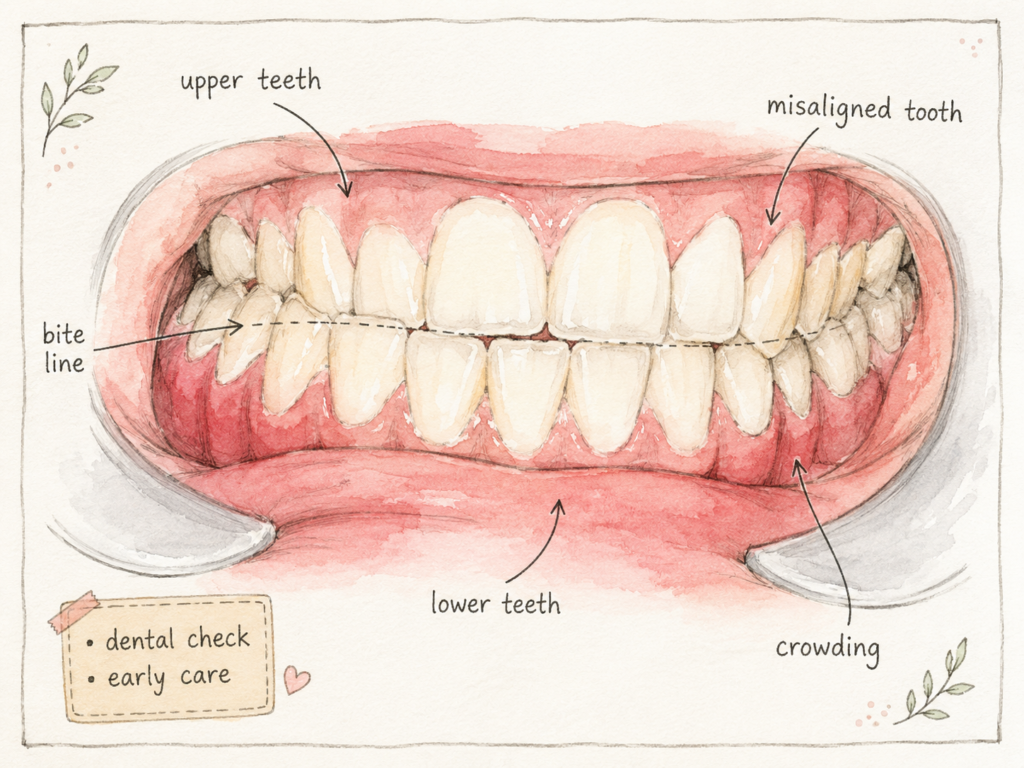
A crossbite is a bite problem where some upper teeth do not sit in the normal position over the lower teeth. In a healthy bite, the upper teeth usually sit slightly outside the lower teeth when the mouth closes. With a crossbite, one or more upper teeth may sit inside the lower teeth, or the upper back teeth may bite too far outside the lower teeth.
Crossbite teeth can affect the front teeth, back teeth, one side of the mouth, or both sides. Some people notice it because their smile looks uneven. Others notice jaw shifting, tooth wear, gum recession, chewing problems, or jaw discomfort. In children, a crossbite can affect jaw growth if it is not treated at the right time.
The good news is that crossbites can often be fixed. Treatment depends on the person’s age, jaw growth, tooth position, and how severe the bite problem is. Children may need a palatal expander, braces, or other early orthodontic care. Teens and adults may need braces, clear aligners, bite correction appliances, tooth reshaping, or in severe jaw cases, surgery.
This guide explains crossbite teeth in simple words. It covers causes, signs, treatment options, home tips, and when to see an orthodontist or dentist.
| Main question | Simple answer |
|---|---|
| What is a crossbite? | A bite where some upper teeth sit in the wrong position compared with lower teeth |
| Can a crossbite affect front teeth? | Yes |
| Can a crossbite affect back teeth? | Yes |
| Can children have crossbite teeth? | Yes, and early checks are important |
| Can adults fix a crossbite? | Yes, but treatment may be different |
| Can crossbite fix itself? | Usually no |
| Who treats crossbite? | A dentist or orthodontist |
What Is a Crossbite
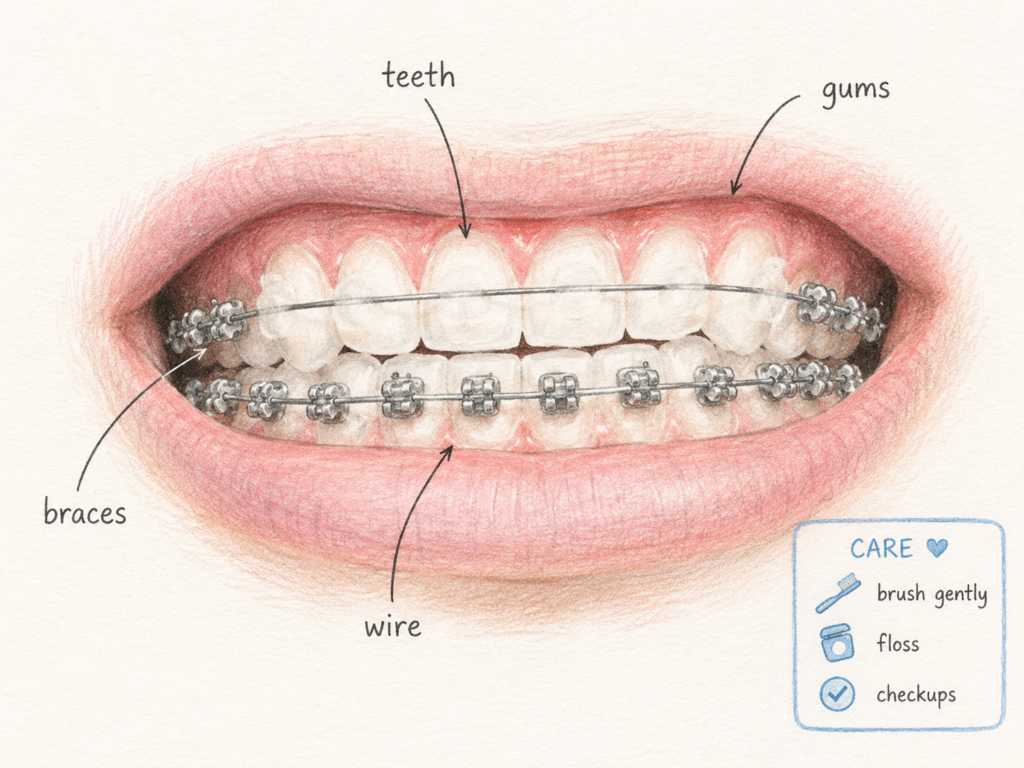
A crossbite is a type of malocclusion. Malocclusion means the teeth or jaws do not line up properly when the mouth closes. In a crossbite, the upper and lower teeth do not meet in the normal way.
A crossbite can affect just one tooth, several teeth, or a whole section of the mouth. It can happen in the front or back of the mouth. It may be mild and hard to see, or it may be obvious when the person bites down.
Orthodontic care note: A crossbite is not only a smile issue. It can also affect chewing, tooth wear, gum health, and jaw movement.
| Crossbite feature | Simple meaning |
|---|---|
| Upper tooth sits behind lower tooth | Common front crossbite pattern |
| Upper back teeth sit inside lower back teeth | Common back crossbite pattern |
| One side of bite affected | Unilateral crossbite |
| Both sides affected | Bilateral crossbite |
| Jaw shifts when closing | Bite may be forcing the jaw to one side |
| Teeth wear unevenly | Bite pressure may be uneven |
How a Normal Bite Usually Looks
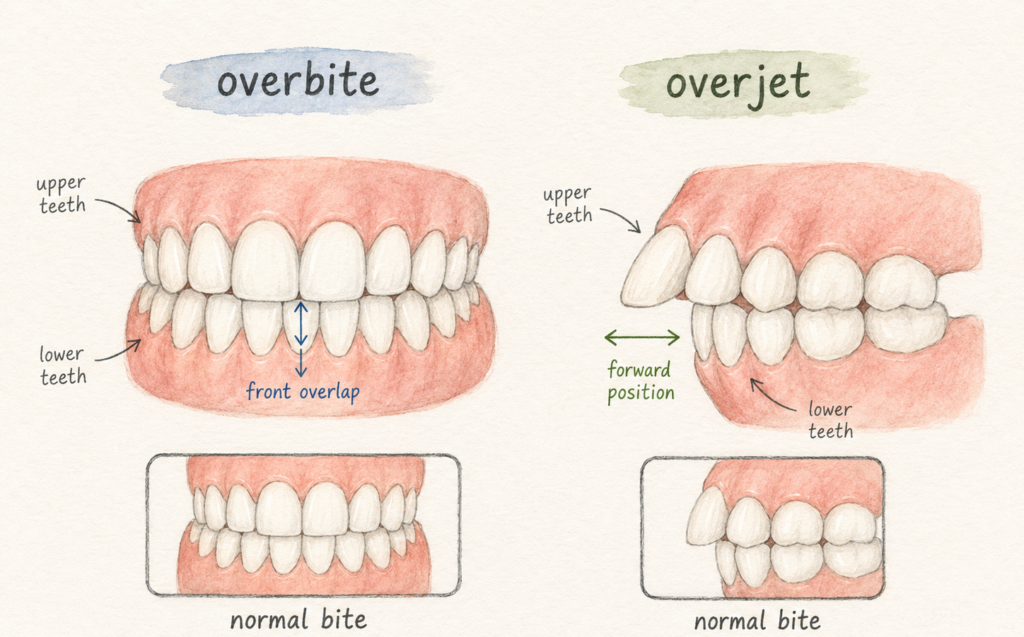
In a normal bite, the upper front teeth sit slightly in front of the lower front teeth. The upper back teeth usually sit slightly outside the lower back teeth. This helps chewing forces spread more evenly.
A crossbite changes this pattern. Some teeth may meet edge to edge, sit behind the lower teeth, or force the jaw to shift to one side.
Signs of a more balanced bite include:
- Upper teeth sit slightly outside lower teeth
- Front teeth overlap gently
- Back teeth meet evenly
- Jaw closes without shifting
- Chewing feels balanced on both sides
- Teeth do not hit too hard in one area
- Gum line does not show unusual pressure signs
| Bite pattern | What it means |
|---|---|
| Upper teeth slightly outside lower teeth | Usually normal |
| Upper teeth inside lower teeth | Crossbite possible |
| Jaw shifts when biting | Bite interference possible |
| One side hits first | Bite imbalance possible |
| Teeth meet edge to edge | Tooth wear risk may rise |
Types of Crossbite Teeth
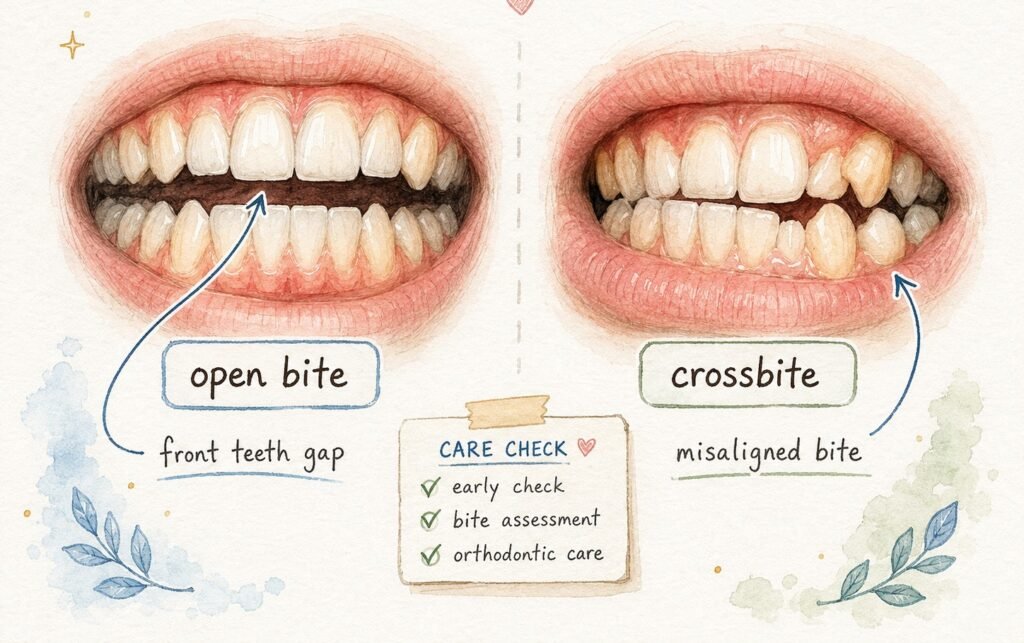
Crossbite teeth are not all the same. The type matters because treatment depends on which teeth are involved and whether the jaw or only the teeth are the main problem.
The main types are anterior crossbite, posterior crossbite, unilateral crossbite, bilateral crossbite, dental crossbite, and skeletal crossbite.
| Type | Simple meaning |
|---|---|
| Anterior crossbite | Front upper teeth sit behind lower front teeth |
| Posterior crossbite | Back upper teeth sit inside lower back teeth |
| Unilateral crossbite | Crossbite on one side |
| Bilateral crossbite | Crossbite on both sides |
| Dental crossbite | Teeth are tipped or positioned wrong |
| Skeletal crossbite | Jaw size or jaw position is part of the problem |
Anterior Crossbite
An anterior crossbite affects the front teeth. One or more upper front teeth sit behind the lower front teeth when biting down. This may look like one tooth is trapped behind the lower teeth.
An anterior crossbite can cause tooth wear, gum pressure, and uneven biting. It should be checked early, especially in children, because it may affect how the front teeth and jaw develop.
Common signs include:
- One upper front tooth sits behind a lower tooth
- Front teeth hit edge to edge
- Lower front teeth look more forward
- Tooth wear on front teeth
- Gum recession near lower front teeth
- Jaw may shift forward when biting
- Smile may look uneven
| Anterior crossbite clue | Why it matters |
|---|---|
| Upper front tooth behind lower tooth | Main sign |
| Tooth wear | Bite force is uneven |
| Gum pressure | Gum recession risk may rise |
| Jaw shift | Bite may be forcing movement |
| Child has mixed baby and adult teeth | Early care may help |
Posterior Crossbite
A posterior crossbite affects the back teeth. Usually, the upper back teeth should sit slightly outside the lower back teeth. In a posterior crossbite, the upper back teeth may sit inside the lower teeth. Sometimes the upper jaw is narrow.
Posterior crossbite can affect chewing and jaw movement. In children, the jaw may shift to one side to make the teeth fit together. If this continues, growth may become uneven.
Common signs include:
- Back teeth do not meet evenly
- Upper back teeth sit inside lower back teeth
- Jaw shifts to one side when closing
- Chewing feels stronger on one side
- Smile may look narrow
- Crossbite may affect one side or both sides
- Tooth wear may appear on back teeth
| Posterior crossbite clue | Why it matters |
|---|---|
| Upper back teeth inside lower teeth | Main sign |
| Narrow upper jaw | Expander may be considered in children |
| One-sided chewing | Jaw may be compensating |
| Jaw shift | Growth pattern may be affected |
| Uneven wear | Bite forces are not balanced |
What Causes Crossbite Teeth
Crossbite teeth can happen for several reasons. Some causes are linked with jaw growth. Some are linked with tooth position. Some are linked with habits during childhood. In many people, more than one factor is involved.
A person may be born with a narrow upper jaw. Teeth may come in at the wrong angle. Baby teeth may be lost too early or stay too long. Habits such as thumb sucking, mouth breathing, or long pacifier use may affect jaw and tooth position in some children.
| Cause | How it may lead to crossbite |
|---|---|
| Narrow upper jaw | Upper teeth may sit inside lower teeth |
| Genetics | Jaw size and tooth position can run in families |
| Thumb sucking | May affect jaw and tooth growth |
| Mouth breathing | May be linked with narrow palate in some children |
| Baby teeth lost early | Adult teeth may shift |
| Baby teeth kept too long | Adult teeth may come in wrong position |
| Crowding | Teeth may erupt out of line |
| Injury | Tooth or jaw position may change |
Childhood Habits That May Matter
Some habits can affect how teeth and jaws grow, especially when they continue for a long time. Not every child with these habits will get a crossbite, but they can raise the risk.
Habits and patterns that may matter include:
- Thumb sucking that continues for years
- Long pacifier use
- Tongue pushing against teeth
- Mouth breathing
- Sleeping with mouth open
- Chewing mostly on one side
- Early loss of baby teeth
- Not treating dental crowding early
- Delayed orthodontic checkups
| Habit or pattern | Possible effect |
|---|---|
| Thumb sucking | Can change tooth and jaw position |
| Long pacifier use | May affect bite development |
| Mouth breathing | May be linked with narrow upper jaw |
| One-sided chewing | Can add to jaw imbalance |
| Early baby tooth loss | Teeth may move into wrong spaces |
| Delayed checkup | Problems may grow before they are found |
Signs You May Have a Crossbite
A crossbite can be easy or hard to notice. Some people can see it in the mirror. Others only learn about it during a dental or orthodontic exam. You may notice one tooth biting behind another, jaw shifting, chewing difficulty, tooth wear, or gum problems.
Children may not complain because they do not know their bite is wrong. Parents may notice a narrow smile, uneven bite, or the child chewing mostly on one side.
| Sign | What it may suggest |
|---|---|
| Upper teeth sit inside lower teeth | Crossbite possible |
| Jaw shifts when biting | Bite interference possible |
| Uneven tooth wear | Bite pressure is uneven |
| Chewing on one side | Bite may feel unbalanced |
| Gum recession near one tooth | Pressure may be too high |
| Jaw clicking or soreness | Jaw strain may be present |
| Smile looks uneven | Bite or jaw position may be uneven |
At-Home Signs to Notice
You cannot diagnose crossbite fully at home, but you can notice clues. A dentist or orthodontist can confirm it.
At-home clues include:
- Bite down slowly and watch if the jaw shifts
- Check if upper teeth sit inside lower teeth
- Notice if one side touches first
- Look for teeth that hit edge to edge
- Notice if chewing feels easier on one side
- Look for worn tooth edges
- Notice if gums are pulling back near one tooth
- Watch if a child’s jaw moves to one side when closing
| What you notice | What to do |
|---|---|
| One tooth trapped behind another | Book a dental or orthodontic check |
| Jaw shifts sideways | Orthodontic exam may help |
| Chewing feels uneven | Bite check needed |
| Gum pulling back | Dentist should check pressure |
| Tooth wear | Bite may need correction |
| Child has early bite issue | Early orthodontic visit may help |
Why Crossbite Should Not Be Ignored
A crossbite may look minor, but it can place uneven pressure on teeth, gums, and jaws. Over time, this may lead to tooth wear, gum recession, jaw strain, chewing trouble, or uneven jaw growth in children.
Not every crossbite causes pain right away. Some people have no symptoms for years. Still, the bite may be placing stress on certain teeth or forcing the jaw to move in an unnatural way.
Orthodontic care note: A painless crossbite can still matter because bite pressure may slowly affect teeth and gums.
| Possible problem | How crossbite may contribute |
|---|---|
| Tooth wear | Teeth hit unevenly |
| Gum recession | One tooth may take too much pressure |
| Jaw shift | Bite forces jaw to one side |
| Chewing trouble | Teeth do not meet evenly |
| Facial imbalance in children | Growth may be affected |
| Jaw discomfort | Muscles and joints may work harder |
| Cracked teeth | Uneven force may raise risk |
Why Early Care Can Matter for Children
Children’s jaws are still growing. This can make some crossbite problems easier to guide earlier than later. A narrow upper jaw may be treated with an expander while growth is still active. Waiting too long can make treatment more complex.
Early care does not mean every child needs braces right away. Sometimes the orthodontist only watches growth. Other times, early treatment may help prevent a bigger problem.
Reasons early checks matter:
- Jaw growth can still be guided
- Crossbite can be found before it worsens
- A narrow upper jaw can be measured
- Baby and adult teeth can be checked together
- Space problems can be noticed early
- Jaw shifting can be corrected sooner
- Treatment may be simpler in some cases
| Child concern | Why early check helps |
|---|---|
| Narrow upper jaw | Expander may work better during growth |
| Jaw shift | Early correction may help balance |
| Front tooth crossbite | Can protect tooth and gum |
| Crowding | Space planning may help |
| Hidden bite issue | Orthodontist can spot it |
How Dentists and Orthodontists Diagnose Crossbite
A dentist or orthodontist checks how the teeth meet when the mouth closes. They may ask the patient to bite down several times, watch the jaw movement, check tooth wear, and look at the gum line. They may also use X-rays, photos, scans, or models of the teeth.
An orthodontist will decide whether the crossbite is mainly dental, skeletal, or both. This matters because a tooth-position problem may be treated differently from a jaw-width problem.
| Exam step | What it helps show |
|---|---|
| Bite check | Shows how upper and lower teeth meet |
| Jaw movement check | Shows if the jaw shifts |
| Tooth wear check | Shows pressure areas |
| Gum check | Finds recession or irritation |
| X-rays | Shows tooth roots and jaw position |
| Digital scan or models | Helps plan treatment |
| Growth check in children | Shows timing and jaw development |
Questions the Orthodontist May Ask
Clear answers help the orthodontist understand the full picture.
They may ask:
- When did you first notice the bite problem?
- Does the jaw shift when you bite?
- Do you chew more on one side?
- Do you have jaw pain or clicking?
- Do you grind your teeth?
- Did you suck your thumb as a child?
- Did baby teeth fall out early or late?
- Does your child breathe through the mouth?
- Has there been dental injury?
- Is there a family history of bite problems?
| Question | Why it matters |
|---|---|
| Jaw shift | Shows functional bite issue |
| Chewing side | Shows bite comfort |
| Grinding | May worsen tooth wear |
| Mouth breathing | May relate to growth pattern |
| Dental injury | Tooth position may change |
| Family history | Jaw pattern may be inherited |
Treatment Options for Crossbite Teeth
Crossbite treatment depends on the cause, age, severity, and whether the teeth or jaw are involved. Children may benefit from growth-guiding treatment. Teens and adults may need tooth movement with braces or aligners. Severe skeletal crossbite may need surgery after growth is complete.
There is no one treatment that fits everyone. The orthodontist creates a plan after checking the bite.
| Treatment option | Often used for |
|---|---|
| Palatal expander | Narrow upper jaw in growing children |
| Braces | Tooth movement and bite correction |
| Clear aligners | Mild to moderate tooth-position crossbite |
| Elastics | Helps guide bite with braces or aligners |
| Tooth reshaping | Very small bite adjustment in selected cases |
| Retainers | Holds results after treatment |
| Jaw surgery | Severe skeletal crossbite in adults |
How Treatment Choice Is Decided
The orthodontist looks at several details before choosing treatment. The goal is to fix the bite safely, not just move teeth quickly.
Treatment depends on:
- Age and growth stage
- Whether the upper jaw is narrow
- Whether one tooth or many teeth are involved
- Whether the jaw shifts
- Whether teeth are crowded
- Whether gums are healthy
- Whether tooth roots can move safely
- Whether the crossbite is mild or severe
- Whether the patient can follow appliance instructions
- Whether surgery is needed for jaw mismatch
| Factor | Why it matters |
|---|---|
| Child still growing | Expander may be possible |
| Adult jaw growth complete | Different options may be needed |
| Dental crossbite | Braces or aligners may work |
| Skeletal crossbite | Jaw width or surgery may be considered |
| Gum recession | Treatment must protect gums |
| Poor oral hygiene | Braces may need better cleaning first |
Palatal Expander for Crossbite
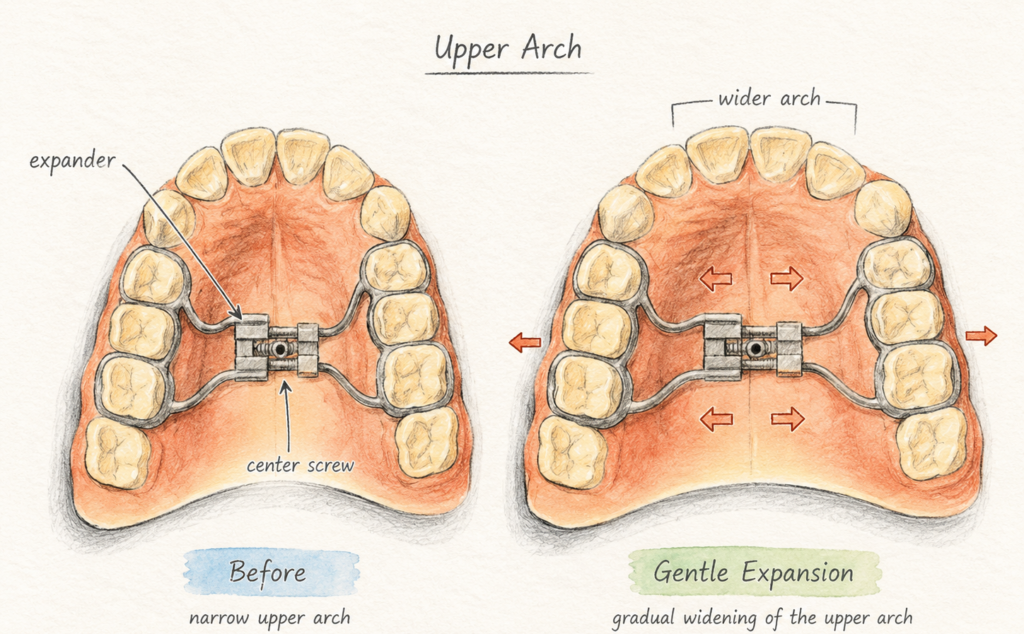
A palatal expander is an orthodontic appliance that widens the upper jaw or upper arch. It is often used in children when the upper jaw is too narrow. The expander sits across the roof of the mouth and is attached to the upper back teeth.
Some expanders are adjusted by turning a small screw. Others work with springs or wires. The aim is to guide the upper jaw wider so the upper teeth can fit better with the lower teeth.
| Expander point | Simple meaning |
|---|---|
| Main use | Widen narrow upper jaw |
| Often used in children | Growth makes expansion easier |
| Helps posterior crossbite | Upper back teeth can fit better |
| Attached to upper teeth | Sits near the roof of the mouth |
| May feel strange at first | Speech and eating can adjust |
| Needs cleaning | Food can stick around it |
What to Expect With an Expander
An expander can feel unusual at first. Speech may sound different for a few days. Eating may take practice. Mild pressure can happen after adjustment. The orthodontist will explain how to clean it and how adjustments are done.
Common experiences include:
- Pressure in the upper teeth or roof of mouth
- More saliva at first
- Temporary speech changes
- Food getting stuck near the appliance
- Need for careful brushing
- Small space may open between front teeth
- Follow-up visits to check progress
| Experience | What helps |
|---|---|
| Pressure | Follow orthodontist advice |
| Food trapping | Rinse and brush carefully |
| Speech change | Practice reading aloud |
| Trouble eating | Start with soft foods |
| Cleaning difficulty | Use recommended tools |
| Front gap appears | Often part of expansion process |
Braces for Crossbite
Braces can move teeth into better positions and help correct crossbite. Braces use brackets, wires, and sometimes elastics to guide teeth over time. They can treat front or back crossbites, depending on the case.
Braces may be used alone or after an expander. For example, a child may first need the upper jaw widened, then braces later to align the teeth.
| Braces use | How it helps |
|---|---|
| Move teeth | Corrects tooth position |
| Improve bite | Helps teeth meet better |
| Use elastics | Guides upper and lower bite |
| Work with expander | Aligns teeth after jaw widening |
| Treat complex cases | Useful for many bite patterns |
| Needs cleaning | Brackets can trap food |
Braces Care During Crossbite Treatment
Good cleaning is very important with braces. Food and plaque can collect around brackets. Poor cleaning can cause cavities, gum swelling, or white spots.
Helpful braces care tips include:
- Brush after meals when possible
- Use fluoride toothpaste
- Clean around brackets carefully
- Floss with braces tools
- Avoid very sticky foods
- Avoid biting hard foods with front teeth
- Wear elastics as directed
- Attend adjustment visits
- Tell the orthodontist if something breaks
- Keep regular dental cleanings
| Care step | Why it helps |
|---|---|
| Brushing around brackets | Prevents plaque buildup |
| Flossing tools | Cleans between teeth |
| Fluoride | Protects enamel |
| Avoiding hard foods | Prevents broken brackets |
| Wearing elastics | Helps bite correction |
| Dental cleanings | Keeps gums healthier |
Clear Aligners for Crossbite
Clear aligners are removable trays that move teeth gradually. They may help with mild to moderate crossbites when the problem is mainly tooth position. They may not be enough for every crossbite, especially if the jaw is narrow or the bite problem is severe.
Clear aligners must be worn as directed. If they are not worn enough hours each day, treatment may not work well.
| Clear aligner point | Simple meaning |
|---|---|
| Removable trays | Can be taken out for eating and cleaning |
| Best for selected cases | Not all crossbites qualify |
| Needs patient effort | Must be worn as directed |
| Easier cleaning | Teeth can be brushed normally |
| May use attachments | Small tooth-colored shapes help movement |
| May use elastics | Bite correction may need extra help |
Clear Aligner Tips
Clear aligners can work well for the right patient, but consistency matters.
Helpful tips include:
- Wear aligners for the hours advised
- Remove them for eating
- Brush before putting them back in
- Clean aligners daily
- Do not drink sugary drinks with aligners in
- Keep aligners in their case when removed
- Change trays only as directed
- Wear elastics if prescribed
- Attend follow-up visits
- Use retainers after treatment
| Good habit | Why it matters |
|---|---|
| Wearing enough hours | Teeth move as planned |
| Cleaning trays | Reduces smell and bacteria |
| Brushing before wearing | Prevents trapped sugar |
| Using case | Avoids losing aligners |
| Follow-up visits | Checks movement |
| Retainers | Holds final result |
Crossbite Treatment in Children
Children may have more treatment options because their jaws are still growing. An orthodontist may use early treatment to guide jaw width, fix a bite shift, or prevent uneven growth. Not every child needs early treatment. Some only need monitoring until more permanent teeth come in.
A first orthodontic check around age seven is often recommended because enough permanent teeth have come in for the orthodontist to see bite and jaw patterns.
| Child treatment option | When it may be used |
|---|---|
| Monitoring | Mild issue or waiting for growth |
| Palatal expander | Narrow upper jaw |
| Limited braces | One or few teeth need correction |
| Habit appliance | Thumb habit or tongue habit affects bite |
| Space maintainer | Baby tooth lost early |
| Full braces later | Final tooth alignment |
Why Timing Matters for Children
Timing can change the treatment plan. If the upper jaw is narrow, it may be easier to guide growth while the child is younger. If the crossbite is left for years, the jaw may keep shifting to one side.
Parents should watch for bite clues, but they do not need to diagnose it themselves. An orthodontist can check growth and decide whether treatment is needed now or later.
Signs a child should be checked:
- Upper teeth sit inside lower teeth
- Jaw shifts to one side when closing
- Child chews mostly on one side
- Front teeth bite behind lower teeth
- Teeth wear unevenly
- Mouth breathing or long thumb sucking habit
- Baby teeth lost too early
- Crowding is obvious
- Dentist recommends orthodontic review
| Child sign | Why it matters |
|---|---|
| Jaw shift | Growth may be affected |
| Back tooth crossbite | Upper jaw may be narrow |
| Front tooth crossbite | Tooth and gum pressure risk |
| One-sided chewing | Bite may not feel balanced |
| Crowding | Space may be limited |
| Mouth breathing | Growth pattern should be checked |
Crossbite Treatment in Adults
Adults can also fix crossbite teeth. Treatment may take more planning because jaw growth is complete. If the crossbite is mainly due to tooth position, braces or clear aligners may help. If the jaw mismatch is severe, jaw surgery may be discussed.
Adults may also have gum recession, worn teeth, missing teeth, crowns, implants, or jaw joint symptoms that affect the treatment plan. The orthodontist may work with a general dentist, periodontist, or oral surgeon.
| Adult concern | Why it matters |
|---|---|
| Jaw growth complete | Expansion options may be limited |
| Gum recession | Tooth movement must be planned carefully |
| Worn teeth | Bite forces need review |
| Missing teeth | Space planning may be needed |
| Crowns or implants | Movement limits may exist |
| Severe skeletal mismatch | Surgery may be considered |
Adult Treatment Choices
Adult treatment may include simple or complex care depending on the bite.
Possible options include:
- Braces
- Clear aligners
- Elastics
- Limited orthodontic treatment for one tooth
- Tooth reshaping in selected cases
- Gum treatment before orthodontics
- Restorative dental work after bite correction
- Jaw surgery for severe skeletal cases
- Retainers after treatment
| Option | Best for |
|---|---|
| Braces | Many moderate or complex cases |
| Clear aligners | Selected mild to moderate cases |
| Elastics | Bite guidance |
| Tooth reshaping | Very small bite adjustment |
| Gum care | Recession or gum disease |
| Surgery | Severe jaw mismatch |
| Retainers | Long-term stability |
Can Crossbite Fix Itself
A crossbite usually does not fix itself. Some small tooth position changes may happen as children grow, but relying on this can be risky. A crossbite may stay the same or get worse as adult teeth come in.
If a child has a crossbite, an orthodontic check can help decide whether to treat early or monitor. If an adult has a crossbite, it usually needs orthodontic or dental treatment to change.
| Situation | Can it fix itself |
|---|---|
| Mild baby tooth bite issue | Sometimes may change, but needs watching |
| Adult tooth crossbite | Usually no |
| Jaw-width crossbite | Usually needs treatment |
| One tooth crossbite | Usually needs dental or orthodontic help |
| Crossbite with jaw shift | Should be checked |
| Adult crossbite | Needs treatment if correction is wanted |
Why Waiting Can Make It Harder
Waiting does not always cause harm, but it can allow problems to continue. Teeth may wear unevenly, gums may recede, and jaw shifting can become a habit. In children, growth may continue around the wrong bite pattern.
Reasons not to ignore it include:
- Tooth wear may increase
- Gum recession may worsen
- Jaw shift may become more established
- Chewing may stay uneven
- Treatment may become more complex
- A narrow jaw may be harder to widen later
- Teeth may crowd more as adult teeth come in
| Waiting risk | What may happen |
|---|---|
| Uneven bite force | Tooth wear |
| Front tooth crossbite | Gum pressure |
| Back tooth crossbite | Jaw shift |
| Narrow upper jaw | Crowding or bite imbalance |
| Adult jaw growth complete | Fewer growth-guiding options |
How Long Crossbite Treatment Takes
Treatment time depends on the type of crossbite, patient age, appliance used, and how well instructions are followed. A single tooth crossbite may take less time than a full jaw-width problem. Treatment with an expander may be shorter, but braces or aligners may still be needed afterward.
The orthodontist can give the most accurate estimate after an exam.
| Case type | General timing idea |
|---|---|
| Single tooth crossbite | May be shorter |
| Mild dental crossbite | Often months to over a year |
| Crossbite with crowding | May take longer |
| Expander phase | Often shorter active phase, then holding time |
| Braces with bite correction | Often one to two years or more |
| Severe adult jaw case | Longer and may involve surgery |
What Can Affect Treatment Time
Many things can make treatment faster or slower.
Factors include:
- Severity of crossbite
- Number of teeth involved
- Jaw growth stage
- Type of appliance
- Oral hygiene
- Wearing aligners as directed
- Wearing elastics as directed
- Broken brackets or missed visits
- Gum health
- Need for surgery or extra dental work
| Factor | Effect on time |
|---|---|
| Mild case | Usually shorter |
| Severe case | Usually longer |
| Good appliance use | Helps treatment stay on plan |
| Missed visits | Can slow progress |
| Poor hygiene | May pause treatment |
| Growth timing | Can affect child treatment |
| Surgery needed | Adds planning and healing time |
Does Crossbite Treatment Hurt
Crossbite treatment should not be sharply painful, but pressure and soreness can happen. Braces, aligners, and expanders all move teeth or guide the jaw slowly. This can cause mild soreness after adjustments or new aligner trays.
The soreness usually improves as the mouth adjusts. Severe pain, cuts, swelling, or broken appliances should be reported to the orthodontist.
| Treatment feeling | What it may mean |
|---|---|
| Mild pressure | Common after adjustment |
| Tooth soreness | Common during movement |
| Speech change | Common with some appliances |
| Cheek or tongue rubbing | Appliance may need wax or adjustment |
| Sharp pain | Needs orthodontic check |
| Swelling or sores | Should be checked if lasting |
Comfort Tips During Treatment
Small steps can make treatment more comfortable.
Helpful tips include:
- Eat soft foods after adjustments
- Use orthodontic wax if brackets rub
- Rinse with warm salt water if advised
- Keep appliances clean
- Follow pain relief advice from a clinician
- Report broken wires or sharp edges
- Wear aligners as directed
- Do not stop elastics without advice
- Keep follow-up visits
| Discomfort | Helpful step |
|---|---|
| Sore teeth | Soft foods |
| Bracket rubbing | Orthodontic wax |
| Expander pressure | Follow adjustment schedule |
| Aligner tightness | Wear as directed |
| Sharp wire | Call orthodontist |
| Mouth sore | Gentle rinse and check if lasting |
Eating and Cleaning With Crossbite Appliances
Orthodontic appliances need good cleaning. Food can collect around braces, expanders, and aligner attachments. Poor cleaning can lead to plaque, bad breath, cavities, gum swelling, or white spots on teeth.
Eating may need small changes, especially at the start of treatment.
| Appliance | Cleaning concern |
|---|---|
| Braces | Food around brackets |
| Expander | Food under appliance |
| Aligners | Sugar can get trapped if teeth are not clean |
| Elastics | Must be changed as directed |
| Retainers | Need daily cleaning |
| Bite plates | Can trap food if not cleaned |
Food Tips During Treatment
The right foods can make treatment easier.
Helpful food tips include:
- Choose soft foods after adjustments
- Cut hard foods into small pieces
- Avoid sticky candies
- Avoid chewing ice
- Avoid biting hard foods with front teeth
- Drink water after meals
- Brush after eating when possible
- Remove aligners before eating
- Clean appliances as advised
| Better choice | Avoid or limit |
|---|---|
| Soft pasta | Sticky candy |
| Yogurt | Chewing ice |
| Scrambled eggs | Hard nuts if they break appliances |
| Soft rice | Hard crusty bread after adjustment |
| Soup that is not too hot | Sugary drinks with aligners |
| Cut fruit | Biting whole hard apples with braces |
Retainers After Crossbite Treatment
After crossbite treatment, retainers help hold the teeth in their new positions. Teeth can shift over time if retainers are not worn as directed. Retainers are an important part of the treatment, not an optional extra.
Some retainers are removable. Some are fixed behind the teeth. The orthodontist will explain which type is best and how often to wear it.
| Retainer type | How it works |
|---|---|
| Removable retainer | Worn as directed and taken out for eating |
| Clear retainer | Thin plastic tray over teeth |
| Hawley retainer | Plastic and wire design |
| Fixed retainer | Bonded behind teeth |
| Night retainer | Often worn during sleep after full-time phase |
Retainer Care Tips
Retainers need cleaning and safe storage. A dirty retainer can smell bad and collect bacteria.
Helpful tips include:
- Wear retainer as directed
- Clean it daily
- Keep it in a case when not worn
- Do not wrap it in tissue
- Keep it away from heat
- Keep it away from pets
- Do not eat with removable retainers
- Call orthodontist if it feels tight or breaks
- Bring it to checkups
| Care mistake | Better habit |
|---|---|
| Not wearing retainer | Follow wear schedule |
| Wrapping in tissue | Use case |
| Hot water cleaning | Use advised method |
| Leaving near pets | Store safely |
| Ignoring tight fit | Call orthodontist |
| Dirty retainer | Clean daily |
What Happens If Crossbite Is Not Fixed
Some mild crossbites may not cause major symptoms right away. But many crossbites can create long-term stress on teeth, gums, and jaws. The risk depends on the severity and type.
A dentist or orthodontist can explain the likely risks in your case.
| Possible effect | Why it can happen |
|---|---|
| Tooth wear | Uneven bite pressure |
| Gum recession | Tooth may be pushed too hard |
| Jaw shifting | Teeth guide jaw into wrong position |
| Chewing trouble | Back teeth may not meet well |
| Tooth chipping | Bite stress |
| Jaw soreness | Muscles work harder |
| Uneven growth in children | Jaw shift during growth |
Signs the Crossbite May Be Causing Problems
Get a bite check if you notice symptoms that suggest stress.
Watch for:
- Teeth wearing down unevenly
- Gum pulling back near one tooth
- Jaw clicking or soreness
- Chewing mostly on one side
- Tooth chipping
- Tooth sensitivity from wear
- Head or jaw muscle tiredness
- Bite feels like it hits on one tooth first
- Child’s jaw shifts sideways when biting
| Symptom | Why it matters |
|---|---|
| Gum recession | Bite pressure may be involved |
| Tooth wear | Teeth may be hitting wrongly |
| Jaw shift | Bite may need correction |
| One-sided chewing | Bite is not balanced |
| Jaw pain | Muscles or joints may be stressed |
| Chipped teeth | Force may be uneven |
Home Checks Before Seeing an Orthodontist
Home checks can help you notice signs, but they cannot replace a professional exam. The goal is to gather useful details.
Use a mirror and bite down gently. Do not force the jaw into a different position.
| Home check | What to notice |
|---|---|
| Bite slowly | Does the jaw shift |
| Front teeth | Do upper teeth sit behind lower teeth |
| Back teeth | Do upper teeth sit inside lower teeth |
| Tooth wear | Are edges uneven |
| Chewing | Is one side easier |
| Gum line | Is one area receding |
| Smile | Does it look narrow or uneven |
What to Tell the Orthodontist
Clear details help the orthodontist plan the exam.
Tell them:
- When you noticed the crossbite
- Whether there is pain
- Whether the jaw shifts
- Whether chewing is uneven
- Whether there is tooth wear
- Whether gums are receding
- Whether there was thumb sucking or mouth breathing
- Whether teeth were removed early
- Whether you had braces before
- Whether the bite has changed recently
| Detail | Why it helps |
|---|---|
| Age of first notice | Shows if long-term |
| Jaw shift | Important for treatment planning |
| Pain or clicking | Jaw joint needs review |
| Gum recession | Tooth pressure concern |
| Past orthodontics | Shows relapse or new issue |
| Mouth breathing | Growth pattern clue in children |
Myths About Crossbite Teeth
There are many myths about crossbite teeth. Some people think crossbite is only a cosmetic problem. Others think it will always go away as a child grows. Some adults think it is too late to fix. These ideas can delay care.
| Myth | Truth |
|---|---|
| Crossbite is only about looks | It can affect chewing, wear, gums, and jaw movement |
| Children always grow out of it | Many crossbites need orthodontic care |
| Adults cannot fix crossbite | Adults can often be treated |
| Braces are the only option | Expanders, aligners, elastics, and surgery may also be used |
| No pain means no problem | Bite stress can happen without pain |
| A small crossbite never matters | Even one tooth can affect wear or gums |
Better Ways to Think About Crossbite
A crossbite is best seen as a bite pattern, not just crooked teeth. The goal of treatment is to help the teeth and jaws work better together.
Better thinking includes:
- Crossbite can affect one tooth or many teeth
- Type of crossbite matters
- Children may benefit from early checks
- Adults still have treatment options
- Jaw width and tooth position are different issues
- Retainers help keep results
- An orthodontist can explain the best timing
| Old thinking | Better thinking |
|---|---|
| It is just a crooked tooth | It may affect the bite |
| My child will grow out of it | It should be checked early |
| I am too old for treatment | Adult treatment may still work |
| I only need braces | Treatment depends on cause |
| Pain is the only reason to fix it | Wear and gum health also matter |
Questions to Ask Before Treatment
Before starting crossbite treatment, it is helpful to ask clear questions. This makes the plan easier to understand.
Good questions include:
- What type of crossbite do I have?
- Is it dental or skeletal?
- Is my upper jaw narrow?
- Do I need an expander?
- Can braces or aligners fix it?
- Will I need elastics?
- How long may treatment take?
- What happens if I do not treat it?
- Are my gums healthy enough for treatment?
- Will I need retainers afterward?
- Are there any treatment limits in my case?
| Question | Why it helps |
|---|---|
| What type is it | Explains the problem |
| Dental or skeletal | Guides treatment choice |
| Expander needed | Checks jaw width |
| Braces or aligners | Compares options |
| Gum health | Protects teeth during movement |
| Retainers | Helps keep results |
What Makes a Good Treatment Plan
A good crossbite plan should be clear and personal. It should explain the cause, method, time, risks, home care, and retention.
A good plan includes:
- Bite diagnosis
- Treatment goal
- Appliance choice
- Estimated time
- Cleaning instructions
- Visit schedule
- What to do if something breaks
- Retainer plan
- Cost and payment discussion
- Risks and limits
- Follow-up plan
| Plan part | Why it matters |
|---|---|
| Diagnosis | Shows what is being fixed |
| Appliance choice | Explains how it will be fixed |
| Time estimate | Sets expectations |
| Hygiene plan | Prevents cavities and gum issues |
| Retainer plan | Maintains result |
| Follow-up | Keeps treatment on track |
Unique Insight: The Bite Shift Clue
A helpful way to understand crossbite is to watch for a bite shift. Some people do not close straight into a comfortable bite. Their teeth touch in one spot first, then the jaw slides to the side so more teeth can meet. This shift can be small, but it matters.
In children, a repeated shift may affect how the jaw grows. In adults, it may place extra stress on teeth, gums, muscles, and jaw joints. This is why an orthodontist watches how the jaw closes, not just how the teeth look once they are already together.
| Bite shift sign | What it may mean |
|---|---|
| Jaw moves sideways when closing | Crossbite or bite interference possible |
| One tooth hits first | Bite may not be balanced |
| Chewing mainly on one side | One side feels more comfortable |
| Teeth look centered when open but not closed | Bite shift may be present |
| Child’s chin shifts when biting | Growth should be checked |
How to Notice a Bite Shift Safely
Do not force your jaw. Just watch gently in a mirror.
You can notice:
- Whether the jaw closes straight down
- Whether the chin moves to one side
- Whether one side touches first
- Whether front teeth slide into position
- Whether bite feels different when closing slowly
- Whether a child’s bite changes each time they close
- Whether chewing is easier on one side
| What you notice | Best next step |
|---|---|
| Jaw closes straight | Still get check if teeth seem crossed |
| Jaw shifts sideways | Orthodontic exam |
| One tooth hits first | Bite check |
| Child’s jaw shifts | Early orthodontic visit |
| Bite feels uneven | Dental or orthodontic review |
Final Thoughts
Crossbite teeth happen when some upper teeth do not line up correctly with the lower teeth. The upper teeth may sit inside the lower teeth, behind the lower teeth, or in a position that forces the jaw to shift. Crossbite can affect front teeth, back teeth, one side, or both sides.
A crossbite is not only about appearance. It can affect chewing, tooth wear, gum health, jaw comfort, and jaw growth in children. Some crossbites are mild, but they still need a proper check to understand the risk.
Treatment depends on age, jaw growth, tooth position, and severity. Children may need monitoring, a palatal expander, limited braces, or early orthodontic care. Teens and adults may need braces, clear aligners, elastics, retainers, or in severe cases, jaw surgery. The right plan should come from a dentist or orthodontist after an exam.
Do not wait for pain before getting a bite checked. If upper teeth sit inside lower teeth, if the jaw shifts when closing, if chewing feels uneven, or if a child has a crossbite, book an orthodontic check.
| Final takeaway | Simple meaning |
|---|---|
| Crossbite is a bite problem | Teeth do not meet in the normal position |
| It can affect front or back teeth | Type matters |
| It usually does not fix itself | Orthodontic care is often needed |
| Children should be checked early | Growth can affect treatment options |
| Adults can still get treatment | Braces or aligners may help selected cases |
| Retainers matter | They hold the corrected bite |
| A bite check is important | Pain is not the only sign |
Simple Closing Checklist
- Do upper teeth sit inside lower teeth?
- Do upper front teeth sit behind lower front teeth?
- Does the jaw shift when biting down?
- Is chewing easier on one side?
- Are teeth wearing unevenly?
- Is gum pulling back near one tooth?
- Does the smile look narrow?
- Does the child have mouth breathing or thumb sucking history?
- Has a dentist mentioned bite problems?
- Has the bite changed over time?
- Are there jaw clicks or jaw soreness?
| If your answer is yes | Best next step |
|---|---|
| Upper teeth sit inside lower teeth | Book orthodontic check |
| Jaw shifts when closing | Orthodontist should evaluate |
| Child has crossbite signs | Early visit is helpful |
| Adult has crossbite | Ask about braces or aligners |
| Gum recession or tooth wear | Dentist should check bite pressure |
| Jaw pain or chewing problems | Dental or orthodontic review |