


When Can You Eat After Getting a Filling?
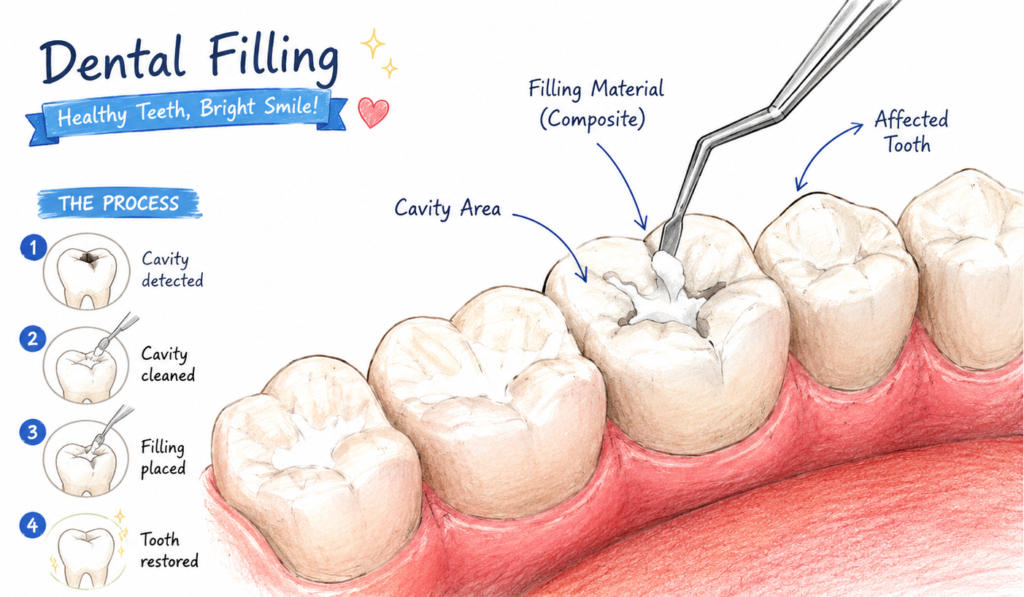
Getting a dental filling is one of the most common dental treatments. Millions of people receive fillings every year to repair teeth affected by cavities, small fractures, or wear. After the procedure, one of the first questions many patients ask is simple: Can you eat after a filling?
The answer depends on several factors, including the type of filling material used, the amount of numbness in your mouth, and how your tooth feels after treatment. Some people can eat almost immediately, while others may need to wait a few hours before having a meal.
Many patients leave the dental office with instructions but still feel unsure about what foods are safe, how long they should wait, and whether discomfort during eating is normal. This confusion can lead to accidental biting of the cheeks, damage to a new filling, or unnecessary worry.
Understanding what happens after a filling can make recovery easier and help protect the treated tooth. The good news is that most people return to their normal eating habits very quickly. However, making smart food choices during the first few hours and days can help prevent discomfort and support a smooth adjustment period.
This guide explains when you can eat after a filling, which foods are best, what foods should be avoided temporarily, and when unusual symptoms may require a call to your dentist.
When Is It Safe to Have Your First Meal?
Many patients want a simple answer before learning the details.
In most cases, you can eat after a filling, but timing depends on the filling material and whether your mouth is still numb.
Modern filling materials often harden quickly. However, your dentist may still recommend waiting until the numbness wears off before eating.
The biggest concern is usually not the filling itself. The concern is accidentally biting your tongue, lips, or cheeks while the anesthetic is still active.
The table below provides a general overview.
| Situation | General Recommendation |
|---|---|
| Composite filling | Usually safe to eat once numbness is gone |
| Amalgam filling | May require a longer waiting period |
| Mouth still numb | Wait before eating solid foods |
| Soft foods available | Usually safer during the first meal |
| Significant discomfort | Choose gentle foods and monitor symptoms |
Many dentists suggest starting with soft foods and avoiding extremely hard or sticky foods immediately after treatment.
Expert Insight
A common concern among patients is that eating too soon will damage the filling. According to many practicing dentists, the greater risk is accidental injury to numb tissues rather than damage to modern filling materials.
Patients often focus on protecting the tooth while forgetting that they may not feel injuries to their lips or cheeks until the numbness disappears.
usually Questions Patients Ask
- Can I eat immediately?
- Can I drink coffee?
- Will chewing damage the filling?
- Why does my bite feel different?
- Is sensitivity normal?
- How long should I avoid hard foods?
These questions are normal because every filling experience can feel slightly different.
| Patient Question | Short Answer |
|---|---|
| Can I eat after a filling? | Usually yes, after numbness fades |
| Can I drink water? | Usually yes |
| Can I chew gum? | Better to wait |
| Can I eat crunchy foods? | Wait until the tooth feels comfortable |
| Can I eat sweets? | Best limited immediately after treatment |
What Your Dentist Does During a Filling
Understanding the procedure helps explain why eating instructions vary.
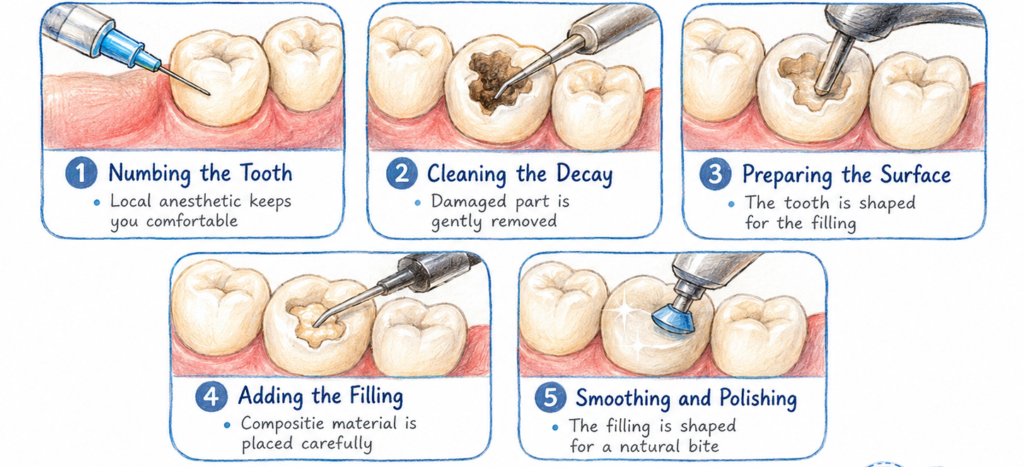
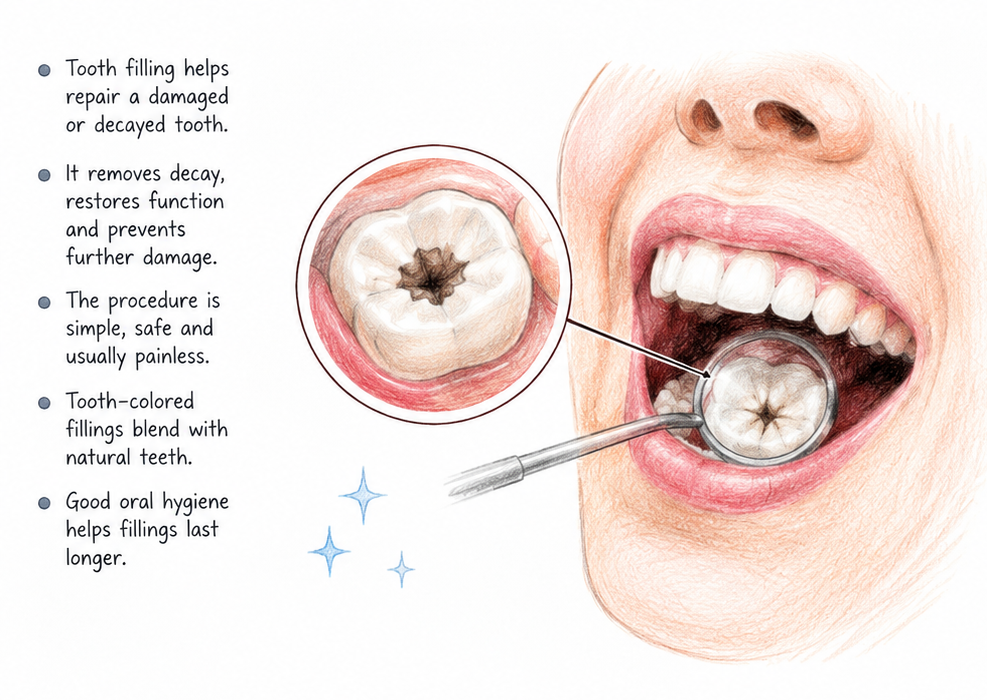
A filling repairs a damaged part of the tooth. The dentist removes decay or weakened material and replaces it with a filling material that restores the tooth’s shape and function.
During treatment, local anesthetic is often used. This medication temporarily blocks sensation in the treatment area.
After the procedure, several things may be happening at the same time:
- The filling is settling into your bite pattern
- The surrounding tissues are numb
- The tooth may be mildly irritated
- The jaw muscles may feel tired
- The gum tissue may be slightly sensitive
These changes can affect how eating feels during the first hours after treatment.
| Post-Filling Change | Possible Effect |
|---|---|
| Numbness | Difficulty feeling food |
| Mild inflammation | Temporary sensitivity |
| Bite adjustment | Different chewing sensation |
| Jaw fatigue | Mild soreness |
| Gum irritation | Tenderness near the tooth |
Most of these effects improve naturally within a short period.
The Role of Numbness After Dental Treatment
Many people assume the filling itself determines when they can eat. In reality, numbness often plays a bigger role.
When your lips, tongue, or cheeks are numb, you cannot accurately judge pressure while chewing. This can lead to accidental injuries.
Children are particularly vulnerable because they may chew on numb areas out of curiosity.
Adults can experience problems too. Some people accidentally bite the inside of the cheek while eating a meal shortly after treatment.
Common problems caused by eating while numb include:
- Lip injuries
- Cheek bites
- Tongue bites
- Small cuts
- Swelling from accidental trauma
| Area Affected | Possible Problem |
|---|---|
| Lip | Bite injury |
| Cheek | Swelling and soreness |
| Tongue | Cuts or irritation |
| Gum | Minor trauma |
| Mouth corner | Tenderness |
Waiting until normal sensation returns is often the safest approach.
Signs Numbness Is Wearing Off
- Tingling sensations
- Partial return of feeling
- Easier speech
- Better control of facial muscles
- More awareness of temperature
Once sensation has returned, eating becomes much safer.
Types of Dental Fillings and Guidelines for Eating
Not all fillings are identical.
The material used can influence your dentist’s recommendations.
The two most common types are composite fillings and amalgam fillings.
Composite fillings are tooth-colored and commonly used today. These fillings are hardened using a special curing light.
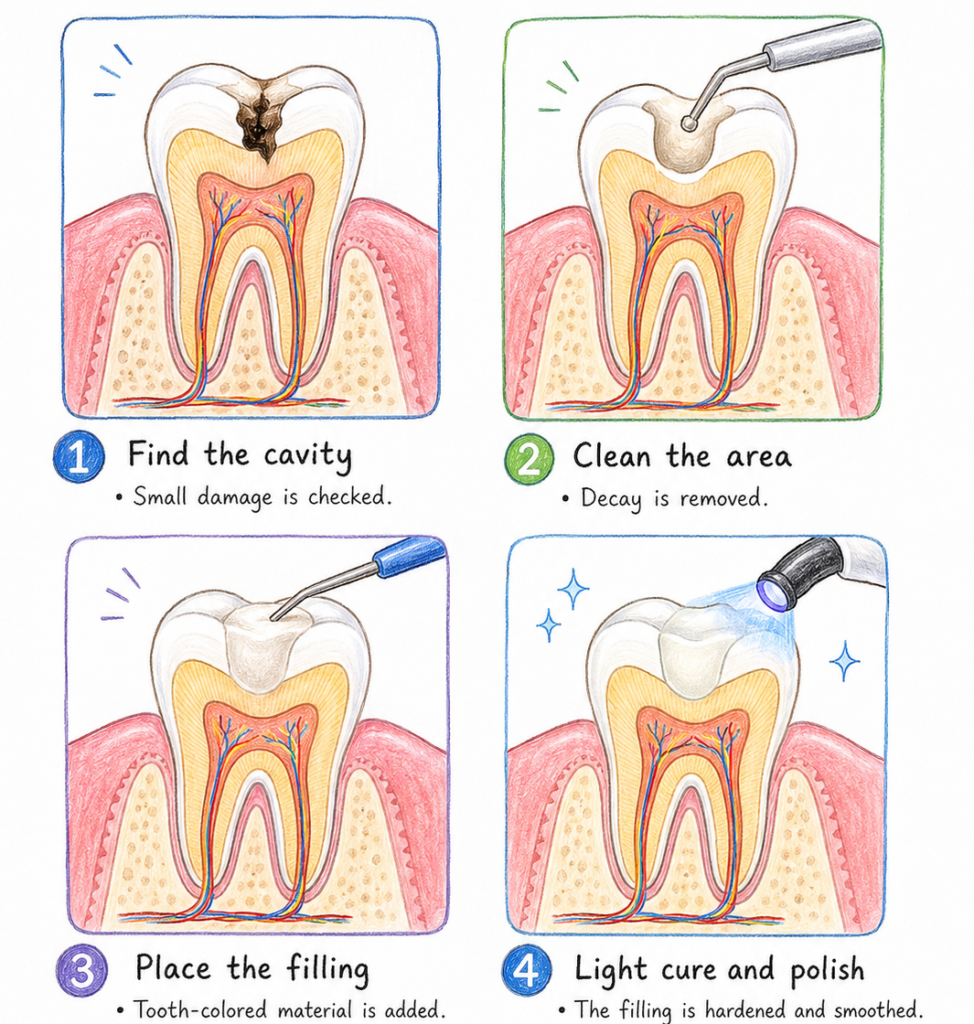
Because the material hardens quickly, patients can often eat once numbness has disappeared.
Amalgam fillings, which contain metal components, may require additional time before full chewing pressure is applied.
| Filling Type | Appearance | Typical Eating Guidance |
|---|---|---|
| Composite | Tooth-colored | Usually after numbness ends |
| Amalgam | Silver-colored | May require extra waiting time |
| Glass ionomer | Tooth-colored | Follow dentist instructions |
| Temporary filling | Varies | Often requires extra care |
Always follow your dentist’s specific instructions because individual situations vary.
Why Composite Fillings Are Popular
Many patients receive composite fillings because they blend with natural teeth.
Benefits include:
- Natural appearance
- Quick hardening
- Strong bonding
- Conservative tooth preparation
These advantages often make post-treatment eating simpler.
Why Temporary Fillings Need Extra Attention
Temporary fillings are different.
They are designed to protect the tooth until permanent treatment occurs.
Temporary materials are generally not as strong as permanent fillings.
Patients with temporary fillings should be especially careful with:
- Sticky foods
- Hard candy
- Nuts
- Ice
- Chewing gum
These foods can loosen or remove the temporary material.
Soft Foods That Are Safe After a Dental Filling
Choosing the right foods after a filling can make the recovery period more comfortable. While most fillings are strong enough to handle normal chewing, your tooth may still be sensitive for a short time. Soft foods place less pressure on the treated area and reduce the chance of discomfort.
Many patients find that eating softer foods during the first day helps them adjust to the new filling. This is especially helpful if the filling was large or located in a tooth that handles a lot of chewing force.
Some foods are naturally easier on newly treated teeth.
| Food | Why It May Be Helpful |
|---|---|
| Yogurt | Soft and easy to chew |
| Mashed potatoes | Gentle on sensitive teeth |
| Scrambled eggs | Soft texture with good nutrition |
| Oatmeal | Easy to eat and filling |
| Soup | Comfortable when not too hot |
| Soft pasta | Requires little chewing |
| Bananas | Soft and naturally sweet |
| Applesauce | Smooth and easy to eat |
Patients often feel more comfortable when they start with softer foods and slowly return to their normal diet as sensitivity improves.
A Helpful Eating Approach
Many dentists suggest paying attention to how the tooth feels rather than following a strict schedule.
If chewing feels comfortable:
- Continue adding normal foods
- Chew carefully at first
- Avoid sudden pressure on the treated tooth
If chewing feels uncomfortable:
- Continue with softer meals
- Avoid forcing the tooth to handle heavy chewing
- Give the area more time to settle
Foods That Might Irritate the Tooth Soon After Treatment
Not every food is a good choice immediately after treatment.
Some foods place extra stress on a newly filled tooth or increase sensitivity.
The following foods are often best avoided for a short period.
| Food Type | Reason for Caution |
|---|---|
| Hard candy | Strong biting pressure |
| Ice | Can stress sensitive teeth |
| Nuts | Require heavy chewing |
| Sticky candy | May pull on restorations |
| Chewing gum | Can create unnecessary stress |
| Popcorn kernels | May become trapped around teeth |
| Hard chips | Sharp edges may irritate the area |
These foods do not necessarily need to be avoided forever. The goal is simply to allow the tooth time to adjust.
Why Sticky Foods Can Be Problematic
Sticky foods deserve special attention.
Foods such as:
- Caramel
- Taffy
- Chewy candy
- Gum
can place pulling forces on restorations. This is particularly important when a temporary filling is present.
Many dentists recommend waiting until the tooth feels completely normal before eating these foods.
Can You Drink Water, Coffee, or Tea Safely After a Dental Procedure?
Many patients feel thirsty after a dental appointment and want to know what beverages are safe.
Water is usually the safest choice.
It helps keep the mouth comfortable and does not place stress on the filling.
| Drink | General Guidance |
|---|---|
| Water | Usually safe |
| Coffee | Better after numbness fades |
| Tea | Usually acceptable when not extremely hot |
| Soda | Best limited initially |
| Alcohol | Follow dentist recommendations |
Hot Drinks and Sensitivity
Some people notice increased sensitivity after a filling.
Very hot beverages can temporarily increase discomfort.
This does not necessarily mean anything is wrong. The tooth may simply be adjusting after treatment.
If hot drinks cause discomfort:
- Allow beverages to cool slightly
- Take smaller sips
- Monitor whether sensitivity improves
Most mild sensitivity improves with time.
When Is the Right Time to Have Your First Meal?
The timing of your first meal depends on several factors.
These include:
- Filling material
- Amount of numbness
- Tooth sensitivity
- Dentist recommendations
For many patients, the safest plan is waiting until normal feeling returns to the lips, cheeks, and tongue.
| Situation | Suggested Approach |
|---|---|
| Still numb | Wait before eating |
| Feeling has returned | Soft foods may be appropriate |
| Sensitive tooth | Choose gentle foods |
| Temporary filling | Follow specific instructions |
Many people can comfortably eat within a few hours of treatment.
A Practical Example
The first patient receives a small composite filling and numbness wears off quickly. They may be comfortable eating a normal meal later the same day.
The second patient receives a larger filling near a nerve and experiences more sensitivity. They may prefer softer foods for a day or two.
Both situations can be normal.
Explaining Typical Tooth Sensitivity After Treatment
Sensitivity is one of the most common concerns after a filling.
Many patients worry that discomfort means something went wrong.
In reality, mild sensitivity is often a normal part of recovery.
The tooth has undergone treatment and may need time to settle.
Common temporary sensations include:
- Sensitivity to cold
- Mild sensitivity to pressure
- Awareness of the filling
- Brief discomfort while chewing
| Sensation | Often Normal? |
|---|---|
| Mild cold sensitivity | Yes |
| Slight pressure sensitivity | Yes |
| Brief tenderness | Yes |
| Severe worsening pain | No |
| Swelling | No |
Most normal sensitivity gradually improves over days or weeks.
Why Teeth Can Feel Sensitive
The inside of the tooth contains living tissue.
Even when treatment is performed carefully, the tooth may react temporarily.
This reaction often decreases naturally as healing occurs.
Patients are often reassured to learn that temporary sensitivity does not automatically mean treatment failure.
Reasons Your Bite Can Feel Unusual After a Filling
Many people notice something unusual when they first bite down after treatment.
The tooth may feel:
- Taller
- Different
- Unfamiliar
- More noticeable
This feeling often improves as the patient becomes accustomed to the restoration.
However, a filling that is too high can create genuine problems.
Possible signs include:
- One tooth touches first
- Discomfort while chewing
- Jaw soreness
- Feeling that the bite is uneven
| Bite Feeling | Possible Meaning |
|---|---|
| Slightly different | Normal adjustment |
| Constant pressure | May need evaluation |
| Pain when biting | Contact dentist |
| Uneven chewing | Possible bite adjustment needed |
Dentists can usually correct a high filling quickly if necessary.
What Happens If You Eat Too Quickly After a Filling?
This question is extremely common.
Patients often imagine that a single bite will ruin the filling.
Modern materials are generally strong and reliable. In many situations, the filling itself is not the biggest concern.
The bigger concern is eating while numb or placing excessive pressure on a sensitive tooth.
Reasonable eating habits help reduce risk.
Helpful habits include:
- Starting with softer foods
- Chewing carefully
- Avoiding hard objects
- Following dental instructions
Most patients do not damage their fillings simply by eating normal foods at the appropriate time.
What Happens After a Big Tooth Filling Procedure
Large fillings may create a different recovery experience compared to smaller ones.
When more tooth structure requires treatment, the tooth may react more strongly afterward.
Possible experiences include:
- Increased sensitivity
- Longer adjustment period
- Temporary discomfort with pressure
- Awareness of the treated tooth
| Filling Size | Possible Recovery Experience |
|---|---|
| Small | Usually quick adjustment |
| Medium | Mild temporary sensitivity |
| Large | Longer adjustment period |
Many patients improve steadily without needing additional treatment.
Patience and proper care are often the most important parts of recovery.