


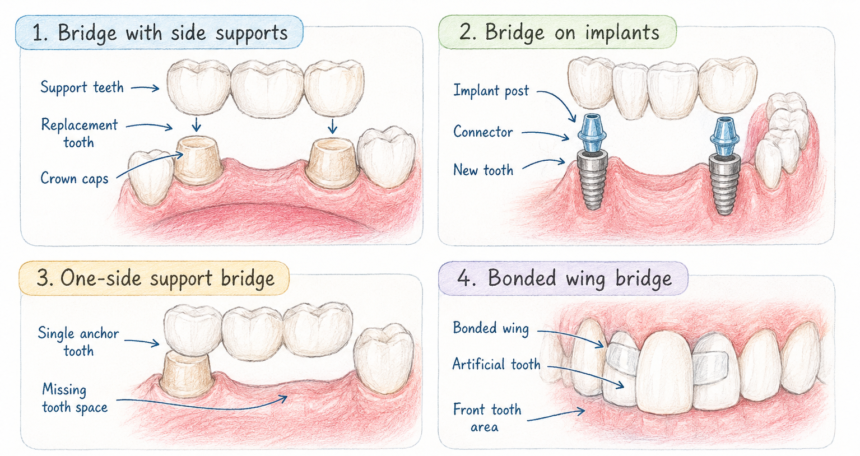
A Cantilever Dental Bridge is one of those dental solutions that most people have never heard of until their dentist mentions it. Unlike a traditional dental bridge that gets support from teeth on both sides of a gap, a cantilever bridge only attaches to one side. That single point of support is what makes it different — and it is also what makes people curious, and sometimes cautious, about choosing it.
If you have a missing tooth and your dentist has brought up a cantilever bridge as an option, you probably have questions. What exactly is it? How does it work? Is it safe? How long will it last? These are completely reasonable things to want to know before agreeing to a treatment that involves permanently altering healthy teeth. This article covers everything about Cantilever Bridge Dental What You Should Knowin straightforward language so you can make a well-informed decision.
About Cantilever Dental Bridges
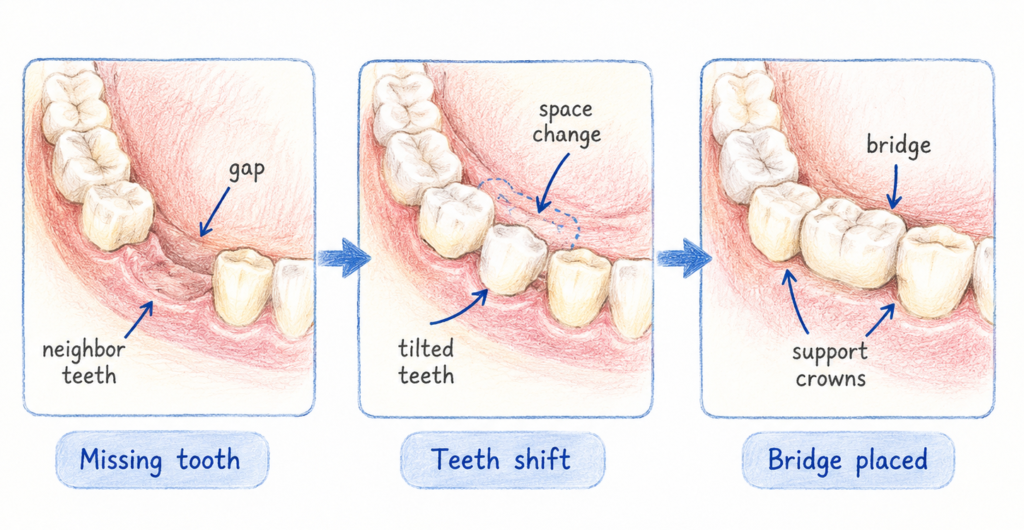
A dental bridge is a fixed dental restoration that fills the space left by a missing tooth. The replacement tooth — called a pontic — is held in place by being attached to real teeth on one or both sides. Those supporting teeth are called abutment teeth.
In a traditional bridge, there are abutment teeth on both sides of the missing tooth, so the pontic is anchored from two directions. A cantilever bridge is different because the pontic is only anchored on one side. The supporting tooth or teeth are all on the same side of the gap, not on both sides.
Think of it like a diving board attached to one side of a pool. The board sticks out over the water, supported only at one end. A cantilever bridge works the same way — the false tooth sticks out over the gap, anchored only to the teeth beside it on one side.
This design exists because sometimes there is only one natural tooth next to the gap. If the missing tooth is at the back end of the mouth, for example, there may not be any tooth on the far side to act as an anchor. In situations like that, a cantilever bridge becomes a practical option.
Differences between bridge types:
| Type of Bridge | Abutment Teeth Location | Best Used When |
|---|---|---|
| Traditional Bridge | Both sides of the gap | Teeth on both sides are healthy |
| Cantilever Bridge | One side only | Only one neighboring tooth available |
| Maryland Bridge | One side (bonded with wings) | Front teeth, less tooth reduction needed |
| Implant-Supported | No abutment teeth needed | Patient is a good implant candidate |
Where in the Mouth Is a Cantilever Bridge Used
The placement of a cantilever bridge is not random. It is carefully considered based on the location of the missing tooth and the condition of the surrounding teeth.
The most common location for a Cantilever Bridge Dental What You Should Know is the front of the mouth, specifically the upper lateral incisors. These are the teeth just beside the two front teeth. Because they are in a visible area and do not have to handle a lot of biting force, a cantilever bridge can work well here. The dentist attaches the bridge to the canine tooth — the slightly pointed tooth just beside the lateral incisor — and the false tooth extends into the gap without needing support from the other side.
Some dentists also use cantilever bridges in other front tooth areas and occasionally in premolar areas. However, they are rarely used in the back of the mouth where chewing forces are much stronger. Molars exert a tremendous amount of pressure, and a one-sided anchor is generally not strong enough to handle that kind of force safely over a long period of time.
Common locations where cantilever bridges are used:
- Upper lateral incisors (most common)
- Lower front teeth in some cases
- Premolar area when adjacent teeth are only on one side
- Near the front of the arch where biting pressure is lower
Locations where cantilever bridges are typically avoided:
- Molar region
- Areas with heavy grinding or clenching
- Regions where the abutment tooth is already weakened
- Posterior areas with poor bone support
How a Cantilever Bridge Is Made and Placed
The process of getting a cantilever bridge takes place over at least two dental visits. Understanding the steps helps reduce any anxiety about what to expect.
First Appointment — Preparation
The abutment tooth or teeth on one side of the gap need to be prepared. This means the dentist reshapes them by filing down the enamel and outer structure. This is done to create space for the dental crown that will sit over the abutment tooth and hold the bridge in place. Local anesthetic is used so this process is not painful.
After reshaping, the dentist takes impressions or digital scans of your teeth. These measurements are sent to a dental laboratory where the bridge is custom-made to fit your mouth precisely. While waiting for the permanent bridge to be completed, the dentist places a temporary bridge to protect the prepared teeth and fill the gap.
Laboratory Phase
In the lab, a skilled technician crafts the bridge from the specified material — usually porcelain, ceramic, zirconia, or metal alloy. The process typically takes about two weeks. The technician matches the color and shape to the rest of your natural teeth so the bridge looks as natural as possible.
Second Appointment — Fitting and Cementing
When the permanent bridge is ready, you return for the fitting appointment. The dentist removes the temporary bridge, cleans the abutment teeth, and tries the permanent bridge in place. Adjustments are made if needed for comfort and bite alignment. Once everything fits correctly, the bridge is cemented permanently onto the abutment teeth.
What happens during the process:
| Step | What the Dentist Does | What You Experience |
|---|---|---|
| Initial consultation | Examines the gap and surrounding teeth | X-rays and general assessment |
| Tooth preparation | Files down abutment tooth enamel | Numbness from local anesthetic |
| Impressions | Takes molds or digital scans | Mild pressure, no pain |
| Temporary bridge | Placed to protect teeth | Functional but less polished look |
| Final fitting | Cements permanent bridge | Slight pressure, bite adjustment |
Materials Used in Cantilever Bridges
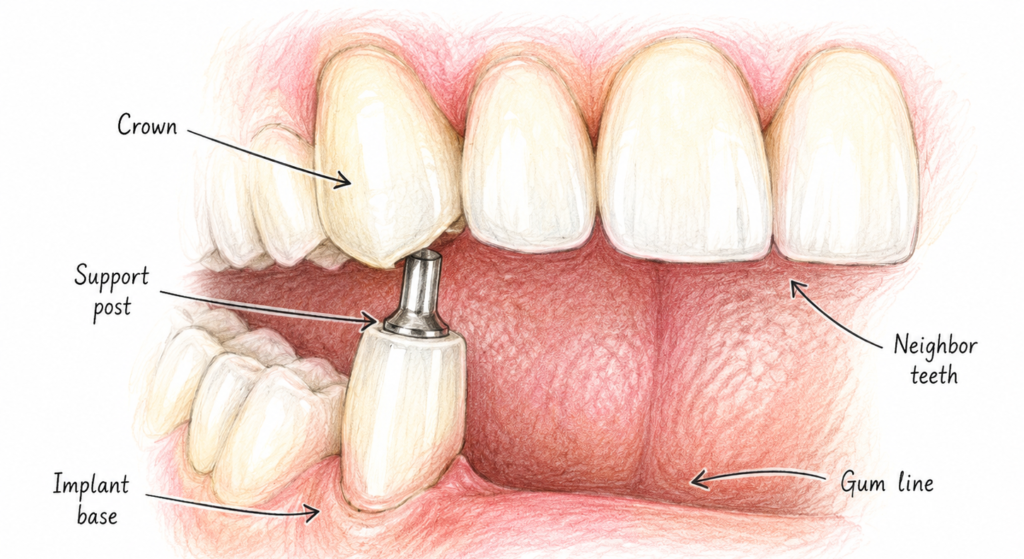
The material a cantilever bridge is made from affects its strength, appearance, and lifespan. Dentists and patients typically choose from several options based on the location of the bridge and the patient’s individual preferences.
Porcelain-Fused-to-Metal (PFM)
This has been one of the most commonly used materials for decades. A metal substructure provides strength, and porcelain is layered on top for a natural appearance. PFM bridges are durable and blend reasonably well with natural teeth, though a faint grey line can sometimes appear at the gum line over time as the metal base becomes slightly visible.
All-Ceramic or All-Porcelain
These bridges look the most natural and are a popular choice for visible front teeth. They do not have any metal inside, so there is no risk of the grey line issue. The color match is generally excellent. They are slightly less strong than metal-based options but are usually strong enough for front teeth where biting forces are lower.
Zirconia
Zirconia is a newer material that has become very popular in recent years. It is extremely strong — stronger than traditional porcelain — and also looks very natural. Zirconia bridges work well for cantilever applications because of the added strength, which helps compensate for the one-sided anchoring. They are also biocompatible, meaning the body does not react negatively to them.
Metal Alloy (Gold or Base Metal)
Pure metal bridges are very strong and durable but are rarely used in visible areas because of their appearance. They are sometimes used in back teeth but, as mentioned, cantilever bridges are generally not recommended in molar areas. You might encounter these in specific situations where strength is the priority and aesthetics are less important.
Comparison of bridge materials:
| Material | Appearance | Strength | Best For | Approximate Lifespan |
|---|---|---|---|---|
| Porcelain-fused-to-metal | Good | Very good | Most tooth positions | 10 to 15 years |
| All-ceramic/porcelain | Excellent | Moderate | Front teeth | 10 to 15 years |
| Zirconia | Excellent | Excellent | Any position | 15 years or more |
| Metal alloy | Poor aesthetics | Excellent | Non-visible areas | 20+ years |
Who Is a Good Candidate for a Cantilever Bridge
Not everyone with a missing tooth is automatically a good candidate for a cantilever bridge. Dentists consider several factors before recommending this type of restoration.
Suitable candidates typically include:
People who are missing a lateral incisor or another front tooth where there is only one adjacent tooth available to serve as an anchor. Patients whose abutment tooth is healthy, strong, and has good bone support underneath it. Adults whose jaws have finished growing — cantilever bridges are generally not placed in teenagers or younger people because changes in jaw structure can affect the fit over time.
People who do not grind their teeth heavily, since grinding creates excessive forces that can stress the one-sided anchor. Patients who maintain good oral hygiene habits, since a bridge requires careful cleaning around it and poor hygiene can lead to decay in the abutment teeth.
People who may not be good candidates:
Those who have severe bruxism (teeth grinding or clenching) since the force can damage the bridge and the abutment tooth. People with gum disease or significant bone loss, as the abutment tooth needs a solid foundation. Those missing multiple adjacent teeth — a cantilever bridge works best for a single tooth gap.
People who are good candidates for dental implants may be directed toward that option instead, particularly if long-term durability and avoiding alteration of healthy teeth are high priorities.
Candidate evaluation factors:
| Factor | Why It Matters | Impact on Suitability |
|---|---|---|
| Abutment tooth health | Must support all bridge forces | Weak tooth means unsuitable candidate |
| Bone density | Supports the abutment tooth root | Low density increases failure risk |
| Bite forces | One anchor handles all chewing load | High forces reduce suitability |
| Bruxism | Excess force damages bridge | Moderate to severe grinding is a concern |
| Oral hygiene habits | Affects longevity of bridge | Poor hygiene increases decay risk |
| Jaw growth status | Must be complete for stable fit | Ongoing growth rules out bridge |
Advantages of Choosing a Cantilever Bridge
A cantilever bridge offers several genuine benefits. Understanding these helps explain why dentists still recommend it in appropriate situations despite the availability of other options.
Only one tooth needs to be prepared
With a traditional bridge, at least two abutment teeth are modified. With a cantilever bridge, the preparation may involve only one tooth, meaning one healthy tooth is spared from being filed down. This is a meaningful benefit because reducing the amount of enamel removed preserves the natural tooth structure.
It is a fixed restoration
Unlike a partial denture that can be removed, a cantilever bridge stays in your mouth permanently. This gives patients a more natural feeling. You eat, speak, and smile the same way you would with natural teeth. There is no adjusting to taking out and putting in a removable device.
Faster than implants.
A dental implant requires a surgical procedure, a healing period of several months, and multiple appointments over six months to a year or longer. A cantilever bridge is usually completed in just two or three visits over a couple of weeks. For patients who want the gap filled quickly, this is a significant practical advantage.
Cost
Dental implants are generally more expensive than bridges. For patients with budget constraints, a cantilever bridge can provide a good functional and aesthetic result at a lower price point.
Good aesthetic result
When made from quality materials like zirconia or all-ceramic, cantilever bridges look very natural. Patients in the front of the mouth where visibility is important often appreciate being able to smile without the gap being visible.
Summary of advantages:
- Spares at least one additional tooth from preparation
- Fixed in place, no need for removal
- Shorter treatment time compared to implants
- Generally lower cost than implant-based options
- Natural-looking result with quality materials
- Good option when only one adjacent tooth is available
- Relatively simple procedure with established techniques
Disadvantages and Risks to Consider
A balanced understanding of a cantilever bridge means looking honestly at the limitations and potential risks involved. Dentists who thoroughly explain these are helping patients make genuinely informed choices.
Stress on the abutment tooth
Because all the force from the bridge goes through one anchor tooth, that tooth is under significantly more stress than it would be if the load were shared between two teeth. Over time, this can cause the abutment tooth to experience increased wear, loosening, or even cracking in some cases.
Risk of the abutment tooth tipping
The single anchor tooth is like a lever. The force applied to the pontic can create a tipping or rotational force on the abutment tooth, potentially causing it to shift its position slightly over years of use. This is more of a concern in the back of the mouth where forces are greater.
Enamel loss is permanent
To place the crown on the abutment tooth, some of its natural structure has to be removed. This is irreversible. Even if the bridge fails years later and needs to be replaced, the abutment tooth will always need a crown going forward.
Not suitable for high-force areas
As mentioned, cantilever bridges are not appropriate for molar areas. This limits where they can be placed.
Risk of failure over time
All dental bridges have a finite lifespan. With a cantilever bridge, the one-sided support means there is potentially more risk of debonding, cracking, or fracture over time compared to a traditional bridge with two anchor points.
Possible impact on adjacent teeth.
If the bridge fails and the abutment tooth becomes damaged, it can affect the health of neighboring teeth as well.
Potential disadvantages:
| Risk | Cause | How to Reduce It |
|---|---|---|
| Abutment tooth stress | One-sided force distribution | Regular monitoring by dentist |
| Tooth tipping | Lever force on anchor | Proper case selection, avoid back teeth |
| Permanent enamel loss | Crown preparation | Cannot be avoided once decided |
| Limited placement zones | Cannot handle molar forces | Use only in appropriate locations |
| Bridge failure | Wear, decay, or force | Good hygiene and regular check-ups |
| Abutment tooth damage | Long-term stress | Ensure tooth is strong before placement |
How a Cantilever Bridge Compares to Other Tooth Replacement Options
It helps to understand where a cantilever bridge fits in the bigger picture of tooth replacement dentistry. Comparing it with other options makes the decision-making process clearer.
Cantilever Bridge vs. Traditional Bridge
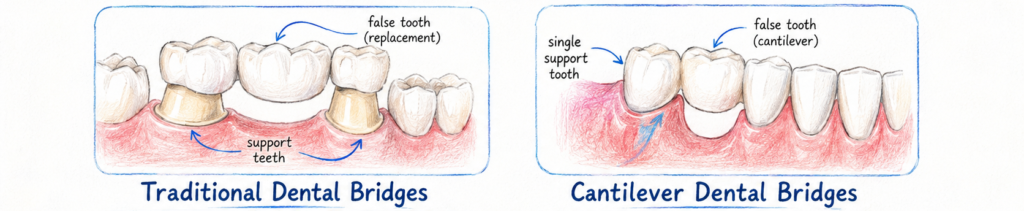
A traditional bridge uses abutment teeth on both sides of the gap. It distributes force more evenly and is considered more stable. However, it requires two teeth to be prepared instead of one or two on one side. If there simply is no tooth on one side of the gap, a traditional bridge is not possible. A cantilever bridge fills this specific need.
Maryland Bridge vs. Dental Implant

A Maryland bridge also uses one-sided support but works differently. Instead of a crown on the abutment tooth, it uses metal or resin wings that are bonded to the back surfaces of the adjacent teeth. This preserves much more tooth structure. However, Maryland bridges are less strong and more prone to debonding. They are generally used only for front teeth and in situations where long-term durability is not the top priority.
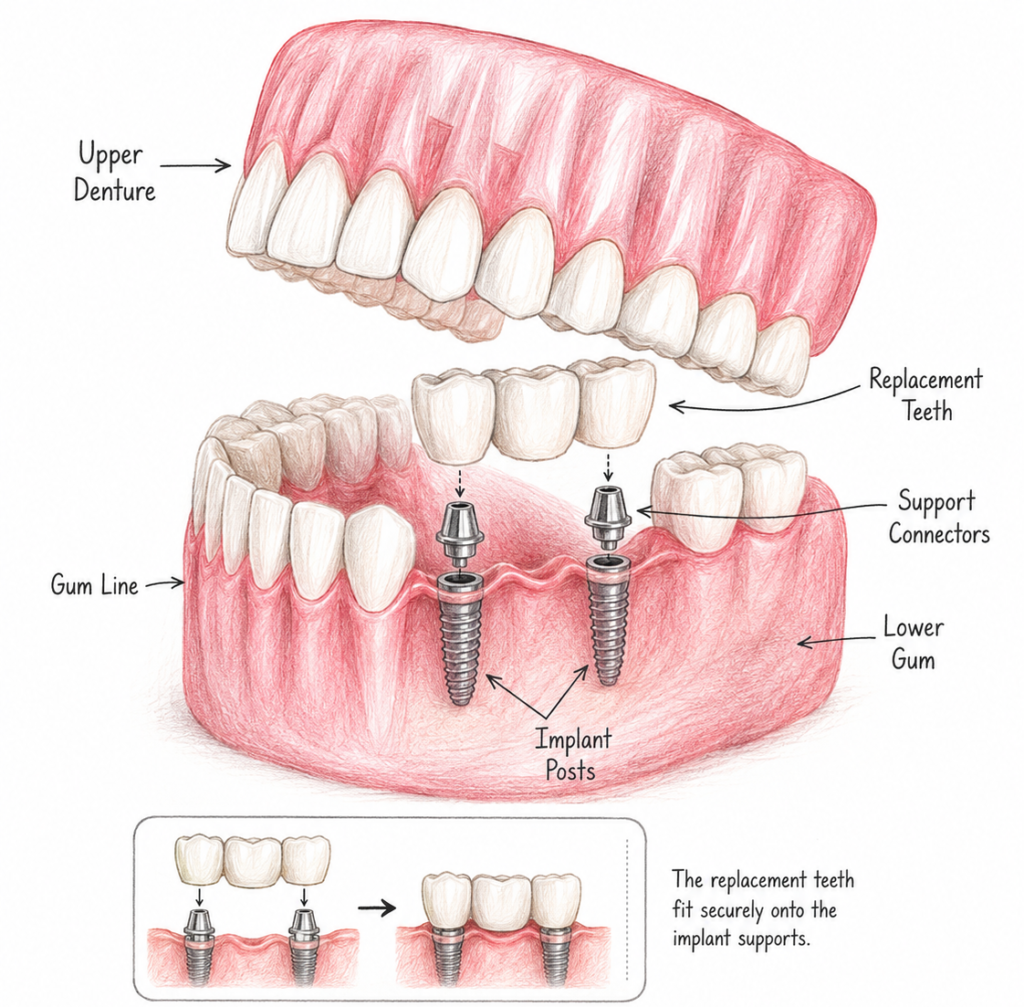
Implant supported Dental bridge
A dental implant is a titanium post surgically placed into the jaw bone. A crown is attached to the implant, and the result looks and functions like a natural tooth. Implants do not require alteration of any neighboring teeth. They are considered the gold standard for tooth replacement because of their durability (they can last a lifetime with proper care) and their bone preservation benefits.
However, implants require sufficient bone volume, involve surgery, take much longer to complete, and cost considerably more. Not every patient is a candidate.
Cantilever Bridge vs. Partial Denture
A removable partial denture fills the gap with a removable appliance. It does not require filing down neighboring teeth, but patients generally find them less comfortable and less natural-feeling than a fixed bridge. There is also the social aspect of having a removable dental appliance that many people find uncomfortable.
Option comparison:
| Option | Alters Adjacent Teeth | Surgery Required | Time to Complete | Approximate Cost Range | Lifespan |
|---|---|---|---|---|---|
| Cantilever Bridge | Yes (1–2 teeth) | No | 2 to 3 weeks | Moderate | 10 to 15 years |
| Traditional Bridge | Yes (2+ teeth) | No | 2 to 3 weeks | Moderate | 10 to 15 years |
| Maryland Bridge | Minimal | No | 2 to 3 weeks | Moderate | 5 to 10 years |
| Dental Implant | No | Yes | 6 to 18 months | High | Potentially lifelong |
| Partial Denture | No | No | 2 to 4 weeks | Low | 5 to 10 years |
How Long Does a Cantilever Bridge Last
One of the most common questions patients ask is how long the bridge will last. The honest answer is that it depends on several factors, but well-made cantilever bridges can last anywhere from 10 to 15 years, and sometimes longer with excellent care.
Research published in the Journal of Oral Rehabilitation and similar peer-reviewed sources has found that anterior cantilever bridges — those placed in the front of the mouth — have acceptable survival rates over medium and long-term follow-up periods when proper case selection has been done. Studies indicate that the location of the bridge and the health of the abutment tooth are among the strongest predictors of longevity.
The daily forces applied to the bridge are a major factor. Front teeth receive far less chewing force than back teeth, which is one reason cantilever bridges perform better in anterior locations. Someone who grinds their teeth at night will experience much greater forces on the bridge, often shortening its lifespan significantly.
Oral hygiene habits also have a direct effect. The space under the bridge and around the crown on the abutment tooth is a place where plaque and bacteria can accumulate. If that area is not cleaned well, decay can develop in the abutment tooth. Once the abutment tooth is damaged by decay, the bridge may fail and require replacement.
Regular dental check-ups allow the dentist to monitor the bridge, check for early signs of wear or loosening, and address small problems before they become big ones.
Factors affecting cantilever bridge lifespan:
| Factor | Effect on Lifespan | What You Can Do |
|---|---|---|
| Location (front vs. back) | Front teeth last longer | Choose placement carefully with dentist |
| Biting forces | Higher forces shorten lifespan | Use night guard if grinding is present |
| Oral hygiene | Poor hygiene leads to decay | Brush, floss, and use interdental tools |
| Material quality | Better materials last longer | Discuss material options with dentist |
| Regular check-ups | Early problems caught and fixed | Attend dental visits every 6 months |
| Abutment tooth health | Healthier tooth means longer life | Treat any existing decay before bridge |
Caring for a Cantilever Dental Bridge
Proper care of a cantilever bridge is not complicated, but it does require some specific habits to keep both the bridge and the surrounding teeth healthy. The bridge itself cannot decay, but the natural teeth it is attached to can. The gum tissue around the bridge also needs attention.
Brushing
Brush your teeth twice a day using a soft-bristled toothbrush. Pay special attention to the area where the crown meets the gum line on the abutment tooth. This is where plaque tends to build up and where decay is most likely to start if cleaning is not thorough.
Flossing Under the Bridge
Regular floss cannot be threaded under a bridge the usual way because the teeth are connected. You need to use a floss threader — a small flexible needle-like tool — to thread the floss under the pontic (false tooth) and along the gum line beneath it. Alternatively, super floss (which has a stiff end for threading) or interdental brushes can be used.
Water flossers are also helpful for cleaning under bridges. The stream of water can reach areas that regular floss misses.
Regular Dental Visits
Visit your dentist at least every six months. At these visits, the dentist will check the integrity of the bridge, look for early signs of decay in the abutment teeth, and professionally clean areas that are difficult to reach with home tools.
Avoiding Hard and Sticky Foods
Very hard foods like hard candies, ice, and tough crusty bread can put excessive stress on the bridge. Sticky foods like caramel and chewing gum can pull at the bridge. Limiting these types of foods reduces the risk of damaging or dislodging the bridge.
Night Guards for Grinders
If you grind your teeth at night (bruxism), ask your dentist about a custom night guard. This is a small oral appliance worn during sleep that protects both natural teeth and the bridge from the excessive forces that occur during grinding.
Daily care routine for a cantilever bridge:
- Brush twice daily with a soft toothbrush
- Use a floss threader or super floss to clean under the bridge daily
- Consider using an interdental brush to clean around the abutment crown
- Use a water flosser as an additional tool for hard-to-reach areas
- Rinse with an antibacterial mouthwash to reduce bacterial buildup
- Avoid biting hard objects or foods directly on the bridge
- Wear a night guard if bruxism is present
- Attend regular dental check-ups every six months
Signs That Something May Be Wrong With Your Bridge
Even with good care, problems can sometimes develop. Knowing what warning signs to watch for allows you to seek help quickly and potentially prevent a minor issue from becoming a major one.
Sensitivity or Pain
If you notice sensitivity to hot, cold, or sweet foods, or if biting down causes discomfort, this could indicate that decay has started in the abutment tooth or that the bridge has shifted slightly. Do not ignore pain — contact your dentist.
The Bridge Feels Loose
A bridge that was once firmly cemented in place should not move at all. If you notice any movement or rocking when you bite, the cement bond may have failed. This allows bacteria to get under the crown and can lead to rapid decay of the abutment tooth.
A Bad Taste or Smell
A persistent bad taste or smell that does not go away with brushing can indicate bacterial buildup under the bridge or early decay.
Visible Changes
If the gum tissue around the bridge looks red, swollen, or bleeding when you brush, this is a sign of gum irritation or the beginning of gum disease around the bridge area.
Chips or Cracks
With porcelain or ceramic bridges, chips or visible cracks can sometimes develop, particularly if hard foods were bitten. Even if there is no pain, a cracked bridge should be examined by a dentist because a crack can progress and lead to complete fracture.
Warning signs to watch for:
| Sign | Possible Cause | Action to Take |
|---|---|---|
| Pain or sensitivity | Decay in abutment tooth | See dentist promptly |
| Loose bridge | Cement failure | Dental visit immediately |
| Bad taste or odor | Bacterial buildup or decay | Book dental appointment |
| Swollen or bleeding gums | Gum disease or irritation | Professional cleaning needed |
| Chip or crack in bridge | Physical damage | Dentist evaluation required |
| Change in bite feel | Bridge shift or wear | Dental check needed |
The Cost of a Cantilever Dental Bridge
Cost is an important practical consideration. Cantilever bridge prices vary depending on the country, the specific region or city, the materials chosen, and the individual dental practice. That said, some general ranges can give a realistic idea of what to expect.
In the United States, a cantilever bridge typically costs between $1,000 and $2,500 per tooth or unit. Because a cantilever bridge involves at least one crown on the abutment tooth plus the pontic, the total cost is often in the range of $2,000 to $5,000 for the complete restoration. Zirconia or high-quality all-ceramic options tend to cost more than standard porcelain-fused-to-metal choices.
Dental insurance often covers a portion of the cost of a cantilever bridge if it is deemed medically necessary. Coverage typically ranges from 50 to 80 percent after the deductible. However, insurance plans vary enormously, and some may categorize bridges as major restorative work with different cost-sharing arrangements. It is always worth contacting your insurance provider directly to understand what your specific plan covers before committing to treatment.
For patients without dental insurance, many dental practices offer payment plans or work with third-party financing companies that allow the cost to be spread out over several months.
Cost comparison across tooth replacement options:
| Option | Average Cost Range (USD) | Insurance Coverage Likelihood |
|---|---|---|
| Cantilever Bridge | $2,000 to $5,000 | Often partially covered |
| Traditional Bridge | $2,500 to $6,000 | Often partially covered |
| Maryland Bridge | $1,500 to $3,000 | Varies by plan |
| Dental Implant | $3,000 to $6,000+ | Often limited or not covered |
| Partial Denture | $700 to $2,500 | Often partially covered |
What Dentists and Specialists Say About Cantilever Bridges
Dental professionals have varying views on cantilever bridges. Most agree that they are a useful tool when the right conditions are present but that they should not be considered a universal solution for all missing tooth situations.
Dr. Kenneth Hebel, a prosthodontist with experience in complex dental restorations, has noted that cantilever bridges in the anterior region of the mouth can perform predictably when proper patient selection is applied and when the abutment tooth has sufficient root support. The key, according to such experts, is case selection — using the technique in situations where it is genuinely appropriate rather than as a shortcut when a more ideal solution is available.
Research published in clinical dental journals has also highlighted that the crown-to-root ratio of the abutment tooth plays a significant role in the success of a cantilever bridge. A tooth with a long root relative to the crown portion handles the additional load better than a tooth with a short root or compromised bone support.
Prosthodontists — dentists who specialize in tooth replacement and restoration — are generally the most experienced clinicians for bridge work. If your general dentist has recommended a cantilever bridge, you may wish to request a referral to a prosthodontist for a second opinion, particularly if you have concerns about the suitability of your specific situation.
Understanding Cantilever Bridges: Common Patient Questions
Is the procedure painful?
No. The abutment tooth preparation is done under local anesthetic, so you will not feel pain during the procedure. Some patients experience mild soreness or sensitivity in the days following preparation, which typically settles quickly. Over-the-counter pain relievers are usually sufficient if needed.
Can I eat normally with a cantilever bridge?
Yes, in most cases. However, it is wise to avoid very hard, crunchy, or sticky foods on the side of the bridge. Normal everyday foods can be eaten without significant restrictions.
Will the bridge look natural?
With quality materials and a skilled dental technician, a cantilever bridge can look very natural. For front teeth especially, an experienced lab technician can match the shade, shape, and translucency of the bridge to your natural teeth closely.
What happens if the bridge fails?
If a cantilever bridge fails — for example, if it comes loose or the abutment tooth is damaged — your dentist will assess the situation and discuss options. Sometimes the bridge can be recemented. In other cases, the abutment tooth may need further treatment, or a different restoration option (such as an implant) may be considered for the long term.
Can a cantilever bridge be replaced?
Yes. Bridges can be replaced when they reach the end of their useful life. The new bridge may be of the same type or a different design depending on the condition of the remaining teeth.
Do I need to do anything differently when cleaning my teeth?
Yes. Cleaning under the bridge is the main change. A floss threader, super floss, or interdental brush is needed to clean the space under the pontic. Your dentist or dental hygienist will show you exactly how to do this at the time of placement.
Frequently asked questions summary:
| Question | Short Answer |
|---|---|
| Is placement painful? | No, local anesthetic is used |
| Can I eat normally? | Yes, with some food cautions |
| Will it look natural? | Yes, quality materials match well |
| What if it fails? | Dentist will reassess and discuss options |
| Can it be replaced? | Yes, with same or different restoration |
| Special cleaning needed? | Yes, floss threader or interdental tools |
Deciding Whether a Cantilever Bridge Is Right for You
The decision about whether a cantilever bridge is the right choice for your situation is ultimately one that needs to be made with your dentist — and possibly a specialist — based on a careful look at your specific circumstances.
The most important things to consider are: whether your abutment tooth is healthy and strong enough to carry the additional load, whether the location of the missing tooth is one where a cantilever bridge is appropriate (front of the mouth with lower forces), and whether you are prepared to maintain good oral hygiene to protect both the bridge and the surrounding teeth.
If you have been told you are a good candidate for a dental implant and you have the time and budget for that option, it is worth seriously considering since implants preserve natural tooth structure and are designed to last much longer. However, if implants are not suitable for you, or if the cantilever bridge situation is specifically suited (such as a missing lateral incisor with a healthy canine next to it), then a well-placed, well-maintained cantilever bridge can be an excellent and long-lasting solution.
Never feel rushed into a decision. Ask your dentist to explain exactly why they are recommending a cantilever bridge specifically for your case. Ask about the alternative options and why they may or may not be appropriate for you. A good dental professional will welcome these questions and provide thorough explanations.
Decision checklist before agreeing to a cantilever bridge:
- Ask the dentist to confirm the abutment tooth’s root length and bone support
- Ask what material the bridge will be made from and why
- Ask about the expected lifespan for your specific situation
- Ask whether a dental implant is a possible alternative and why or why not
- Ask to see before and after photographs of similar cases
- Confirm what the cleaning routine will involve
- Understand the full cost and what your insurance will cover
- Consider a second opinion from a prosthodontist if you have any doubts
Practical Tips for a Successful Outcome
Getting a cantilever bridge placed is just the beginning. What you do after placement plays a large role in how well the bridge performs over its lifetime. Here are some practical tips drawn from clinical experience and dental research.
Start the cleaning routine immediately after the bridge is placed. Do not wait until problems develop. Your dental hygienist or dentist will likely demonstrate how to use a floss threader at the appointment — practice this at home until it becomes a natural part of your routine.
If you smoke, be aware that smoking increases the risk of gum disease, reduces blood flow to the gum tissue, and can shorten the lifespan of dental restorations. Reducing or stopping smoking benefits not just your bridge but your overall oral and general health.
If you notice any change in the way the bridge feels — even something subtle like a slight shift in how your teeth come together — mention it at your next dental visit. Small changes in bite alignment can create uneven forces that accelerate wear.
Stay consistent with dental check-ups. Many bridge problems are caught early at routine appointments before they cause major damage. Skipping regular visits allows small issues to become large ones.
Keep the overall health of your remaining natural teeth in good shape. A failed cantilever bridge often leads to a situation where other teeth need to be involved in the next restoration. The healthier your overall dental situation, the more options you will have.
Summary tips for long-term bridge success:
- Begin proper cleaning techniques immediately after placement
- Use a soft toothbrush and avoid hard foods near the bridge
- Floss under the bridge daily using appropriate tools
- Attend every six-month dental check-up without exception
- Wear a night guard if you grind your teeth
- Avoid habits like chewing on ice, pens, or hard objects
- Stop or reduce smoking to protect gum health
- Report any new sensitivity, looseness, or pain promptly
- Keep all surrounding teeth healthy to preserve future restoration options
A cantilever bridge, when placed correctly in the right patient and cared for properly, can be a practical, functional, and aesthetically satisfying way to replace a missing tooth. The one-sided support design is a specific solution for specific situations — and in those situations, it works well. With the information in this article, you are better prepared to have a meaningful conversation with your dentist and make the choice that is right for your dental health.