


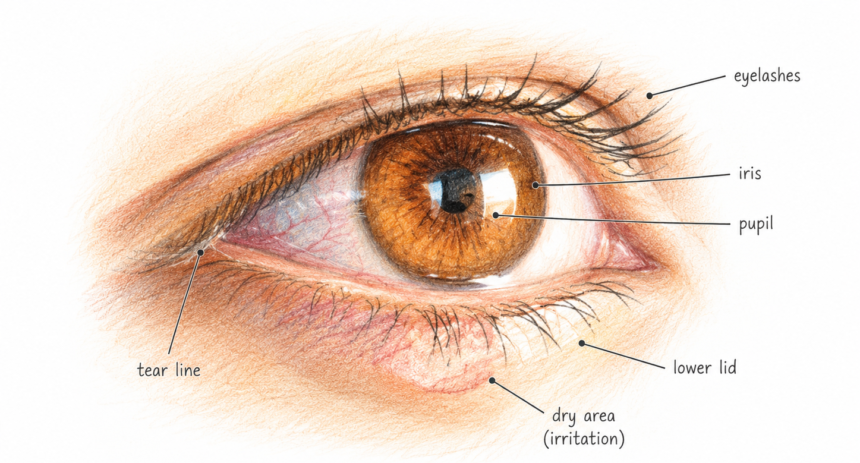
Crying is one of the most natural human experiences. Whether you cry from sadness, joy, frustration, or physical pain, tears are your body’s way of responding to what is happening inside you. But have you ever noticed that after crying for a long time, your eyes start to burn, sting, or feel raw? You are not imagining it. This is a very real, very common experience — and there are specific biological and chemical reasons behind it.
Most people assume that tears are just salty water. In reality, tears are a complex liquid made up of oils, water, proteins, enzymes, and electrolytes. When you cry heavily for an extended period, the chemistry of your tears changes, the volume overwhelms your eye’s natural defense system, and the sensitive skin around your eyes gets irritated. All of this adds up to that burning, stinging sensation that many people experience after a long cry.
This article walks you through the science of why your eyes burn when you cry too much, what happens inside your eyes and around them during emotional weeping, how to relieve the discomfort, and when the burning might be a sign of something more worth paying attention to. By the end, you will have a thorough understanding of what your body is doing — and what you can do to feel better faster.
The Three Types of Tears and Why They Are Different
Before you can understand why your eyes burn, you need to understand that not all tears are the same. Your eyes produce three distinct types of tears, and each serves a completely different purpose.
Basal tears:
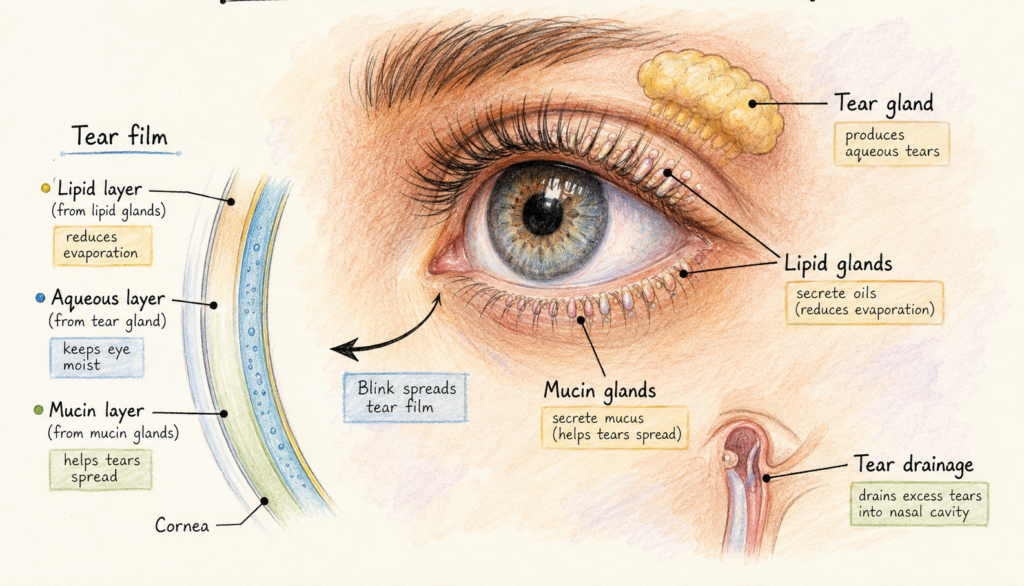
Basal tears are the tears your eyes produce constantly, around the clock. You never notice them because they are always there — a thin protective film covering your cornea (the clear front surface of your eye). Basal tears keep your eyes moist, deliver oxygen and nutrients to the corneal tissue, and act as a barrier against dust, bacteria, and environmental irritants. Without basal tears, your cornea would dry out and become damaged within minutes.
Reflex tears:
Reflex tears are produced when your eyes are irritated by something external — smoke, onion fumes, a piece of dust, bright light, or even cold wind. These tears are produced quickly and in larger quantities than basal tears. Their job is to flush out whatever is irritating the eye.
Emotional tears:
the ones that come when you cry from feelings — are different from both of the above. They contain higher levels of stress hormones, specifically ACTH (adrenocorticotropic hormone), prolactin, and enkephalin (a natural painkiller). They also contain more protein and have a slightly different electrolyte composition than basal tears.
| Type of Tear | Purpose | Key Contents | Volume Produced |
|---|---|---|---|
| Basal | Constant eye lubrication | Water, oils, proteins, lysozyme | Small, continuous |
| Reflex | Flush out irritants | Mostly water, electrolytes | Large, sudden burst |
| Emotional | Response to emotions | Stress hormones, higher protein, enkephalin | Variable, often large |
The fact that emotional tears have a higher protein content is one of the central reasons why crying a lot causes burning. Proteins and stress hormones in higher concentrations can irritate sensitive eye and skin tissue, especially when produced in large quantities over a sustained period.
What Happens to Your Eyes When You Cry for a Long Time
When you start crying, your lacrimal glands — located above each eye, toward the outer corner — kick into high gear. These are the main tear-producing glands. Under emotional stress, the nervous system sends a signal that causes these glands to produce tears much faster than they normally would.
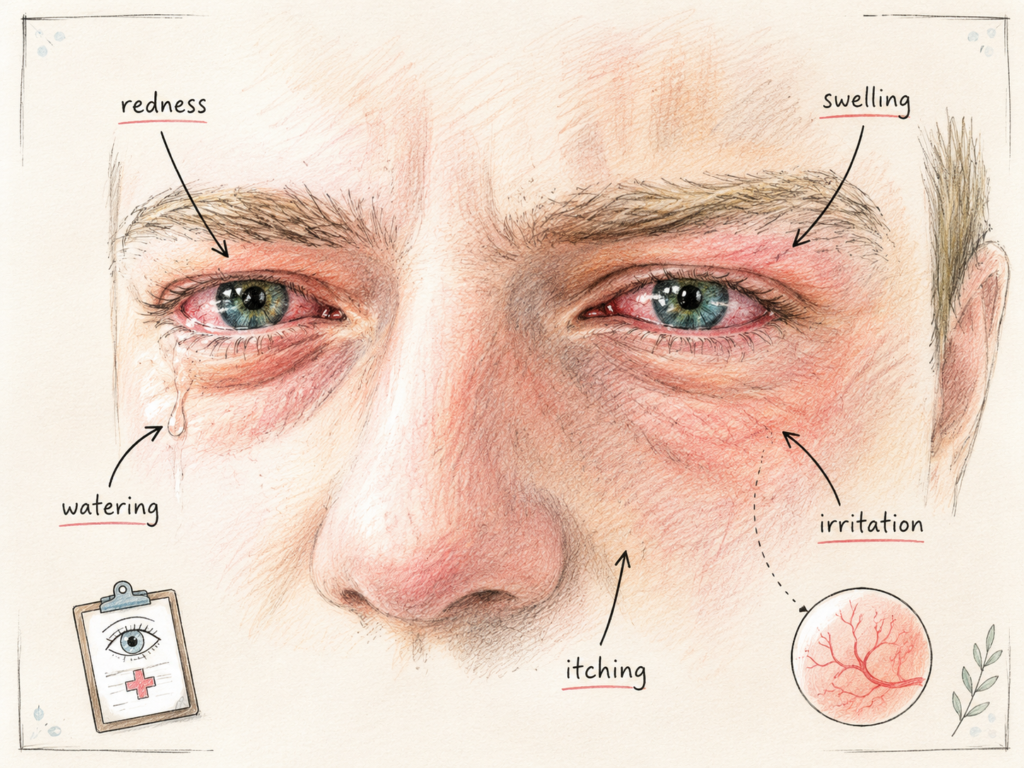
Your eyes have a natural drainage system. Tears flow across the surface of the eye and then drain through two tiny openings called puncta, located in the inner corners of your upper and lower eyelids. From there, they travel through the nasolacrimal duct into your nose — which is why your nose runs when you cry. This drainage system works efficiently under normal conditions.
However, when you cry heavily, your tear production far outpaces drainage capacity. Tears overflow down your cheeks. The thin film of tears on your eye’s surface becomes unstable. The excess tears carry with them higher concentrations of proteins, salts, and stress hormones, and as this excess liquid sits on the surface of your eye and the surrounding skin, it begins to irritate.
The skin around your eyes is some of the thinnest and most delicate skin on your entire body. It is about 0.5mm thick — compared to 2mm or more on most other parts of your face. This skin has very little underlying fat to cushion it and very few oil glands to protect it. So when this area is exposed to the salt and protein content of excess emotional tears for a prolonged period, it becomes red, swollen, and irritated quickly.
What happens step by step when you cry for a long time:
- Lacrimal glands produce tears faster than the drainage system can handle
- Tears overflow and run down the face
- Excess tears pool at the lower eyelid and the inner corner of the eye
- The salty, protein-rich liquid saturates the thin skin around the eye
- The skin becomes red, puffy, and raw from extended contact
- The corneal surface, now flooded with more tears than it needs, becomes temporarily destabilized
- Rubbing the eyes — which most people do when crying — adds physical friction and spreads bacteria from the hands to the eye
- When crying stops, the eye surface suddenly has less lubrication and may feel dry and exposed
The Salt Content of Emotional Tears and Why It Burns
Salt is one of the most immediate reasons your eyes burn after crying. Tears are naturally saline — they contain sodium chloride (salt) but the concentration and overall composition shifts during heavy emotional crying.
Your body maintains a careful balance of electrolytes in all its fluids. Normal basal tears have a sodium concentration roughly similar to blood plasma, around 135–145 milliequivalents per liter. However, during prolonged crying, the composition of tears can fluctuate. As your lacrimal glands work overtime, the tears they produce may carry slightly altered concentrations of sodium, potassium, chloride, and bicarbonate.
The surface of your eye, particularly the cornea and conjunctiva (the clear membrane covering the white of your eye) is covered with densely packed, highly sensitive nerve endings. The cornea is actually the most sensitive tissue in the entire human body in terms of nerve density. When these nerve endings are exposed to salt concentrations that are even slightly off from what they expect, they send pain signals to your brain, which you feel as burning or stinging.
Think of it like rubbing salt water into a small cut on your hand — even a tiny amount of salt on broken or irritated skin creates an immediate burning reaction. The nerves in your eye are doing the same thing, but because the corneal nerve endings are so numerous and sensitive, the sensation is much more noticeable even without any actual injury.
Factors that increase the burning sensation from salt in tears:
- Crying for more than 10–15 minutes continuously
- Rubbing your eyes, which disrupts the tear film and introduces more friction
- Being in a dry or air-conditioned environment that evaporates the tear film faster
- Having pre-existing dry eye conditions that make the corneal surface more vulnerable
- Not blinking enough during or after crying, which normally helps spread and refresh the tear film
The Role of Stress Hormones in Eye Burning
Emotional tears are not just salt water. They contain measurably higher amounts of stress hormones compared to reflex or basal tears. Research by Dr. William Frey II, a biochemist who spent years studying the composition of emotional tears, found that crying may serve a biological function — that it actually removes stress hormones and other chemicals from the body through tears.
Among the substances found in elevated levels in emotional tears are:
- Prolactin — the hormone associated with emotional responses and also responsible for stimulating tear production. Women have higher prolactin levels than men, which is one reason women tend to cry more frequently.
- ACTH (Adrenocorticotropic Hormone) — a stress hormone that triggers cortisol release. Higher concentrations of ACTH in tears contribute to their slightly acidic pH during intense crying.
- Enkephalin — a natural opiate-like compound that acts as a painkiller. Its presence in tears is one reason crying can sometimes provide emotional relief.
- Lysozyme — an antibacterial enzyme present in tears that helps protect the eye from infection. It is important for eye health but in higher concentrations can interact with the corneal surface.
When these hormonal compounds are present in higher-than-normal concentrations and the eye is bathed in them for an extended time — particularly during prolonged crying — the sensitive corneal and conjunctival surfaces react. The slightly altered pH (acidity) of emotionally charged tears can activate pain receptors on the cornea more readily than the neutral or mildly alkaline pH of regular basal tears.
Additionally, stress hormones circulating in your body during emotional crying also affect blood flow. Blood vessels around and in the eye dilate during emotional distress, contributing to the redness and swelling you see in and around the eye after crying.
Why Your Eyelids Swell and How That Contributes to the Burning
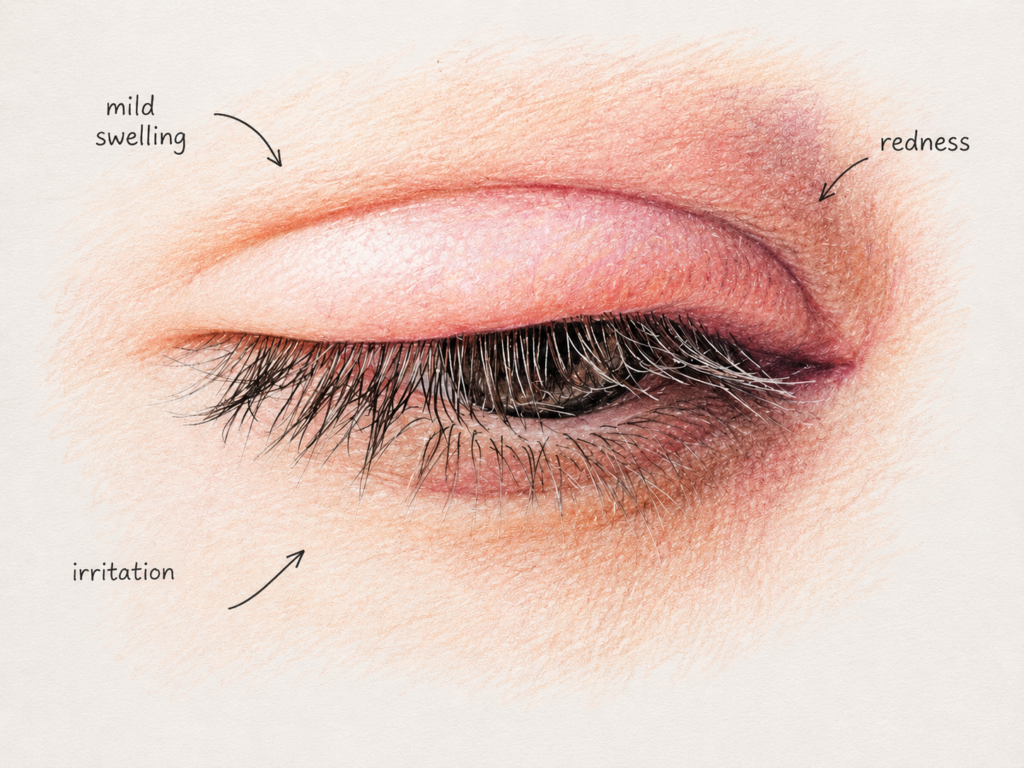
Swollen, puffy eyelids are a near-universal experience after heavy crying. Understanding why this happens also helps explain the burning sensation.
When you cry, the blood vessels around your eyes dilate in response to the emotional and physical stress. This increased blood flow causes fluid to leak out of the vessels and accumulate in the surrounding tissue — a process called edema. Because the skin around the eye is extremely thin and has very little structural support, this fluid has nowhere to go and builds up quickly, creating the characteristic puffy look.
This swelling has several effects that contribute to burning:
The swollen eyelid skin becomes taut and stretched. When you blink, the swollen lids press differently against the eye surface than normal — creating friction and uneven distribution of the tear film. Instead of the tear film spreading smoothly across the cornea with each blink, it moves irregularly, leaving patches of exposed corneal surface that quickly dry out and trigger burning.
The inner lining of the eyelid — called the palpebral conjunctiva — becomes inflamed and slightly swollen as well. This inner surface normally glides smoothly over the eyeball with each blink, but when inflamed, it feels rough and creates a scratching or burning sensation as it moves across the corneal surface.
The tear drainage system can also become temporarily blocked or reduced during heavy crying. When the puncta (tear drain openings) are surrounded by swollen tissue, tear drainage efficiency drops, which can paradoxically cause both overflow tears running down the face AND a feeling of dry, burning eyes at the same time — because the tear film quality has degraded even though there is water present.
Common sensations associated with post-crying eyelid swelling:
- Heaviness or tightness in the eyelids
- Burning that worsens when blinking
- A feeling that the eyelids are slightly sticky or rough
- Sensitivity to light (photophobia) due to the inflamed conjunctiva
- A gritty or sandy feeling, as if something is in the eye
Eye Rubbing During Crying , My Eyes Burn When I Cry So Much
Almost everyone rubs their eyes when they cry. It is an instinctive response — the eyes itch, they water, they feel uncomfortable, and the natural reaction is to rub them. Unfortunately, eye rubbing during and after crying is one of the main reasons the burning sensation becomes more intense.
When you rub your eyes, several things happen simultaneously. The mechanical pressure pushes blood into the tissue around the eye, accelerating swelling. The rubbing disrupts the tear film that protects the corneal surface. It introduces bacteria and oils from your fingers and hands to the eye — potential irritants that compound the chemical irritation already happening from the tears themselves. If you rub hard enough or frequently enough, you can also cause small abrasions on the conjunctival surface, which then burn significantly when the salty tears continue to flow over them.
People often describe the burning as being much worse after they have rubbed their eyes than before. This is consistent with what happens physically — rubbing causes micro-damage to the already sensitized surface, and then the ongoing exposure to excess tears on that damaged surface creates an intensely unpleasant burning sensation.
A note from optometry practice:
Optometrists commonly advise patients to avoid rubbing their eyes even in non-crying situations because of the mechanical stress it places on the cornea. During crying, when the cornea is already exposed to altered tear chemistry, rubbing compounds the problem significantly. Gently blotting tears with a soft, clean tissue and allowing natural blinking to redistribute the tear film is always a better approach.
What rubbing does versus what you should do instead:
| What Rubbing Does | What You Should Do Instead |
|---|---|
| Disrupts tear film | Let natural blinking redistribute tears |
| Introduces bacteria from hands | Use a clean, soft tissue to gently blot |
| Increases blood flow and swelling | Apply a cool, damp cloth to reduce inflammation |
| Can cause micro-abrasions on conjunctiva | Avoid pressure on the eye entirely |
| Spreads oils and irritants | Wash hands before touching eye area |
The Connection Between Crying and Dry Eye Sensation
There is an interesting paradox that many people experience — you cry until your eyes are flooded with tears, and then afterward your eyes feel dry and burning. How can your eyes feel dry after producing so much liquid?
The answer lies in the quality of tears rather than just their quantity. Your eye needs a balanced three-layer tear film to stay comfortable. This tear film consists of an outer lipid (oil) layer produced by the meibomian glands in your eyelids, a middle aqueous (water) layer produced by the lacrimal glands, and an inner mucin layer produced by goblet cells in the conjunctiva. All three layers working together create a stable, comfortable protective film over the cornea.
During heavy crying, the aqueous (water) layer is massively overproduced. This excess water can actually wash away or dilute the lipid layer and the mucin layer — disrupting the balance. When crying stops, and the lacrimal glands return to normal production, the tear film may be temporarily unstable and poorly structured. The lipid layer — which normally prevents evaporation of the aqueous layer — has been disrupted, so what little tear film remains evaporates too quickly. The result is a post-cry dry eye sensation on a cornea that is already sensitized and slightly irritated.
This is why many people find that their eyes feel more uncomfortable in the minutes and hours after crying stops than during the crying itself. During the cry, there is constant tear flow keeping the surface wet, even if chaotically. After the cry, the surface is left depleted and unbalanced.
People who are more likely to experience pronounced post-cry burning:
- Those who already have dry eye syndrome (the baseline tear film quality is already compromised)
- People who wear contact lenses (lenses interfere with tear film stability even under normal conditions)
- Those in very dry or air-conditioned environments (faster tear evaporation after the cry ends)
- People who cry infrequently (the lacrimal glands are less accustomed to high production demands)
- Older adults (tear production and quality naturally decrease with age)
How Your Nose Connects to Eye Burning After Crying
The nasolacrimal duct — the drainage channel that carries tears from the eye into the nose — plays a surprising role in why your face and eyes feel so uncomfortable after crying. When you cry heavily, this duct is flooded with excess tears. Your nose runs, the inside of your nasal passages becomes irritated by the salty fluid, and the mucous membranes in your nose swell.
This nasal swelling can create a feedback effect. Because the nasolacrimal duct connects the eye to the nose, swelling and congestion in the nasal passages can actually impair tear drainage from the eye. Tears that cannot drain properly accumulate around the eye longer, extending the contact time between the irritating tear composition and the sensitive eye and skin tissue.
Additionally, when people cry heavily, they often breathe through their mouths and blow their noses repeatedly. Both of these actions contribute to facial skin dryness and overall tissue irritation. The combination of repeated nose-blowing, prolonged tear exposure, and mouth breathing during a heavy cry creates a constellation of discomforts that includes burning eyes, sore skin under the nose, chapped lips, and headache.
Specific Situations That Make Post-Cry Eye Burning Worse
Not every crying episode leads to significant eye burning. Some situations make it much more likely and much more intense. Understanding these situations helps you take steps to prevent or minimize the discomfort.
Crying while wearing eye makeup:
Crying while wearing eye makeup is one of the most reliable ways to make your post-cry burning worse. Mascara, eyeliner, and eyeshadow all contain chemical compounds — pigments, preservatives, waxes, and polymers — that are irritating to the eye surface when dissolved into the tears and swept across the cornea. Mascara in particular is notorious for migrating into the eye during crying and creating a chemical irritation that compounds the natural irritation from the tears themselves. The burning from mascara-laden tears can be significantly more intense than from plain tears.
Crying in a dry or cold environment:
Crying in a dry or cold environment accelerates tear evaporation, which means the concentrated salts and proteins in the tears are left on the corneal surface in higher concentrations as the water evaporates. Air-conditioned rooms, outdoor environments in winter, and high-altitude locations all have lower ambient humidity that speeds this evaporation.
Crying while wearing contact lenses:
Crying while wearing contact lenses is problematic for several reasons. Contact lenses sit directly on the tear film. During heavy crying, the lens can absorb some of the altered tear composition. The excess salt and protein content can reduce oxygen transmission through the lens and change the lens’s fit slightly. Additionally, emotional crying often causes uncontrolled blinking and eye rubbing, and the combination of a displaced lens and a sensitized corneal surface creates significant burning and discomfort.
Crying through fatigue or illness:
Crying through fatigue or illness makes the situation worse because the body’s normal repair and recovery mechanisms are already stressed. Tired or sick eyes have less-stable tear films and more-reactive nerve endings, so the same amount of crying produces more burning than it would in a rested, healthy person.
Crying that involves prolonged, intense sobbing (as opposed to gentle tearing) produces far more tear volume and involves more facial muscle tension. The muscular contractions around the eye during intense sobbing contribute to the physical compression and swelling of periorbital tissue, adding to the discomfort.
How Long Does the Burning Last and When to Be Concerned
For most people, the burning and stinging after crying resolves on its own within 20 minutes to an hour after the crying stops. This is the time it takes for the tear film to restabilize, the swelling to begin reducing, and the corneal nerve endings to calm down.
If the burning persists beyond a couple of hours, or if it is accompanied by changes in your vision, unusual discharge, or severe pain, it may be worth paying closer attention.
Normal post-cry symptoms that resolve without treatment:
- Mild to moderate burning that improves within an hour
- Redness that fades within 30–60 minutes
- Puffy eyelids that reduce within a few hours
- Temporary light sensitivity
- Slightly blurry vision that clears with blinking
Symptoms that warrant medical attention:
- Burning that persists more than several hours without improvement
- A gritty sensation that continues long after crying has stopped (may indicate a foreign body or corneal abrasion)
- Significant change in vision that does not clear with blinking
- Unusual discharge (yellow, green, or thick white) from the eye
- Pain that is severe or stabbing rather than a burning sensation
- A visible scratch or cloudiness on the cornea
People with pre-existing conditions including dry eye disease, blepharitis (inflammation of the eyelid margins), rosacea, or allergic conjunctivitis may find that crying triggers a flare of their underlying condition, which can cause more prolonged or intense discomfort. For these individuals, having a management plan in place before a significant crying episode — such as keeping lubricating eye drops on hand — is a practical approach.
Practical Ways to Relieve the Burning After Crying
The good news is that post-cry eye burning is very responsive to simple home care. You do not need any medications or special equipment to get relief quickly. The goal is to restore tear film stability, reduce swelling, and calm the irritated tissue.
Using preservative-free artificial tears:
is one of the most effective immediate treatments. Regular basal tears produce a stable, balanced tear film. After heavy crying, that film is disrupted. Artificial tears — particularly those that are preservative-free, as preservatives themselves can irritate already-sensitized eyes — help to replace the lost lipid and mucin layers and reestablish the normal tear film quickly. Use them as soon as possible after crying stops.
Cold compresses:
work remarkably well for post-cry eye discomfort. The cold temperature constricts the dilated blood vessels around the eye, which reduces the swelling and the associated burning and aching. Simply soak a clean washcloth in cool water, wring it out, and hold it gently over closed eyes for 5–10 minutes. Do not use ice directly on the eye area — this can be too intense for the thin, already-irritated skin.
Washing your face gently with cool water:
helps remove the residual salt and protein deposits from the skin around the eyes and from the eyelid margins. Avoid using hot water, which would increase blood vessel dilation and worsen swelling. Cool or lukewarm water is ideal.
Resting in a dark, quiet room:
gives your eyes a recovery period. Light stimulation — especially from screens — requires the eye to work actively and can prolong the sensitivity of the corneal nerve endings. Even 15–20 minutes of eyes-closed rest in a dark room can significantly accelerate recovery.
Staying hydrated:
helps your body restore normal tear production more quickly. Crying involves significant fluid loss — through tears, through nose-blowing, and through mouth breathing. Drinking water after a crying episode helps replenish fluid levels and supports normal lacrimal gland function.
Blinking intentionally:
sounds almost too simple, but deliberate, full blinks every few seconds after crying stops help to redistribute whatever tear film is present more evenly across the cornea. Many people, after an intense emotional experience, unconsciously blink less frequently as they recover, which contributes to faster evaporation of the remaining tear film.
Remedies at a glance:
| Remedy | How It Works | How to Use |
|---|---|---|
| Preservative-free eye drops | Replaces disrupted tear film layers | 1–2 drops in each eye immediately after crying |
| Cool compress | Constricts blood vessels, reduces swelling | Damp cloth on closed eyes for 5–10 minutes |
| Cool water face wash | Removes salt and protein residue | Gentle splash or rinse without rubbing |
| Dark room rest | Reduces corneal nerve stimulation | 15–20 minutes with eyes closed |
| Hydration | Restores fluid balance for tear production | 1–2 glasses of water after crying |
| Intentional blinking | Redistributes remaining tear film | Full blinks every 3–5 seconds for a few minutes |
Why Some People Experience More Burning Than Others
Not everyone who cries heavily experiences significant eye burning. Individual variation is real and is determined by several factors.
People with naturally higher tear film quality — particularly those with healthy meibomian gland function producing a good lipid layer — tend to recover more quickly from the disruption caused by emotional crying. The lipid layer is protective, and when it is robust, it bounces back more quickly after the overload of the aqueous layer during crying.
People with hormonal differences also respond differently. Because prolactin — which is involved in tear production — exists at higher levels in women, women generally produce more emotional tears and cry for longer periods than men on average. Higher tear volume over a longer period means more sustained exposure of the corneal and periorbital tissue to the altered tear chemistry, which tends to produce more intense and longer-lasting burning.
Age is a significant factor. As people get older, tear production naturally decreases and the composition of tears shifts — the lipid layer produced by the meibomian glands becomes less efficient, and the overall tear film becomes less stable. Older adults who cry heavily are more likely to experience significant burning because their baseline tear film is already more vulnerable.
Skin sensitivity varies enormously between individuals. People with sensitive skin, eczema-prone skin, or rosacea are more likely to experience intense burning and longer-lasting redness around the eyes after crying, simply because their skin barrier function is less robust and the tissues react more strongly to the salt and protein exposure.
Individual factors affecting post-cry burning intensity:
- Baseline tear film quality and meibomian gland health
- Hormonal profile (prolactin levels, estrogen, testosterone)
- Age and associated changes in tear production
- Skin sensitivity and barrier function around the eye
- Presence of pre-existing eye conditions (dry eye, blepharitis, conjunctivitis)
- Contact lens wear
- Hydration status at the time of crying
- Duration and intensity of the crying episode
The Psychological Side — Does Crying Too Much Cause Long-Term Eye Problems
A question many people wonder about, especially those who go through periods of frequent or intense crying due to grief, depression, anxiety, or other difficult circumstances — does crying heavily and regularly cause any lasting damage to the eyes?
The reassuring answer, for most people, is no. The human eye is remarkably resilient, and the mechanisms of irritation and recovery described throughout this article are self-correcting. The tear film restabilizes, the swelling reduces, the corneal nerve endings calm down, and no permanent damage occurs from the crying itself.
However, there are some indirect connections worth knowing. If heavy crying is happening because of significant psychological distress, the stress hormones circulating in the body — including cortisol — can affect tear film quality over time. Chronic stress is associated with dry eye disease, because the chronic elevation of stress hormones can disrupt the normal hormonal regulation of tear production. So while a single crying episode causes no lasting harm, a prolonged period of intense emotional distress may contribute to a gradual decline in tear film quality.
People who are in grief or going through prolonged emotional difficulty and who find themselves crying frequently should be aware that their eye comfort may decline over this period — not because crying itself is damaging, but because the underlying stress is affecting their physiology. Maintaining good eye hygiene, staying hydrated, and using lubricating drops as needed can help manage this during difficult periods.
It is also worth noting that people in significant psychological distress sometimes neglect self-care behaviors that support eye health — sleeping enough, eating well, staying hydrated, and getting fresh air. These basics matter for tear film quality and overall eye comfort.
What Eye Drops Work Best After Crying
Not all eye drops are equal when it comes to post-cry relief. The wrong type of drop can actually make things worse, so it is worth knowing which ones to reach for.
Lubricating drops (artificial tears)
are the best choice. These are designed to mimic or supplement the natural tear film. Look for ones that are preservative-free if you plan to use them more than four times a day, because the preservatives in regular artificial tears can themselves be irritating to already-sensitized eyes. Products containing hyaluronic acid, carboxymethylcellulose, or polyethylene glycol are well-tolerated and effective.
Avoid redness-reducing drops (the kind marketed as “getting the red out”). These drops work by constricting the blood vessels in the eye, which does reduce redness quickly — but this is a cosmetic fix that does not address the underlying irritation. Worse, they can cause a rebound effect where the redness returns more intensely after the drops wear off. Using these regularly can make your eyes more sensitive over time.
Avoid antihistamine eye drops unless you know your burning is related to an allergic component, because these have a drying effect and can worsen the dry eye sensation that often follows heavy crying.
Drops to use vs. avoid after crying:
| Drop Type | Use After Crying? | Reason |
|---|---|---|
| Preservative-free lubricating drops | Yes — best choice | Restores tear film without adding irritants |
| Lubricating drops with preservatives | Yes, if used infrequently | Effective but limit to 4 or fewer uses per day |
| Redness-relieving drops (decongestant) | Avoid | Cosmetic only, causes rebound redness |
| Antihistamine drops | Avoid unless allergic | Drying effect worsens post-cry dry sensation |
| Prescription cyclosporine drops | Only if prescribed | For chronic dry eye disease, not acute situations |
Making Eye Care a Priority During Emotionally Difficult Times
During periods of grief, emotional stress, significant life changes, or mental health challenges — when crying is frequent and intense — making basic eye care part of your daily routine can prevent a great deal of unnecessary discomfort.
Keeping preservative-free lubricating drops accessible so you can use them during and after crying episodes matters. If you wear contact lenses, consider wearing glasses on days when you know you might cry — this removes one major source of additional discomfort. Removing eye makeup before anticipated emotional situations, or using waterproof formulas that are less likely to dissolve into the tear film, helps reduce chemical irritation.
Getting enough sleep during emotionally difficult periods is particularly important for eye health, because sleep is when the meibomian glands replenish the lipid layer of the tear film. Sleep deprivation directly worsens dry eye symptoms and tear film instability, meaning your eyes are more vulnerable to the disruption caused by crying when you are already sleep-deprived.
Drinking enough water throughout the day maintains the body’s fluid balance necessary for adequate tear production. People in emotional distress sometimes forget to eat and drink regularly — even mild dehydration measurably reduces tear volume and quality.
Finally, if you find that your eyes are burning severely and persistently during a period of frequent crying, and that basic home remedies are not providing adequate relief, a conversation with an optometrist or ophthalmologist is worthwhile. They can assess your tear film quality, check for any underlying dry eye disease or other contributing condition, and recommend treatments — including prescription options if needed — that can provide better ongoing support.
A Summary of the Key Reasons Your Eyes Burn When You Cry
Bringing everything together — your eyes burn after crying for several interconnected reasons that all come back to the biology of tears and the sensitivity of the eye surface.
The elevated salt concentration in emotional tears irritates the densely packed nerve endings on the corneal surface. The higher protein and stress hormone content of emotional tears creates a slightly altered chemical environment that the corneal tissue responds to with a burning sensation. The overwhelming volume of tears during a prolonged cry disrupts the structured three-layer tear film, leaving the cornea temporarily less well-protected after the crying stops. The swelling of the periorbital tissue — caused by blood vessel dilation and fluid accumulation — changes how the eyelid moves across the eye, creating friction and uneven tear distribution. Eye rubbing compounds all of these problems by adding physical damage, introducing contaminants, and disrupting the tear film further. And for people with pre-existing vulnerabilities in their tear film or corneal sensitivity, all of these effects are amplified.
The good news is that in the vast majority of cases, this is a temporary and self-correcting situation. Your eyes are designed to recover. With a little support — cool compresses, lubricating drops, gentle hydration, and rest — the burning subsides, the tear film stabilizes, the swelling reduces, and your eyes return to normal comfort.
Understanding the why behind the burning takes away some of its unsettling quality. When you know that what you are experiencing is a predictable biological response to the extraordinary chemistry of emotional tears — not a sign that something is wrong — it becomes easier to take care of your eyes thoughtfully and give your body the time it needs to settle after the emotional experience of crying.
Your tears serve a purpose. Even when they hurt a little afterward, they are part of how your body processes what it goes through. Taking care of the physical side of that process is simply good self-care.