


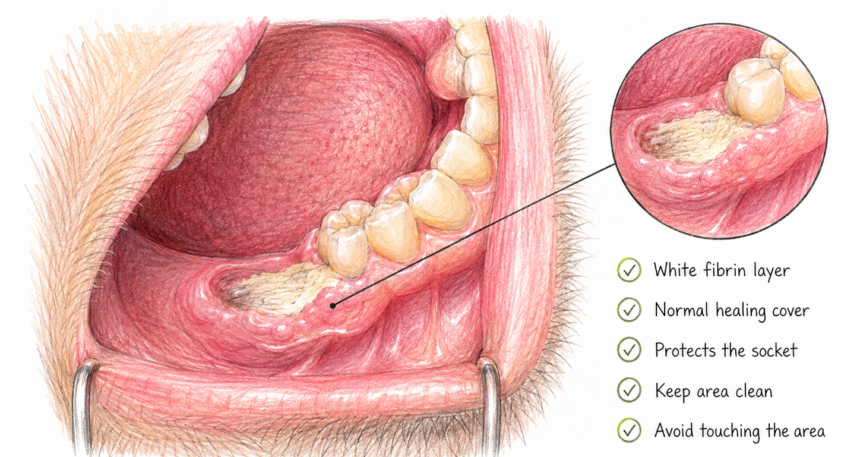
A White Fibrin Film Over the Socket over a tooth extraction socket can look worrying, especially when you are checking your mouth after a tooth removal. Many people think white tissue means infection, pus, or dry socket. In many cases, a white or pale yellow layer over the socket is part of normal healing. This layer is often called a fibrin film.
Fibrin is a natural healing material made by the body. After a tooth is removed, a blood clot forms inside the socket. This clot protects the bone and nerve endings underneath. As healing continues, the dark clot may become covered by a whitish or yellowish film. This can be part of the normal healing process.
A white fibrin film is usually not something to scrape, rinse hard, or remove. It acts like a soft healing cover. If you disturb it too early, you may slow healing or increase the risk of dry socket.
Still, not every white area is normal. A white socket with severe pain, bad smell, pus, fever, swelling, or pain that gets worse after improving should be checked by a dentist or oral surgeon. The key is to look at the whole picture, not just the color.
| Main question | Simple answer |
|---|---|
| Is white film over an extraction socket normal? | Often yes, especially if pain is improving |
| What is fibrin? | A natural healing protein that helps form a protective layer |
| Should you remove the white film? | No, do not scrape or pick it |
| Is white film the same as pus? | Not always |
| Can dry socket look white? | Sometimes exposed bone may look white, but pain is usually severe |
| When should you call a dentist? | Severe pain, bad smell, pus, fever, swelling, or worsening symptoms |
What Is the White Fibrin Film Over the Socket
A white fibrin film is a pale layer that can form over the tooth socket during healing. It may look white, cream, pale yellow, or grayish white. It can appear on top of the blood clot or around the healing gum edges.
This film is part of the body’s normal repair process. After a tooth is removed, the body works to close the wound, protect the socket, and build new tissue. Fibrin helps support this early repair.
The white film may look strange because people expect the socket to stay red or dark. But healing tissue can change color over time. The socket may look darker at first, then lighter as new tissue forms.
Dental care note: A white film that appears while pain is slowly improving is often a normal healing sign.
| What you see | Possible meaning |
|---|---|
| White or pale yellow film | Normal fibrin or healing tissue possible |
| Dark red clot | Early blood clot |
| Pink edges | Gum tissue healing |
| Grayish layer with mild discomfort | Healing tissue possible |
| Empty socket with severe pain | Dry socket possible |
| Thick pus with swelling | Infection possible |
Why the Film Looks White
The white color can come from fibrin, healing tissue, and surface moisture. It does not always mean pus. Healing wounds in the mouth often look white or yellowish because saliva keeps the area wet and the tissue is covered by a soft healing layer.
The mouth heals differently from dry skin. A cut on the skin may form a dry brown scab. A wound inside the mouth stays wet, so it may form a softer pale layer instead.
Common reasons the socket looks white include:
- Fibrin film
- Healing tissue
- Saliva mixing with the clot surface
- New gum tissue forming
- Food residue sitting near the socket
- Small bits of healing material
- Surface layer over the blood clot
| White appearance | More likely normal when |
|---|---|
| Thin white layer | Pain is mild or improving |
| Pale yellow film | No swelling or fever |
| White over clot | Socket still feels protected |
| White near gum edge | Gum tissue is closing |
| White with no bad smell | Less concerning |
| White with normal soreness | Common after extraction |
Why a Blood Clot Matters After Tooth Removal
After a tooth is removed, a blood clot should form in the empty space where the tooth used to be. This empty space is called the socket. The clot protects the bone and nerve endings underneath. It also supports the start of new tissue growth.
The clot is very important during the first few days. If it comes out too early or does not form well, the bone and nerves may become exposed. This can lead to dry socket, which can be very painful.
The white fibrin film often develops as the clot changes and the socket begins to heal. This does not mean the clot is bad. It usually means the body is moving into the next healing stage.
| Healing part | What it does |
|---|---|
| Blood clot | Covers and protects the socket |
| Fibrin | Helps form a healing layer |
| Gum tissue | Slowly closes the opening |
| New tissue | Fills the socket over time |
| Bone healing | Happens deeper and takes longer |
| Saliva | Keeps the mouth moist but can change the look |
How the Socket Usually Changes
The socket does not look the same every day. The color and texture can change as healing moves forward.
Common changes include:
- First day, the socket may look dark red
- Early days, the clot may look darker or jelly-like
- After that, a white or yellowish layer may appear
- Gum edges may look pink and swollen
- The hole may slowly look smaller
- Mild soreness should slowly improve
- Chewing and brushing may feel easier over time
| Stage | Common look |
|---|---|
| Right after extraction | Red blood clot |
| Early healing | Dark clot with swelling |
| Few days later | White or yellow film may appear |
| Later healing | Pink tissue starts filling in |
| More healing | Socket becomes smaller |
| Deeper healing | Bone fills in over weeks to months |
Is White Fibrin Film Normal
A white fibrin film is often normal after a tooth extraction. It can be a sign that the socket is healing. It is usually not a reason to panic if the pain is mild, improving, and there are no warning signs.
Normal healing can still feel uncomfortable. Mild pain, tenderness, swelling, and a bad taste from old blood can happen for a short time. What matters is the direction. Symptoms should slowly get better, not worse.
If the socket has a white film but you feel better each day, that is usually more reassuring than a socket that looks white and hurts more each day.
| Normal healing clue | What it means |
|---|---|
| Pain slowly improving | Healing is likely moving forward |
| Mild swelling going down | Expected recovery |
| White thin film | Fibrin or healing tissue possible |
| No fever | Less infection concern |
| No pus | Less infection concern |
| No severe bad smell | Less dry socket or infection concern |
| Socket slowly closing | Healing is progressing |
Normal White Film Versus Something Concerning
The white color alone is not enough to decide if something is wrong. Pain level, smell, swelling, and timing matter more.
| Feature | More likely normal fibrin | More concerning |
|---|---|---|
| Pain | Mild and improving | Severe or worsening |
| Smell | None or mild | Strong foul smell |
| Swelling | Improving | Getting worse |
| Fever | No | Yes |
| Discharge | No pus | Thick pus |
| Socket look | Covered by film | Empty-looking with visible bone |
| Timing | Gradual healing | Sudden worsening after initial improvement |
White Film Versus Pus
Many people worry that a white film means pus. Sometimes infection can create pus, but fibrin film and pus are not the same thing. Fibrin is part of healing. Pus usually suggests infection.
Pus may look thick, creamy, yellow, greenish, or cloudy. It may come with swelling, warmth, worsening pain, bad taste, fever, or a foul smell. Fibrin film is usually more like a soft layer attached to the healing surface and does not drain out like pus.
Dental care note: Do not try to scrape the socket to see what it is. If you are unsure, call your dentist.
| Feature | Fibrin film | Pus |
|---|---|---|
| Purpose | Healing support | Infection fluid |
| Look | Thin white or pale yellow layer | Thick cloudy fluid |
| Pain | Often mild or improving | Often worsening or throbbing |
| Smell | Usually not strong | May smell bad |
| Swelling | Usually improving | May increase |
| Fever | Usually no | Can happen |
| What to do | Leave it alone | Call dentist |
Signs It May Be Infection
A socket infection is less common than normal healing changes, but it can happen. Infection should be checked because it may need dental care.
Possible infection signs include:
- Pain that gets worse instead of better
- Swelling that increases after the first few days
- Pus or thick discharge
- Fever
- Bad taste that does not improve
- Strong foul smell
- Redness spreading around the gum
- Face or jaw swelling
- Feeling unwell
- Trouble opening the mouth
| Symptom | Why it matters |
|---|---|
| Fever | Body may be fighting infection |
| Thick discharge | Pus may be present |
| Increasing swelling | Infection or irritation possible |
| Severe pain | Needs dental check |
| Bad smell with pain | Dry socket or infection possible |
| Face swelling | Urgent dental advice needed |
White Film Versus Food Stuck in the Socket
Food can sometimes sit near or inside the extraction area. It may look white, yellow, brown, or soft. This can be confusing because food residue may look like healing tissue. The safest approach is not to dig into the socket.
After the dentist says rinsing is allowed, gentle rinsing can help remove loose food. Do not use hard swishing, toothpicks, cotton buds, or fingers inside the socket. These can disturb the clot and fibrin layer.
| What it could be | Clues |
|---|---|
| Fibrin film | Attached to socket, thin, does not rinse away easily |
| Food residue | May move with gentle rinsing |
| Healing tissue | Looks pale and stays in place |
| Bone | Hard white area with severe pain may be dry socket |
| Pus | Thick fluid with swelling or fever |
Safe Ways to Handle Food Near the Socket
If you think food is near the socket, stay gentle. Follow your dentist’s aftercare instructions because timing can differ based on the extraction.
Helpful steps include:
- Do not poke the socket
- Do not use a toothpick inside the hole
- Do not scrape the white film
- Use gentle rinsing only when your dentist allows it
- Let water flow out instead of spitting hard
- Eat soft foods during early healing
- Chew on the other side if possible
- Call the dentist if food feels stuck and causes pain
- Use a syringe only if your dentist gave one and explained how
| Mistake | Safer choice |
|---|---|
| Digging food out | Gentle rinse if allowed |
| Hard swishing | Slow gentle mouth movement |
| Spitting forcefully | Let liquid fall out gently |
| Using toothpick | Call dentist if stuck |
| Scraping white film | Leave healing tissue alone |
White Film Versus Dry Socket
Dry socket happens when the blood clot does not form, dissolves, or comes out before the socket heals. When the clot is missing, the bone and nerves inside the socket may be exposed. This can cause strong pain.
Dry socket is usually known more by pain than by color. A dry socket may look empty. Sometimes you may see a whitish area at the bottom, which can be exposed bone. But the biggest clue is pain that becomes severe, often a few days after extraction.
A normal fibrin film usually comes with healing pain that slowly improves. Dry socket pain usually gets worse and may spread to the ear, temple, eye, or neck on the same side.
| Feature | Normal fibrin film | Dry socket |
|---|---|---|
| Pain | Mild or improving | Severe and worsening |
| Socket | Covered with clot or film | May look empty |
| White area | Healing layer possible | Exposed bone possible |
| Timing | Healing over days | Often starts a few days after extraction |
| Smell | Usually mild or none | Bad breath or foul odor may occur |
| Pain medicine | Usually helps | Often not enough |
| Treatment | Home care and follow instructions | Dentist treatment needed |
Dry Socket Warning Signs
Dry socket can be very painful, but it usually can be treated by a dentist or oral surgeon. Do not try to pack the socket yourself.
Warning signs include:
- Severe pain within a few days after extraction
- Pain that gets worse instead of better
- Pain spreading to the ear, eye, temple, or neck
- Socket looks empty
- Blood clot seems lost
- Bone may be visible
- Bad breath or foul odor
- Bad taste
- Pain medicine does not help enough
| If you notice this | Best next step |
|---|---|
| Severe worsening pain | Call dentist quickly |
| Empty-looking socket | Dental check |
| Pain spreading to ear | Dry socket possible |
| Bad odor with pain | Dentist visit |
| Bone visible | Prompt dental care |
| Pain not controlled | Dentist or oral surgeon |
What the Socket May Look Like During Healing
The socket can look different depending on the tooth removed, how difficult the extraction was, your healing speed, and how closely you look. Wisdom tooth sockets may look deeper than simple extraction sockets. Stitches may also change the appearance.
A healing socket may have red, dark, white, yellow, or pink areas at different times. This can be normal as long as symptoms are improving and there are no warning signs.
| Look | Possible meaning |
|---|---|
| Dark red | Blood clot |
| Blackish red | Older clot |
| White film | Fibrin or healing layer |
| Pale yellow | Healing tissue or fibrin |
| Pink edges | New gum tissue |
| Grayish surface | Healing layer or debris, check symptoms |
| Empty hole with severe pain | Dry socket possible |
Why Wisdom Tooth Sockets Look Different
Wisdom teeth are often larger and deeper in the jaw. Some wisdom teeth are impacted or removed surgically. This can make the socket look deeper and take longer to fill in.
Wisdom tooth healing may include more swelling and soreness than a simple tooth removal. A white film can still be normal. But severe pain, bad smell, fever, or swelling that gets worse should be checked.
| Wisdom tooth factor | How it affects healing |
|---|---|
| Larger socket | Hole may look deeper |
| Surgical removal | More tissue healing needed |
| Stitches | Gum may look different |
| Back of mouth location | Harder to see and clean |
| Food trapping | More likely after first days |
| Higher dry socket risk | Follow aftercare closely |
Should You Remove the White Film
You should not remove the white fibrin film. It is part of the healing process and may protect the socket. Scraping, picking, or brushing directly inside the socket can disturb the clot and slow healing.
Even if the white film looks odd, leave it alone unless your dentist tells you otherwise. If it is food, gentle rinsing may loosen it when rinsing is allowed. If it is healing tissue, it should stay in place.
Dental care note: The safest rule is simple. Do not put anything into the socket unless your dentist gave you instructions.
| Action | Safe or unsafe |
|---|---|
| Leaving white film alone | Safe |
| Gentle rinsing when allowed | Usually safe |
| Scraping with fingernail | Unsafe |
| Using cotton bud inside socket | Unsafe |
| Brushing directly into socket | Unsafe |
| Using toothpick | Unsafe |
| Calling dentist with concern | Safe |
What Can Happen If You Pick the Film
Picking the white film can cause problems. It may disturb the clot, restart bleeding, irritate the gum, or increase pain. It can also push germs into the wound.
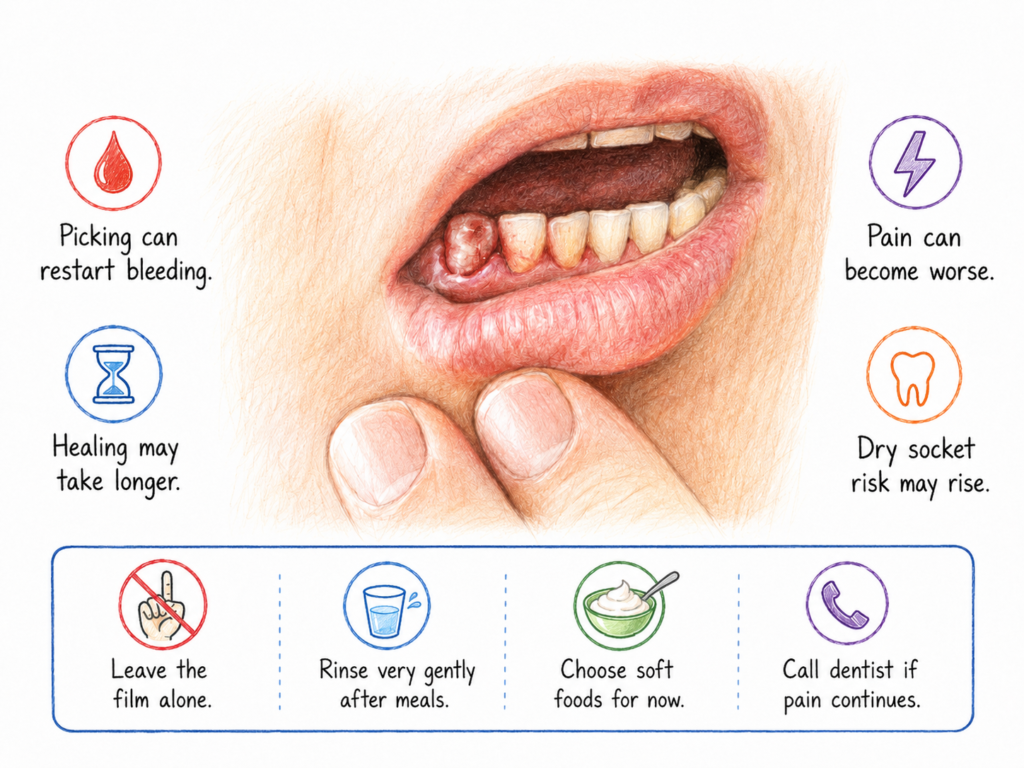
Possible problems include:
- Delayed healing
- More bleeding
- More pain
- Gum irritation
- Higher dry socket risk
- Infection risk
- Food packing deeper into the socket
- Need for an extra dental visit
| Picking result | Why it matters |
|---|---|
| Clot disturbed | Socket loses protection |
| Bleeding starts | Healing area reopened |
| Pain increases | Tissue irritation |
| Fibrin removed | Healing layer disrupted |
| Germs introduced | Infection risk rises |
| Dry socket risk | Bone may become exposed |
Home Care for a Socket With White Film
Home care should protect the clot and support healing. Follow the instructions given by your dentist or oral surgeon first. Different extractions may have different rules.
The main goals are simple: keep the socket protected, avoid strong suction, avoid smoking, eat soft foods early, and clean the mouth gently without disturbing the healing area.
| Home care goal | Simple action |
|---|---|
| Protect clot | Avoid spitting hard and straws early |
| Reduce irritation | Eat soft foods |
| Keep mouth clean | Brush other teeth gently |
| Avoid dry socket risk | Do not smoke |
| Reduce swelling | Follow dentist’s advice |
| Watch healing | Notice pain, smell, swelling, fever |
| Avoid injury | Do not poke the socket |
Gentle Aftercare Tips
These tips are commonly used after tooth removal, but always follow your dentist’s specific advice.
Helpful steps include:
- Rest after the extraction
- Bite on gauze only as directed
- Do not rinse hard during the early period
- Do not spit forcefully
- Avoid straws until your dentist says it is safe
- Avoid smoking or tobacco
- Eat soft foods at first
- Chew away from the socket
- Brush teeth gently, avoiding the socket
- Use salt water rinses only when your dentist says to start
- Take medicine only as directed
| Helpful habit | Why it helps |
|---|---|
| Soft foods | Less pressure on socket |
| Gentle brushing | Keeps mouth cleaner |
| No hard rinsing | Protects clot |
| No straw | Reduces suction risk |
| No smoking | Supports healing |
| Rest | Helps recovery |
Salt Water Rinses and White Film
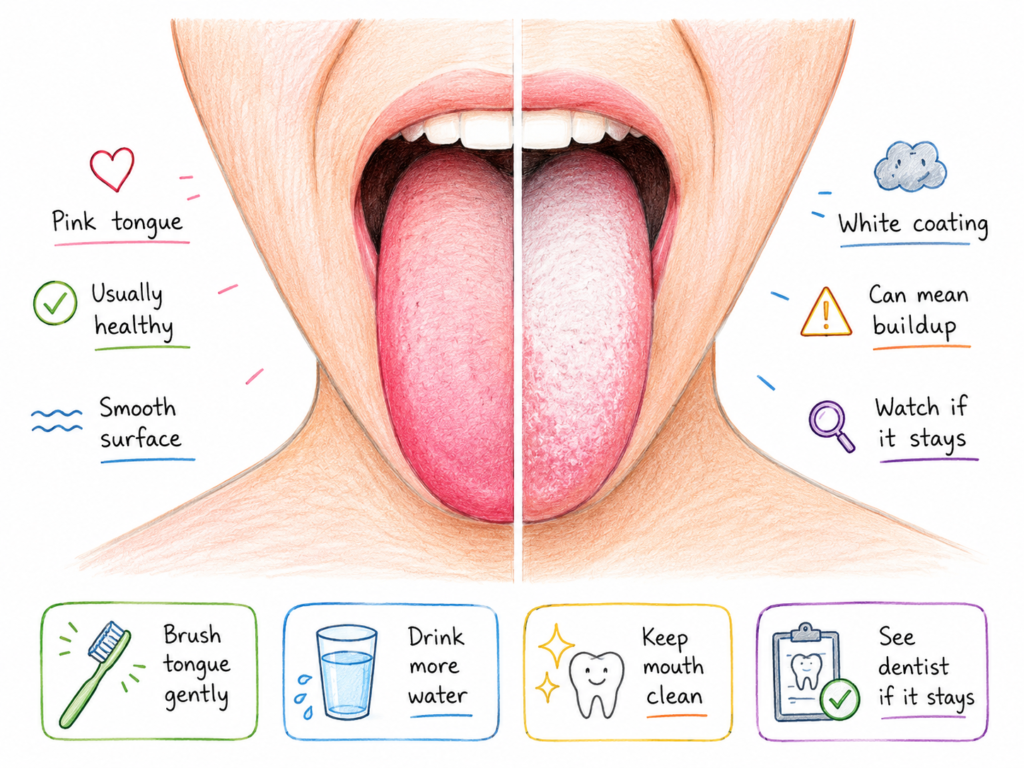
Many dentists recommend gentle warm salt water rinses after the first day or when instructed. Salt water can help keep the area clean and soothe the mouth. But rinsing must be gentle.
Do not swish hard. Do not spit with force. Let the salt water move softly around the mouth, then let it fall out into the sink. The goal is to clean gently, not wash away the healing clot.
| Rinse point | Why it matters |
|---|---|
| Start when dentist says | Timing protects the clot |
| Use warm water | More comfortable |
| Keep it gentle | Avoids disturbing socket |
| Do not spit hard | Reduces clot movement |
| Do not overdo it | Too much rinsing may irritate |
| Stop if it increases pain | Call dentist if unsure |
How to Rinse Gently
A gentle rinse should feel calm, not forceful.
Helpful steps include:
- Use warm water, not hot water
- Mix salt only as advised
- Take a small sip
- Let it sit and move gently
- Do not swish hard
- Lean over the sink
- Let the water fall out
- Do not spit hard
- Repeat only as instructed
- Call dentist if rinsing causes sharp pain or bleeding
| Rinsing mistake | Better choice |
|---|---|
| Hard swishing | Gentle movement |
| Forceful spitting | Let water fall out |
| Hot water | Warm water |
| Rinsing too early | Follow dentist timing |
| Scrubbing socket after rinse | Leave it alone |
Eating When There Is White Film Over the Socket
Eating carefully helps protect the healing socket. Soft foods are usually best early after extraction. Hard, crunchy, spicy, sticky, or seed-filled foods can irritate the socket or get trapped.
As healing improves, you can slowly return to normal foods based on comfort and your dentist’s instructions. If chewing causes pain, stay with softer foods and call the dentist if pain is getting worse.
| Better early foods | Foods to avoid early |
|---|---|
| Yogurt | Chips |
| Smooth soup that is not hot | Hard toast |
| Mashed potatoes | Nuts |
| Soft rice | Seeds |
| Scrambled eggs | Popcorn |
| Smoothies without straw | Spicy foods |
| Soft pasta | Sticky candy |
Eating Tips to Protect the Socket
Small changes can prevent irritation.
Helpful tips include:
- Eat soft foods at first
- Avoid chewing on the extraction side
- Let hot foods cool
- Avoid crunchy foods
- Avoid seeds and popcorn
- Avoid sticky foods
- Do not use a straw
- Drink water gently
- Rinse gently only when allowed
- Call dentist if food gets stuck and causes pain
| Eating habit | Why it helps |
|---|---|
| Soft foods | Less trauma to socket |
| Chew on other side | Protects healing area |
| Avoid seeds | Less chance of trapping |
| No straw | Protects clot |
| Water after meals | Helps clear loose food gently |
| Slow eating | Reduces accidental injury |
Brushing and Oral Hygiene Around the Socket
You still need to keep your mouth clean after an extraction, but you must be gentle around the socket. Brush the other teeth carefully. Avoid brushing directly into the extraction hole unless your dentist says otherwise.
A clean mouth supports healing, but rough cleaning can disturb the clot or fibrin film. The balance is gentle cleaning around the area, not aggressive cleaning inside it.
| Cleaning area | What to do |
|---|---|
| Teeth away from socket | Brush normally but gently |
| Teeth near socket | Brush carefully |
| Socket itself | Do not brush inside |
| Tongue | Clean gently if comfortable |
| Stitches | Do not pull or scrub |
| Mouth rinse | Use only as instructed |
Oral Hygiene Tips
Helpful tips include:
- Use a soft toothbrush
- Brush slowly near the extraction area
- Do not poke the socket
- Avoid strong mouthwash unless prescribed
- Do not use alcohol-heavy rinses early unless dentist says so
- Keep your tongue clean gently
- Clean dentures or appliances as advised
- Wash hands before touching your mouth
- Avoid touching the socket with fingers
- Keep follow-up visits
| Hygiene mistake | Better choice |
|---|---|
| Brushing into socket | Brush around it gently |
| Strong mouthwash | Use dentist-approved rinse |
| Pulling stitches | Leave them alone |
| Finger checking socket | Look only if needed |
| Skipping all brushing | Clean other teeth gently |
Smoking, Vaping, and White Socket Healing
Smoking and vaping can slow healing and raise the risk of dry socket. The suction action can disturb the clot. Chemicals can also affect tissue repair. Tobacco smoke can irritate the wound and reduce healthy healing.
If you smoke or vape, ask your dentist for safe advice before and after extraction. The best choice for healing is to avoid smoking and vaping during the early healing period and longer if your dentist recommends it.
| Smoking or vaping issue | Why it matters |
|---|---|
| Suction | May move the clot |
| Heat | Irritates tissues |
| Chemicals | Can slow healing |
| Dry mouth | Makes mouth less comfortable |
| Higher dry socket risk | Clot may be lost |
| Bad taste | Healing may feel worse |
Safer Healing Choices
Helpful steps include:
- Avoid smoking after extraction
- Avoid vaping after extraction
- Do not use tobacco products
- Ask dentist for support if quitting is hard
- Avoid being around heavy smoke
- Do not use straws
- Follow aftercare exactly
- Call dentist if pain worsens
| Instead of this | Choose this |
|---|---|
| Smoking after extraction | Avoid tobacco and ask for support |
| Vaping near healing socket | Avoid vaping during healing |
| Using straw | Sip gently from a cup |
| Ignoring pain | Call dentist |
| Touching socket | Leave it alone |
Stitches and White Film
If you had stitches, the socket may look different. Stitches can hold gum tissue in place and help protect the extraction area. White film may appear around stitches because healing tissue and fibrin form around the wound.
Some stitches dissolve on their own. Others need removal. Your dentist or oral surgeon should tell you which kind you have.
| Stitch situation | What it may mean |
|---|---|
| White film near stitches | Healing tissue possible |
| Stitches feel loose | May be normal or need check |
| Stitch falls out early | Call dentist if worried |
| Red swollen area with pain | Needs check |
| Pus around stitches | Infection possible |
| Bad smell with worsening pain | Dentist should check |
How to Care for Stitches
Stitches should be left alone. Do not pull them or try to cut them.
Helpful steps include:
- Do not pull stitches
- Do not brush directly over stitches early
- Follow rinsing instructions
- Eat soft foods
- Avoid sticky foods that pull
- Call dentist if stitches come loose with pain or bleeding
- Attend follow-up if removal is needed
- Watch for swelling, pus, or fever
| Do | Avoid |
|---|---|
| Follow dentist instructions | Pulling stitches |
| Eat soft foods | Sticky chewy foods |
| Rinse gently when allowed | Hard swishing |
| Call dentist with concern | Cutting stitches at home |
| Keep area clean gently | Scrubbing the wound |
Bad Taste With White Film
A mild bad taste can happen after tooth removal because of old blood, healing fluid, food residue, or medicine. This does not always mean infection. The taste should slowly improve as healing continues and gentle rinsing is allowed.
A strong bad taste with pus, fever, swelling, or worsening pain is more concerning. That may need dental care.
| Taste pattern | Possible meaning |
|---|---|
| Mild blood taste early | Common after extraction |
| Mild bitter taste | Medicine or healing fluid possible |
| Bad taste with food stuck | Food residue possible |
| Bad taste with pus | Infection possible |
| Bad taste with severe pain | Dry socket or infection possible |
| Taste improving daily | More reassuring |
What Helps Bad Taste Safely
Do not scrape the socket to remove taste. Use gentle care.
Helpful steps include:
- Drink water
- Brush other teeth gently
- Clean tongue gently
- Use salt water rinses when allowed
- Avoid smoking
- Avoid strong mouthwash unless dentist says so
- Eat soft foods
- Call dentist if bad taste is strong or worsening
- Call dentist if taste comes with fever or swelling
| Helpful step | Why it helps |
|---|---|
| Water | Clears mouth gently |
| Tongue cleaning | Reduces coating |
| Gentle brushing | Lowers bacteria |
| Salt water when allowed | Soothes and cleans |
| No smoking | Supports healing |
| Dental check | Needed if symptoms worsen |
Pain Level and White Film
Pain is one of the most useful signs when judging the socket. A white film with mild soreness that improves is usually less concerning. A white or empty-looking socket with severe pain is more concerning.
Some pain is normal after tooth removal, especially in the first days. But pain should usually become easier to manage over time. New severe pain or worsening pain should be checked.
| Pain pattern | What it may mean |
|---|---|
| Mild soreness | Normal healing possible |
| Pain slowly improving | Reassuring |
| Pain worse on day two or three | Needs attention if severe |
| Severe throbbing pain | Dry socket or infection possible |
| Pain spreading to ear | Dry socket possible |
| Pain with swelling and fever | Infection possible |
| Pain medicine not helping | Call dentist |
When Pain Needs a Dentist
Call your dentist or oral surgeon if pain feels wrong or is getting worse.
Get checked if:
- Pain becomes severe
- Pain improves then suddenly gets worse
- Pain spreads to ear, eye, temple, or neck
- Pain medicine does not help
- Socket looks empty
- Bad smell appears with pain
- Swelling increases
- Fever starts
- You cannot eat or drink well
- You feel unwell
| Pain sign | Best action |
|---|---|
| Mild and improving | Follow aftercare |
| Severe and worsening | Call dentist |
| Pain with bad odor | Dental check |
| Pain with fever | Urgent dental or medical advice |
| Pain with empty socket | Dry socket check |
| Pain after food stuck | Dentist if rinsing does not help |
How Long White Film May Last
The white fibrin film may be visible for several days during early healing. The socket will slowly change as gum tissue grows and the opening becomes smaller. Deeper bone healing takes much longer than surface healing.
Every person heals at a different speed. A simple extraction may look better sooner than a surgical wisdom tooth extraction. Smoking, infection, diabetes, poor nutrition, certain medicines, and rough aftercare can slow healing.
| Healing factor | Effect |
|---|---|
| Simple extraction | Often easier healing |
| Surgical extraction | May take longer |
| Wisdom tooth removal | Socket may look deeper |
| Smoking | Can slow healing |
| Poor clot protection | Raises dry socket risk |
| Good aftercare | Supports healing |
| Infection | Delays healing |
Why Healing Time Varies
Two people can have different socket healing even after the same type of extraction. The body, tooth position, surgery difficulty, oral hygiene, and aftercare all matter.
Healing may be slower if:
- The tooth was difficult to remove
- The extraction was surgical
- There was infection before removal
- The person smokes or vapes
- The clot was disturbed
- Oral hygiene is poor
- Diabetes is not well controlled
- The person has weak immune function
- Food keeps getting trapped
- Follow-up instructions are not followed
| If healing is slow | What to do |
|---|---|
| Mild but improving | Keep following aftercare |
| No improvement | Call dentist |
| Worsening pain | Dentist quickly |
| Fever or swelling | Urgent care |
| Socket looks odd but feels better | Ask dentist if worried |
| White film stays with no pain | Often healing, but check if unsure |
What Not to Do With White Film Over the Socket
The biggest mistake is trying to remove the white film. Many people touch it because they think it is food or pus. This can disturb healing and make symptoms worse.
Another mistake is rinsing too hard. Strong swishing or spitting can move the clot. A third mistake is using harsh mouthwash, alcohol, peroxide, or home mixtures without dental advice.
| Mistake | Why to avoid it |
|---|---|
| Scraping white film | Removes healing layer |
| Picking with finger | Adds germs and irritation |
| Toothpick use | Injures tissue |
| Hard rinsing | May move clot |
| Forceful spitting | Suction can disturb clot |
| Smoking | Raises dry socket risk |
| Using harsh chemicals | Burns tissue |
| Ignoring severe pain | Delays care |
Safer Choices Instead
Choose gentle support.
Safer choices include:
- Leave the white film alone
- Follow dentist’s aftercare sheet
- Brush nearby teeth gently
- Use gentle rinses only when allowed
- Eat soft foods
- Avoid straws
- Avoid smoking and vaping
- Take medicine as directed
- Call dentist if symptoms worsen
- Go to follow-up visits
| Concern | Safer response |
|---|---|
| White film looks strange | Leave it and monitor symptoms |
| Food may be stuck | Gentle rinse if allowed |
| Bad taste | Brush gently and call if worsening |
| Pain increasing | Call dentist |
| Swelling | Dental check |
| Fever | Urgent advice |
When to Call the Dentist
You should call your dentist if the socket does not seem to be healing normally or if symptoms get worse. It is better to ask early than to wait with severe pain.
A dentist can look at the socket, clean it safely if needed, place a dressing for dry socket, treat infection if present, and check for retained tooth or bone fragments if symptoms suggest it.
| Reason to call | Why |
|---|---|
| Severe pain | Dry socket or infection possible |
| Pain getting worse | Not typical healing |
| Bad smell with pain | Needs check |
| Pus | Infection possible |
| Fever | Infection concern |
| Swelling getting worse | Needs dental review |
| Socket looks empty | Dry socket possible |
| Bleeding will not stop | Needs urgent help |
| Trouble swallowing or breathing | Emergency concern |
Urgent Warning Signs
Some symptoms need urgent care and should not wait.
Seek urgent help if you have:
- Trouble breathing
- Trouble swallowing
- Face, jaw, or neck swelling that is getting worse
- High fever
- Heavy bleeding that does not stop
- Severe pain that is not controlled
- Pus with swelling
- Feeling very weak or unwell
- Bad taste with spreading swelling
- Mouth opening becomes difficult
| Urgent sign | Best action |
|---|---|
| Breathing trouble | Emergency help |
| Swallowing trouble | Emergency help |
| Heavy bleeding | Urgent dental or medical care |
| Face swelling | Urgent dental care |
| Severe worsening pain | Dentist quickly |
| Fever with swelling | Urgent care |
How Dentists Treat Dry Socket or Infection
If the problem is dry socket, the dentist may gently rinse the socket and place a medicated dressing to reduce pain. This dressing is not the same as normal fibrin film. It is a treatment placed by the dentist.
If infection is suspected, treatment depends on the cause. The dentist may clean the area, drain infection if needed, prescribe medicine when appropriate, or check for deeper tooth or bone problems.
| Problem | Possible dental treatment |
|---|---|
| Dry socket | Gentle cleaning and medicated dressing |
| Food trapped | Safe cleaning by dentist |
| Infection | Cleaning, drainage, medicine if needed |
| Retained fragment | X-ray and removal if needed |
| Gum irritation | Cleaning and aftercare changes |
| Ongoing bleeding | Pressure, exam, treatment |
Why Home Treatment Is Not Enough for Dry Socket
Dry socket pain often needs dental treatment because the underlying bone and nerves may be exposed. Pain medicine alone may not be enough. A dentist can clean the socket safely and place a dressing to soothe it.
Do not pack the socket at home with cotton, gauze, herbs, or medicine. This can trap germs or irritate the wound.
| Home action | Risk |
|---|---|
| Packing socket with cotton | Fibers may stick and trap germs |
| Putting aspirin in socket | Can burn tissue |
| Using random oils | Irritation or allergy risk |
| Digging with tools | Injury and infection |
| Delaying care with severe pain | Longer suffering |
| Taking old antibiotics | May be unsafe and wrong |
Practical Example: Normal White Fibrin Film
A person has a tooth removed. On the third day, they notice a white film over the socket. The pain is mild and better than the day before. There is no fever, no swelling, no pus, and no strong bad smell.
This pattern is often consistent with normal healing. The person should leave the white film alone, eat soft foods, avoid straws and smoking, and follow the dentist’s rinsing instructions.
| Sign | Meaning |
|---|---|
| White film | Fibrin possible |
| Pain improving | Reassuring |
| No fever | Less infection concern |
| No pus | Less infection concern |
| No severe smell | Less concerning |
| Socket covered | Clot or healing layer may be present |
Practical Example: White Area With Severe Pain
Another person has severe pain that starts a few days after extraction. The socket looks empty and has a whitish area at the bottom. Pain spreads to the ear, and pain medicine does not help much. There is bad breath.
This pattern may suggest dry socket. The person should call the dentist or oral surgeon quickly. The white area may not be fibrin. It may be exposed bone.
| Sign | Meaning |
|---|---|
| Severe pain | Dry socket possible |
| Empty-looking socket | Clot may be lost |
| White bottom | Exposed bone possible |
| Pain spreading to ear | Dry socket clue |
| Bad breath | Common dry socket symptom |
| Pain medicine not enough | Dental treatment needed |
Unique Insight: The Color Plus Pain Rule
A helpful way to understand socket healing is the color plus pain rule. Color alone is not enough. A white socket can be normal if pain is improving. A white or empty-looking socket can be concerning if pain is severe. The symptom pattern matters more than the shade.
This rule helps prevent two common mistakes. One mistake is panicking over normal white fibrin. The other mistake is ignoring severe pain because the socket “just looks white.”
| Socket color | Pain pattern | What it may suggest |
|---|---|---|
| White film | Mild and improving | Normal fibrin possible |
| White film | No fever or swelling | Often healing |
| White area | Severe pain | Dry socket possible |
| White and thick discharge | Worsening pain | Infection possible |
| Dark clot | Mild soreness | Normal early healing |
| Empty socket | Severe pain | Dental check needed |
How to Use the Rule at Home
Use this rule gently. Do not keep touching the socket. Look only if needed and focus on symptoms.
Ask yourself:
- Is the pain improving or worsening?
- Is the socket covered or empty-looking?
- Is there a strong bad smell?
- Is there fever?
- Is swelling getting better or worse?
- Is there pus?
- Is pain spreading to the ear or temple?
- Did the clot come out?
- Did I smoke, use a straw, or rinse hard?
- Did symptoms suddenly change?
| Answer | Best next step |
|---|---|
| Pain improving | Continue aftercare |
| Pain worsening | Call dentist |
| Severe pain with empty socket | Dentist quickly |
| Fever or swelling | Urgent advice |
| Unsure but worried | Call dental office |
| White film only | Leave it alone |
Common Myths About White Film Over the Socket
There are many myths about tooth extraction healing. Some people think any white tissue means infection. Others think a healing socket should always look red. These ideas can lead to unnecessary worry or unsafe picking.
The socket can look white during normal healing. The real warning signs are severe pain, worsening symptoms, pus, fever, swelling, or foul smell.
| Myth | Truth |
|---|---|
| White film always means pus | It is often fibrin or healing tissue |
| You should scrape white tissue away | This can disturb healing |
| Dry socket is only about color | Severe pain is a major clue |
| If the socket smells mild, it is infection | Mild taste or smell can happen early |
| Food must be dug out | Gentle rinsing is safer when allowed |
| No pain means no problem ever | Still follow aftercare and watch changes |
Better Ways to Think About Socket Healing
A better way is to think of the socket as a healing wound that stays wet. Wet healing tissue can look pale. It may not look like a skin scab.
Better thinking includes:
- White film can be normal
- Pain pattern matters
- Do not pick the socket
- Gentle rinsing is safer than digging
- Dry socket usually hurts a lot
- Infection often has swelling, pus, fever, or worsening pain
- The dentist can check quickly if you are unsure
| Old thinking | Better thinking |
|---|---|
| White means infection | White may mean fibrin |
| I should clean the hole | I should protect the clot |
| Pain is normal no matter how bad | Worsening severe pain needs care |
| I can remove food with tools | I should rinse gently if allowed |
| It looks scary, so it is bad | Symptoms and timing matter |
Final Thoughts
A white fibrin film over a tooth extraction socket is often a normal part of healing. It may look white, pale yellow, or grayish white. It forms as the body protects the socket and starts building new tissue. If your pain is mild and slowly improving, and there is no fever, pus, strong smell, or worsening swelling, the white film is usually not a reason to panic.
Do not scrape, pick, or remove the white film. It may be helping the socket heal. Protect the area by following your dentist’s aftercare instructions, eating soft foods, avoiding straws, avoiding smoking and vaping, brushing gently, and using gentle rinses only when allowed.
Call your dentist if pain gets worse, the socket looks empty, bone seems visible, bad smell is strong, pus appears, swelling increases, fever starts, or pain spreads to the ear, eye, temple, or neck. These signs may point to dry socket or infection and need dental care.
| Final takeaway | Simple meaning |
|---|---|
| White film can be normal | It may be fibrin |
| Pain pattern matters | Improving pain is reassuring |
| Do not remove it | Picking can slow healing |
| Dry socket hurts strongly | Severe pain needs dental care |
| Infection has warning signs | Pus, fever, swelling, worsening pain |
| Dentist can confirm | Call if unsure |
Simple Closing Checklist
Ask yourself these questions if you see white film over your socket:
- Is the pain getting better?
- Is the white layer thin and staying in place?
- Is there fever?
- Is swelling getting worse?
- Is there pus?
- Is there a strong bad smell?
- Does the socket look empty?
- Is pain spreading to the ear or temple?
- Did bleeding restart?
- Did you accidentally rinse hard, smoke, or use a straw?
- Are you unsure whether it is food or healing tissue?
| If your answer is yes | Best next step |
|---|---|
| Pain is improving | Keep following aftercare |
| White film only | Leave it alone |
| Food may be stuck | Gentle rinse if allowed |
| Severe pain | Call dentist |
| Empty socket | Dental check |
| Fever or pus | Urgent dental advice |
| Swelling spreading | Urgent care |
| Unsure and worried | Call your dental office |