


A cut on the gums is something most people experience at some point in their lives. It can happen from something as simple as eating a hard piece of food, brushing too aggressively, or accidentally biting down on something sharp. In many cases, a gum cut heals on its own within a few days without any special treatment. But sometimes a cut on the gums can be deeper, more painful, or prone to infection, and it needs proper care and attention.
This article covers everything you need to know about cuts on the gums. what causes them, what symptoms to watch for, how to treat them at home, when to see a dentist, and how to prevent them from happening repeatedly. It also addresses how gum cuts differ from other types of mouth sores, what complications can arise, and what the healing process typically looks like.
Common Causes of Cuts on the Gums
There are many different reasons why someone might develop a cut on their gums. Some are obvious and sudden, while others are gradual and repeated. Understanding the cause of a gum cut helps with both treatment and prevention.
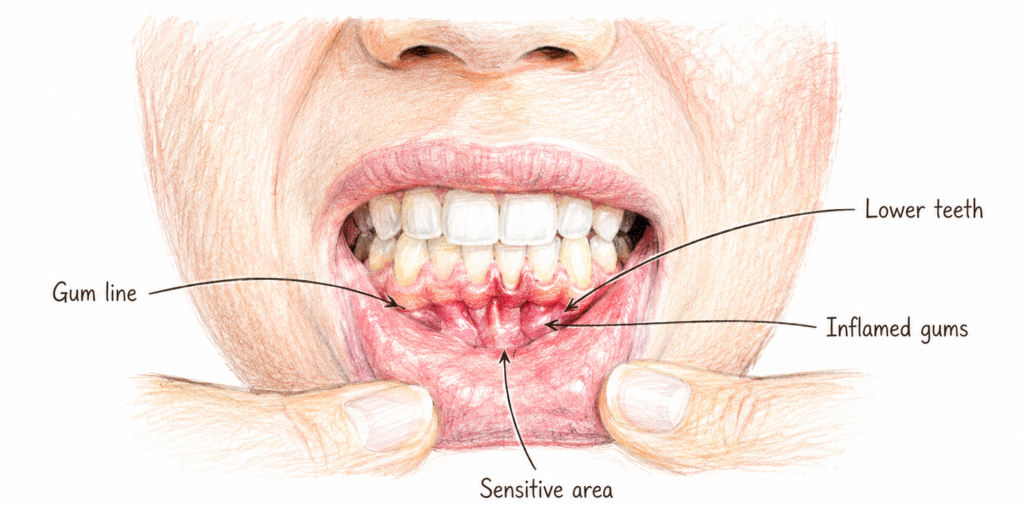
Physical injury is the most straightforward cause. Eating hard or sharp foods like chips, crusty bread, hard candy, or bones can easily cut or scratch the gum tissue. The sharp edge of a broken tooth can cut the gum every time the tongue or cheek brushes against it. Accidentally biting down on a fork or spoon while eating can cause a cut. Children often injure their gums by putting sharp objects in their mouths.
Dental procedures are another common cause. After having a tooth extracted, receiving a deep cleaning, or undergoing gum surgery, the tissue in the mouth will naturally have cuts, wounds, or incisions that are part of the healing process. These are expected and your dentist will give you instructions on how to care for them.
Aggressive brushing is a surprisingly frequent cause of gum cuts and injuries that many people do not think about. Using a hard-bristled toothbrush with too much force can literally tear the delicate gum tissue over time or create small abrasions that turn into cuts. The damage is often gradual, and many people only notice when the gums become sore or start bleeding.
Flossing incorrectly is another common cause. When dental floss is snapped or pushed too forcefully between the teeth, it can cut into the gum at the contact point, causing a small but painful laceration in the sulcus area. This is especially common in people who have tight contact points between their teeth.
Orthodontic appliances like braces, wires, or retainers can rub against the gum tissue and create cuts and irritation over time. A loose or broken wire is particularly likely to poke and cut the gums.
Dentures and partial dentures that do not fit properly can rub the gum tissue with every chewing movement, creating chronic abrasions or cuts. Over time, poorly fitting dentures can cause significant damage to gum tissue.
Causes of gum cuts and their frequency:
| Cause | How Common | Typical Location |
|---|---|---|
| Hard or sharp foods | Very common | Any area of gum along the teeth. |
| Aggressive brushing | Very common | Along the gum line, especially near the front teeth. |
| Incorrect flossing technique | Common | Between teeth contact points. |
| Dental procedure aftermath | Common | Specific to the procedure site. |
| Orthodontic appliance irritation | Common in braces wearers | Cheek-side gum tissue. |
| Ill-fitting dentures | Common in denture wearers | Ridge of gum under the denture. |
| Broken or chipped tooth | Moderate | Gum next to the damaged tooth. |
| Biting on utensils or objects | Moderate | Variable location. |
| Fingernail or sharp object injury | Less common | Variable location. |
What a Gum Cut Feels Like: Recognizing the Symptoms
The symptoms of a cut on the gum are usually quite easy to identify. Most people know immediately when they have cut their gum because the area becomes painful and bleeds. However, the symptoms can vary depending on the depth and cause of the cut.
Pain is the most immediate and obvious symptom. A fresh cut on the gum will usually cause a sharp, stinging sensation when it first occurs. As the initial acute pain fades over the next few minutes or hours, the area may feel tender and sore, especially when touched, when eating, or when drinking hot or cold liquids.
Bleeding is another hallmark symptom. As noted earlier, the gums have a rich blood supply, so even small cuts can bleed more than expected. Minor surface cuts usually stop bleeding within a few minutes if pressure is applied. Deeper cuts may bleed for longer, and if a cut does not stop bleeding after 10 to 15 minutes of gentle pressure, it warrants attention.
Swelling around the site of the cut is common, especially if the injury was significant. The gum tissue near the cut may appear red, puffy, and inflamed. This is a normal part of the initial immune response.
A visible wound or flap of tissue is sometimes present with deeper cuts. If the cut is significant, you may see the wound itself or a small piece of gum tissue that has been partially separated from the surrounding area.
Taste of blood is often one of the first signs that a cut has occurred. The metallic taste of blood in the mouth is a reliable indicator that gum tissue has been broken.
Signs of infection, if the cut does not heal properly, include increasing pain rather than decreasing pain, swelling that gets worse rather than better, pus or discharge from the cut, a fever, or a bad taste coming from the area. These symptoms require professional attention.
Symptom progression timeline for a gum cut:
| Time After Injury | Expected Symptoms |
|---|---|
| First minutes | Sharp pain, active bleeding, and a metallic taste. |
| First hour | Pain may ease slightly, bleeding usually stops, and tenderness begins. |
| Day one to two | Soreness when eating or touching the area, with possible mild swelling. |
| Day two to four | Pain and swelling gradually reduce, and the tissue begins to heal. |
| Day five to seven | Most minor cuts are significantly healed or fully healed. |
| Beyond one week | Any lasting or worsening symptoms should be checked by a dentist. |
What the Gums Actually Are and Why They Are Vulnerable
The gums, also called gingiva, are the soft pink tissue that surrounds and supports the base of the teeth. They are made up of mucous membrane over a base of fibrous tissue, and they are highly vascular, meaning they have a rich supply of blood vessels running close to the surface. This is why even a minor cut on the gum bleeds quite noticeably. The blood supply also makes the gums capable of healing relatively quickly compared to other tissues, but it also means they are easily traumatized.
Gum tissue has two zones. The first is the attached gingiva, which is the firmer tissue sitting closest to the teeth and tightly bound to the underlying bone. The second is the free gingiva, the loose rim of tissue that forms the cuff around each tooth. Between the free gingiva and the tooth is a shallow space called the sulcus, which in healthy gums is about one to three millimeters deep. This area is particularly vulnerable to injury and infection because it traps debris and bacteria.
The tissue of the gums, while resilient, is not as tough as skin on other parts of the body. It is thin, moist, and constantly exposed to friction, food particles, temperature changes, and bacteria. These factors make it easy to cut, irritate, or damage with relatively little force.
Key characteristics of gum tissue and vulnerability:
| Feature | Why It Matters for Cuts |
|---|---|
| Rich blood supply | Even small cuts can bleed significantly. |
| Thin mucous membrane layer | Provides less physical protection than thicker skin. |
| Constant bacterial environment | Cuts are immediately exposed to oral bacteria. |
| Moist environment | May slow clotting compared to dry skin cuts. |
| Proximity to teeth and bone | Deep cuts can affect nearby structures. |
| Regular exposure to food friction | Repeated trauma can happen during every meal. |
How a Gum Cut Is Different From a Mouth Sore
Many people confuse a cut on the gum with other types of mouth sores. The most common confusion is between a gum cut and a canker sore. Understanding the difference matters because they have different causes and sometimes require different responses.
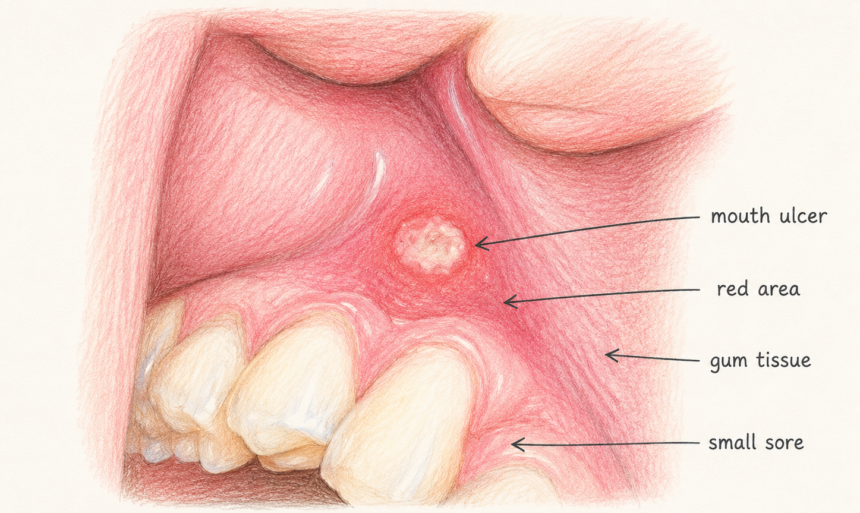
A canker sore, also called an aphthous ulcer, is not a cut. It is a small round or oval ulcer that forms on the soft tissue inside the mouth. It has a white or yellow center with a red border. Canker sores are painful, but they are not caused by physical injury. They are thought to be triggered by immune system activity, stress, certain foods, hormonal changes, or nutritional deficiencies. They are not contagious.
A gum cut, by contrast, has a clear physical cause. It typically looks like a linear wound or a ragged area of damaged tissue rather than the round, bordered ulcer of a canker sore. A fresh cut will bleed when pressure is applied, whereas a canker sore typically does not bleed.
A cold sore is another condition that is sometimes confused with a gum cut. Cold sores are caused by the herpes simplex virus and appear as clusters of small blisters, usually on the outer lip or near the mouth rather than on the gum tissue. They are contagious.
Gum disease, particularly in its ulcerative form called necrotizing ulcerative gingivitis, can cause what looks like cuts or erosion on the gum tissue. However, this condition is accompanied by severe pain, a very bad smell, and rapid progression. It is quite different from a simple physical cut and requires urgent dental treatment.
Comparing gum cuts to other mouth conditions:
| Condition | Appearance | Cause | Bleeding | Healing Time |
|---|---|---|---|---|
| Gum cut | Linear wound or raw tissue | Physical trauma | Yes, active bleeding is common | Three to seven days |
| Canker sore | Round ulcer with a white or yellow center | Immune response, stress, or dietary triggers | Rarely | Seven to fourteen days |
| Cold sore | Cluster of small blisters | Herpes simplex virus | Rarely | Seven to ten days |
| Gum disease ulceration | Erosion of gum tissue | Bacterial infection | Yes | Requires professional treatment |
First Aid for a Fresh Cut on the Gum
When you cut your gum, the first priority is to stop the bleeding and keep the area clean. The good news is that most gum cuts respond well to simple first aid and do not require emergency treatment.
The first thing to do is rinse your mouth gently with clean, cool water. This removes any food particles, debris, or foreign material from around the cut. Do not spit forcefully or swish aggressively, as this can dislodge any clot that is beginning to form.
Apply gentle pressure to the cut using a clean piece of gauze or a clean cloth. Hold it firmly but not excessively hard against the gum for five to ten minutes without lifting it to check repeatedly. Frequent checking disturbs clot formation and prolongs bleeding. If you do not have gauze, a clean wet tea bag works surprisingly well because the tannins in tea help promote clotting.
Avoid hot drinks, hot food, and alcohol after a fresh gum cut. Heat dilates blood vessels and can increase bleeding. Alcohol thins the blood and can also slow clotting.
Apply a cold compress on the outside of the mouth, such as an ice pack wrapped in a cloth held against the cheek near the cut. This helps reduce swelling and can numb the area to ease pain. Cold also causes blood vessels to constrict, which helps reduce bleeding.
Do not probe the cut with your tongue or fingers. This introduces bacteria and can reopen a wound that is starting to close.
Use an antiseptic mouth rinse carefully. A diluted chlorhexidine rinse, which a pharmacist can recommend, helps reduce bacterial contamination of the wound. Use it gently and according to directions. Plain warm salt water is also an effective and readily available antiseptic rinse.
First aid summary for a gum cut:
| Step | What to Do | What to Avoid |
|---|---|---|
| Rinse | Rinse gently with cool water. | Avoid forceful spitting or swishing. |
| Apply pressure | Use clean gauze or cloth for 5 to 10 minutes. | Avoid checking the wound too often. |
| Cold compress | Place ice wrapped in a cloth on the outside of the mouth. | Do not apply ice directly to gum tissue. |
| Rinse with antiseptic | Use warm salt water or diluted chlorhexidine. | Avoid harsh or alcohol-based mouthwash. |
| Pain management | Use over-the-counter ibuprofen or acetaminophen if suitable. | Avoid aspirin, as it may prolong bleeding. |
| Rest the area | Eat soft foods on the opposite side. | Avoid hot foods, alcohol, and spicy foods. |
Home Treatment Options During the Healing Period
Once the immediate first aid is done and the bleeding has stopped, the focus shifts to supporting the healing process and preventing infection over the following days.
Salt water rinses are one of the most effective and simple home treatments available. Salt has natural antimicrobial properties and helps keep the wound clean without damaging the tissue. Dissolve about half a teaspoon of plain salt in a glass of warm water and rinse gently for about 30 seconds, two to three times per day. Do not make the solution too strong, as overly concentrated salt can actually irritate the tissue.
Oral analgesic gels, available without a prescription at most pharmacies, contain a topical anesthetic called benzocaine that numbs the area temporarily. These gels are applied directly to the gum tissue and can provide significant short-term pain relief, particularly before meals when eating may aggravate the cut.
Over-the-counter pain relievers such as ibuprofen or acetaminophen can help manage pain and, in the case of ibuprofen, reduce inflammation. Follow standard dosage instructions. Avoid aspirin specifically, as it is an anticoagulant that can increase bleeding from the wound.
Honey has been used as a wound treatment for thousands of years and has genuine scientific support. Medical-grade manuka honey in particular has documented antibacterial and wound-healing properties. Dabbing a small amount on a gum cut may help reduce bacterial activity and support tissue healing. This is a supplementary measure rather than a replacement for proper care.
Aloe vera gel, when it is pure food-grade or pharmaceutical-grade, has anti-inflammatory and mild antibacterial properties. Applied gently to the cut with a clean finger or cotton swab, it can soothe irritated gum tissue and support healing.
Turmeric paste made from turmeric powder and coconut oil has been used in traditional medicine as an anti-inflammatory and antimicrobial treatment for mouth wounds. Some studies have supported curcumin, the active compound in turmeric, as having genuine anti-inflammatory effects in oral tissue. A small amount applied gently to the wound can be soothing.
Continuing to brush your teeth gently is important during healing. Many people stop brushing near a sore area, which allows plaque and bacteria to accumulate and increases the risk of infection. Use a soft-bristled toothbrush, be gentle near the cut, and brush the rest of your mouth normally.
Home treatment options and their effectiveness:
| Treatment | Active Benefit | Ease of Use |
|---|---|---|
| Warm salt water rinse | Antibacterial and cleansing. | Very easy and always available. |
| Topical benzocaine gel | Helps numb pain temporarily. | Easy and available at most pharmacies. |
| Ibuprofen or acetaminophen | Helps reduce pain and inflammation. | Easy and available at most pharmacies. |
| Manuka honey | May support antibacterial protection and wound healing. | Easy and available at health stores. |
| Aloe vera gel | Anti-inflammatory and soothing. | Easy and available at most pharmacies. |
| Turmeric and coconut oil paste | Anti-inflammatory and antimicrobial. | Moderate effort and used as a traditional remedy. |
| Cold compress | Reduces swelling and pain. | Easy and always available. |
| Gentle brushing with a soft brush | Prevents bacterial buildup around the area. | Important and should not be skipped. |
How Long Does a Gum Cut Take to Heal
The healing time for a gum cut depends on several factors including the size and depth of the cut, the cause, whether infection develops, and the general health of the individual. Healthy gum tissue has excellent blood supply and heals relatively quickly compared to other tissue types.
A small, superficial cut from a chip or sharp food edge will typically begin to feel better within one to two days and will be largely healed within three to five days. The tissue may look slightly pink and feel mildly tender for a few more days after that, but the wound itself will have closed.
A deeper or longer cut, such as one from a dental procedure or a significant injury, may take seven to fourteen days to fully close and heal on the surface. Deeper tissue healing continues beneath the surface even after the wound appears closed.
Cuts caused by ongoing trauma, such as the repeated rubbing of a denture or orthodontic wire, will not heal properly until the source of trauma is removed or corrected. This is important to understand because many patients try home remedies repeatedly for a gum cut that keeps returning without realizing that it is being re-injured constantly.
Factors that slow healing:
Continuing the activity that caused the cut, such as brushing too hard. Smoking, which reduces blood flow to gum tissue and impairs wound healing significantly. Poorly controlled diabetes, which affects the ability of all tissue to heal. Low vitamin C intake, which is essential for collagen production in gum tissue. Immune suppression from medications or illness. Poor oral hygiene that allows bacteria to colonize the wound.
Factors that speed healing:
Keeping the mouth clean with gentle brushing and salt water rinses. Good nutrition with adequate vitamin C, zinc, and protein. Staying well-hydrated, as saliva plays a role in wound healing. Avoiding tobacco and alcohol. Getting enough sleep, as tissue repair happens primarily during rest. Reducing stress, which affects immune function and healing capacity.
When to See a Dentist for a Gum Cut
Many gum cuts do not require a dental visit and heal well with home care. However, there are situations where professional evaluation is important.
A cut that will not stop bleeding after 15 to 20 minutes of applied pressure needs attention. Uncontrolled bleeding from gum tissue may indicate a blood clotting issue or a deeper injury than initially apparent.
A very deep or wide cut, especially one where the tissue is significantly torn or a flap of gum is hanging loose, may require suturing. This is more common after significant trauma such as a fall or accident. A dentist or oral surgeon can assess whether stitches are needed.
A cut that shows signs of infection needs professional treatment. Signs of infection include increasing pain after the first day or two, swelling that is getting worse rather than better, visible pus or discharge, a fever, swollen lymph nodes in the neck, or a persistently bad taste. Gum infections can spread and become serious if not treated. A dentist may prescribe antibiotics or need to drain an abscess.
A cut that does not heal within two weeks should be examined by a dentist. Most simple gum cuts heal completely within this period. A wound that persists beyond two weeks may indicate an underlying issue such as a foreign body in the tissue, an undiagnosed trauma source, oral health disease, or in rare cases, a condition that requires further investigation.
A cut near a tooth that has recently been treated, or one that developed after a dental procedure, should be followed up with the treating dentist if it is not progressing as expected.
Clear reasons to see a dentist about a gum cut:
| Situation | Why Professional Care Is Needed |
|---|---|
| Bleeding not stopping after 15 to 20 minutes | May need proper pressure application or evaluation for a clotting issue. |
| Deep or torn tissue | May require suturing to help the gum heal properly. |
| Signs of infection present | Antibiotics or drainage may be needed. |
| No improvement after two weeks | The underlying cause may need to be identified. |
| Cut caused by a dental procedure | A dentist should monitor the healing process. |
| Cut caused by a broken tooth or appliance | The source of trauma needs correction. |
| Child with significant gum injury | Professional assessment is needed to check depth and risk. |
Medical Treatment Options for More Serious Gum Cuts
When home care is not sufficient, several professional treatments may be used to manage a gum cut.
Suturing, or stitching, is used for deep or wide cuts that have not closed naturally or are too large to heal well on their own. Dentists and oral surgeons use dissolvable sutures in the mouth that do not need to be removed, or non-dissolvable sutures that are taken out after about one week.
Antibiotics may be prescribed if infection is present or if the patient is at elevated risk of infection. This includes patients with diabetes, heart valve conditions, immune suppression, or other risk factors. Common antibiotics prescribed for mouth infections include amoxicillin or metronidazole.
Professional cleaning of the wound may be performed if debris or foreign material is embedded in the cut. Sometimes a piece of food, a small chip of tooth, or a fragment from a broken appliance is lodged in the gum tissue and preventing healing. Removing it is necessary for the wound to close.
Chlorhexidine prescription-strength mouthwash may be recommended to reduce bacterial load in the mouth during healing. This is stronger than over-the-counter options and is used for a defined period under dental guidance.
Laser treatment is increasingly used in dental practice for gum tissue procedures. Low-level laser therapy can promote healing of soft tissue wounds and reduce inflammation. Some dental practices offer this as part of post-surgical care or for treating slow-healing gum wounds.
Professional treatment options:
Professional Treatment Options for Gum Cuts
| Treatment | When It Is Used |
|---|---|
| Suturing | Used for deep or wide cuts, especially after surgery or injury. |
| Antibiotics | Used when there is an active infection or the patient is at higher infection risk. |
| Professional wound debridement | Used when foreign material is trapped in the wound or the cut is contaminated. |
| Prescription chlorhexidine rinse | Used when there is a high bacterial risk or after a dental procedure. |
| Laser therapy | Used to support faster healing and reduce inflammation. |
Preventing Cuts on the Gums
Prevention is always better than treatment. Most gum cuts are preventable with simple adjustments to habits and oral care routines.
Using a soft-bristled toothbrush is one of the most important changes many people can make. Hard-bristled brushes do not clean better than soft ones. They cause more damage to gum tissue and tooth enamel. Dentists consistently recommend soft bristles and a gentle circular or Bass technique of brushing rather than vigorous back-and-forth scrubbing.
Learning to floss properly prevents the snapping injury that is a common cause of gum cuts between the teeth. The correct technique involves curving the floss around each tooth in a C-shape and guiding it gently up and down rather than snapping it between the teeth with force.
Being mindful while eating reduces the risk of cuts from food. Chewing carefully, avoiding extremely hard food, and being aware of bones in meat or fish are simple precautions that significantly reduce accidental gum injuries.
Having orthodontic appliances or dentures checked and adjusted regularly ensures they are fitting correctly and not creating chronic friction. Orthodontists can add dental wax to sharp or protruding wires to prevent them from cutting the gum tissue.
Wearing a mouthguard during contact sports protects the gums and teeth from direct trauma. Many gum injuries happen during sports, and a properly fitted mouthguard is an inexpensive and effective form of protection.
Getting regular dental checkups allows a dentist to identify and address broken teeth, sharp edges, poorly fitting appliances, or signs of gum disease before they cause cuts and complications.
Prevention strategies summary:
Prevention Strategy — What It Addresses Use soft-bristled toothbrush — Prevents brushing-related gum trauma Correct flossing technique — Prevents floss-snapping injury Careful eating habits — Reduces food-related gum injuries Regular appliance adjustments — Prevents denture and brace-related cuts Mouthguard during sports — Protects against impact injuries Regular dental checkups — Identifies and corrects sources of gum trauma early
Special Situations: Gum Cuts in Children and the Elderly
Gum cuts in children and older adults deserve specific mention because these groups have particular vulnerabilities and needs.
Children’s gum tissue is generally healthier and heals quickly, but children are more prone to accidental oral injuries because they put objects in their mouths, fall more frequently, and may not have developed careful chewing habits. A child who injures their gum near a primary tooth should be seen by a dentist if the injury is significant, as trauma to baby teeth can sometimes affect the developing permanent teeth underneath.
Older adults face different challenges. Gum tissue tends to recede with age, exposing more of the tooth root and making the margin between tooth and gum more vulnerable. Many older adults take medications that cause dry mouth, which reduces the protective and healing benefits of saliva. Medications like blood thinners increase bleeding risk from even minor gum cuts. Conditions like diabetes, common in older adults, impair tissue healing. Dentures are a major cause of gum trauma in this population, and regular denture adjustments are essential.
Considerations for children and the elderly:
| Group | Special Concerns | Recommended Action |
|---|---|---|
| Children | Frequent accidental injury and possible risk to developing teeth. | See a dentist if a tooth is involved or the injury is significant. |
| Elderly | Dry mouth, medications, gum recession, and dentures can increase risk. | Keep regular dental visits, adjust dentures when needed, and manage dry mouth. |
Nutrition and Its Role in Gum Healing
What you eat during the healing period after a gum cut matters more than most people realize. Gum tissue heals through a process that requires collagen synthesis, immune activity, and cellular regeneration — all of which depend on specific nutrients.Vitamin C is essential for collagen production. Without adequate vitamin C, gum tissue cannot build the structural proteins needed to close and reinforce the wound. Citrus fruits, strawberries, kiwi, bell peppers, and broccoli are all good sources.
Zinc plays a key role in immune function and wound healing. Meat, shellfish, nuts, and seeds are good dietary sources.
Protein provides the amino acids needed for tissue repair. Eating adequate protein from eggs, fish, poultry, legumes, or dairy during the healing period supports faster recovery.
Vitamin A supports mucous membrane health and cellular regeneration. Carrots, sweet potato, leafy greens, and eggs provide this nutrient.
Staying hydrated supports saliva production, which helps protect the healing wound from bacteria and aids in the early stages of tissue repair.
Nutrients important for gum healing:
| Nutrient | Role in Healing | Food Sources |
|---|---|---|
| Vitamin C | Helps collagen synthesis for tissue repair. | Citrus fruits, berries, peppers, and broccoli. |
| Zinc | Supports immune function and cellular repair. | Meat, shellfish, nuts, and seeds. |
| Protein | Provides amino acids for tissue rebuilding. | Eggs, fish, poultry, and legumes. |
| Vitamin A | Supports mucous membrane regeneration. | Carrots, sweet potato, and leafy greens. |
| Water and hydration | Supports saliva production for wound protection. | Plain water throughout the day. |
What Chronic or Recurring Gum Cuts May Indicate
If you find that you are repeatedly getting cuts on your gums in the same area, or that gum cuts are slow to heal or keep returning, this is worth taking seriously. Chronic or recurring gum injuries can indicate an unresolved mechanical problem such as a poorly fitting denture, a broken tooth, or an orthodontic issue that needs correcting. They can also indicate a health condition that is affecting tissue resilience or healing capacity.
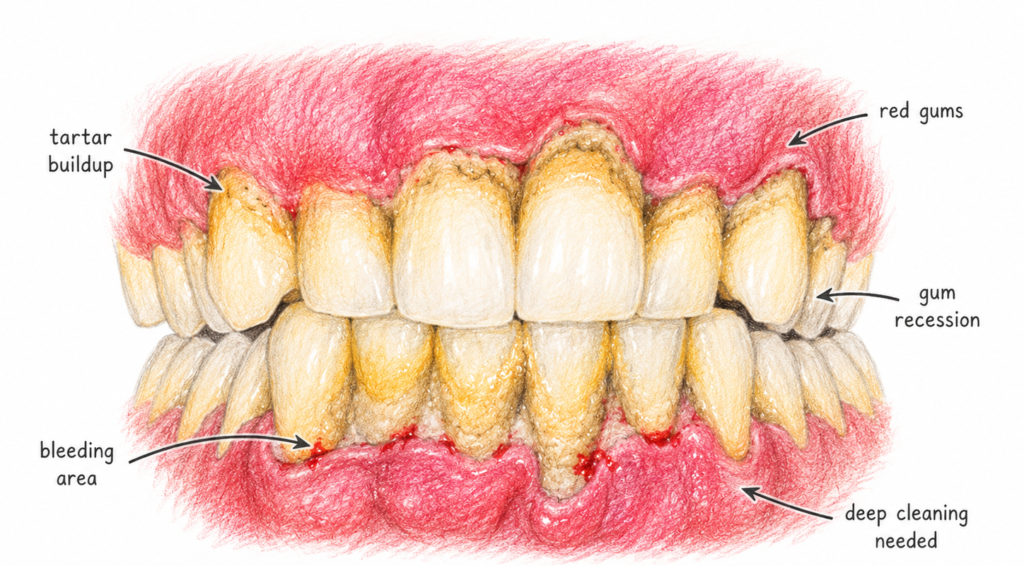
Gum disease in its more advanced forms causes the tissue to become fragile, inflamed, and prone to injury. A dentist can distinguish between simple mechanical cuts and tissue damage caused by underlying periodontal disease.
In very rare cases, a wound in the mouth that does not heal within two to four weeks could indicate a more serious condition requiring investigation. Persistent oral sores are something that any healthcare provider will take seriously and investigate appropriately, usually starting with a simple examination and potentially a tissue biopsy if needed.
The most important message about recurring gum cuts is that they should prompt a dental visit. An assessment of your brushing technique, appliance fit, overall gum health, and any other contributing factors is a simple and worthwhile step that can identify and solve the underlying problem.
Final Thoughts on Managing Cuts on the Gums
A cut on the gum is a common and usually minor injury that most people experience at some point. With the right first aid, home care, and a little patience, the majority of gum cuts heal well within a week. The keys to good outcomes are keeping the mouth clean, avoiding activities that re-injure the area, eating supportive foods, and watching for signs of infection.
The mouth’s natural ability to heal is genuinely impressive. Compared to skin on other parts of the body, gum tissue heals relatively quickly due to its excellent blood supply and the constant presence of growth factors in saliva. Most people who follow simple care guidelines find that a gum cut causes only a few days of discomfort before it is forgotten.
What matters most is recognizing when a gum cut is more serious than it first appears, knowing the warning signs of infection, and being willing to seek professional help when home care is not enough. A dentist can quickly assess a gum injury, provide appropriate treatment, and identify any underlying cause that might be leading to repeated trauma.
Taking care of your gums in general through good brushing habits, correct flossing technique, a nutritious diet, and regular dental visits creates the foundation for tissue that heals quickly and stays healthy over the long term.